

SEARCH
Industry Partners




Prairie Swine Centre is an affiliate of the University of Saskatchewan

Prairie Swine Centre is grateful for the assistance of the George Morris Centre in developing the economics portion of Pork Insight.
Financial support for the Enterprise Model Project and Pork Insight has been provided by:







The First Limiting Amino Acid in Late Gestation may not be Lysine
Posted in: Ontario Pork, Pork Insight Articles by admin on August 13, 2011 | No Comments
The order of first limiting AA in late gestation was determined in 14 sows (6 gilts, 8 2nd parity sows) using the AA deletion technique. A positive control (PC) diet was formulated to contain all essential AA at 160% of current recommendations (NRC 1998). Lysine, threonine, tryptophan and branchedchain AA were each removed from the PC diet to 60% of current recommendations (PC-Lys, PC-Thr, PC-Trp, PC-BCAA, respectively). Sows received each of the diets in random order. Plasma urea nitrogen, indicator AA oxidation and protein turnover (L[1-13C]phenylalanine as tracer AA) were used to evaluate the response to dietary AA deletion from 90-111 d of gestation. Data was analyzed using a Mixed model with sow as random variable. Parity was tested as a covariate but was not significant. Fasted plasma urea nitrogen (mg/dL) was highest (P < 0.09) for the PC-Lys (11.77) diet compared to the PC (8.89) diet followed by the PC-BCAA (10.81) and PCTrp (10.74) diets. Indicator AA oxidation (%) tended to be higher (P < 0.15) for the PC-Thr (18.8) and PC-Trp (18.4) diets compared to the PC (16.4) diet. Tracer flux and protein breakdown (μmol/kg body wt per h, P < 0.05) were higher on the PC-Trp (91.57 and 45.08, respectively) diet compared to the PC (73.72 and 27.97, respectively) diet. The first limiting AA in late gestation may be Thr or Trp rather than Lys but appears to be dependent on the response parameter. Changes in the order of first limiting AA in late gestation in sows means that the traditional Lys to AA ratio used in diet formulations, based on growing pig data, may not apply to pregnant sows.
Dietary Threonine Requirement for Maintenance is 98 mg/kg^0.75 in Adult Sows
Posted in: Ontario Pork, Pork Insight Articles by admin on | No Comments
The objective of this study was to determine the threonine requirement for maintenance in adult sows using the indicator oxidation technique. Four non-pregnant Hypor Hybrid (Hypor Inc) sows (233.0±18.6 kg BW) were adapted to 2.2 kg of a semi-synthetic diet containing 14.0 MJ ME/kg and 3.77 g/kg threonine. Each sow received 6 test diets, in random order, providing threonine intakes of 20, 40, 60, 100, 120 and 140 mg/kg0.75. After adaptation to each diet, indicator amino acid oxidation using L-[1-13C]-PHE was determined simultaneously with indirect calorimetry for 4 h. Plateaus in oxidation were achieved within 1.5 h. PHE oxidation decreased as threonine intake increased up 100 mg/kg0.75 BW, and did not change at greater threonine intakes. Maintenance threonine requirement, calculated by breakpoint regression analysis, was 98 mg/kg0.75. Heat production was linearly correlated (r = 0.70, P = 0.001) with PHE oxidation. Heat production responded in a quadratic manner to threonine intake, and was minimized at a threonine intake of 72 mg/kg0.75. The mean respiratory quotient (RQ, 1.067±0.011) showed that dietary energy was not limiting. RQ was greatest (P<0.001) at threonine intake of 87 mg/kg0.75. The reduced heat production and increased RQ at threonine intakes close to the requirement indicate that maximum energetic efficiency is achieved when both amino acid deficiency and excess are avoided.
Incorporation of oats into swine diets
Posted in: Production by admin on August 12, 2011 | No Comments
Introduction
The high fibre content of oats, which are widely grown in Western Canada, has historically limited their use as an energy source in swine rations. In fact, oats have been shown to have approximately 10% less digestible energy (DE) than barley and 17% and 19% less DE than wheat and corn respectively. However, a recent seminar given at the Western Nutrition Conference in Saskatoon (September, 2007) showed that grower and finisher pigs can be fed diets containing up to 25% oats without compromising growth performance.
This article will review the nutritional profile of oats and will provide recommendations for how oats can be used in swine diets to reduce feeding costs while maintaining performance.
An overview of oats
Canada is the second largest producer of oats (3.3mt) after Russia (4.6mt), but before the USA (1.7mt), Poland (1.2mt) and Finland (1.2mt). Oats are a common crop in Canada and conditions in Manitoba are thought to be ideal. Oats were the third most important crop in the US but are currently in decline.
In comparison to other cereals, oats have a high fibre content as the hull comprises about 23% of the whole grain. Thus, they are lower in energy value than other cereals, making them a popular cereal for ruminants and horses, but traditionally less so for poultry and pigs. Additionally, the nutritional composition varies widely with variety, climate and fertilization.
Oats have a high oil level and relatively good protein quality compared with other cereals. The fibre fraction is highly lignified, resulting in reduced digestibility. The soluble fibre in oats is largely due to non-digestible b-glucans located primarily in the endosperm cell wall. In general, oat fibre has a low water holding capacity and is therefore not particularly good at reducing constipation in monogastric animals.
Table 1: Nutritional composition of oats in comparison to barley
Nutrient Barley Oats
Dry matter (%) 87 87
Crude protein (%) 9.5 10.5
Crude Fibre (%) 4.7 11.6
NDF (%) 17.5 38.4
Oil (%) 1.7 5.2
Ash (%) 2.2 2.5
DE (MJ/kg) 13 11.0
NE (MJ/kg) 9.6 8.2
Source: Atlas & INRA, 2002
The feeding value of oats
As with other high fibre ingredients, the feeding value of oats is best determined by assessing how inclusion affects the overall diet’s fibre level. This is because, as fibre increases, the transit rate of digesta through the gut of pigs decreases, resulting in a reduction in performance through reduced digestibility and increased mucus production. As a result of this, oats must be limit fed depending on the animal’s stage of development.
Table 2: Potential savings when including oats into various hog rations
Stage of No oats Oats at % limit Savings Recommended
animal ($/MT) ($/MT) ($/MT) maximum oat limit
(% of diet)
Grower pigs $235 $228 $7 25
Finisher pigs $229 $222 $7 25
Dry sows $222 $217 $5 20
Diets assume the following prices/MT: Wheat $215; Barley $205; Soya $300; Oats $170.
Table 2 shows that there is a potential to save on feeding costs but that the highest savings can be realized with growing and finishing pigs. Due to limited research examining the nutritional value of oats within sow diets, a conservative limit of 20% is recommended. Assuming a herd size of 250 sows, farrow to finish, this could equate to a feed savings of approximately $660 per month or $8000 per year.
Oats and Net Energy
An important point to remember is that higher oat inclusions only works when diets are formulated to net energy (NE) and digestible amino acids. Again, this is because of the high fibre percentage, because diets formulated to ME or DE will decrease in NE as oat levels increase. Reducing NE through inclusion of high fibre ingredients has been shown time and again to reduce performance.
Table 3: Effect of dietary level of oats on grower and finisher pig growth performance1, 2
Level of oats (%)
0 25 50 P-value
Grower (27.5 – 67.5kg)
Daily gain (kg) 0.83 0.83 0.85 0.67
Daily intake (kg) 1.88 1.87 1.89 0.85
FCR 2.27 2.26 2.25 0.78
NE 2027 2025 2041
NE w/out tallow n/a 1991 1955
Finisher (67.5 – 80kg)
Daily gain (kg) 1.16 1.16 1.17 0.78
Daily intake (kg) 2.89a 2.84a 3.08b 0.01
FCR 2.51 2.49 2.70 0.06
NE 2033 2058 2075
NE w/out tallow n/a 1997 1960
1 Source: Zalinko et al., 2007 Proc. W. Nutr. Conf. pp 253
2 Values within a row not sharing similar superscripts differ significantly
One should note that in the study outlined in Table 3, NE levels were balanced by inclusion of tallow. If this had been ignored the amount of energy each pig consumed per kg of gain would have been sub-optimal and growth would have deteriorated. However, if tallow or vegetable oil cannot be handled in a given on-farm mixing system, adequate levels of dietary energy can be obtained by using wheat or corn with similar financial savings being realized.
Some points to consider
What are the nutrient levels?
It is generally a good idea to send a sample of your oats for nutrient analysis. This will allow for more accurate formulation and will prevent the feeding of rations containing excess amounts of NDF (Neutral Detergent Fibre).
Will you be pelleting your feed?
Oats tend to give a poorer pellet quality than other cereals because the fibrous husk tends to give pellets fracture lines. Thus, one should consider limiting oats to 7.5% of the diet and apply a fine grind if pellets are manufactured.
Should you include an enzyme?
In Europe, where high fibre ingredients such as mill run are commonly used in pig rations, so too are enzymes. However, inclusion costs of enzymes in North America are much higher than in Europe, which typically limits their addition into starter rations.
So does it make financial sense to use an enzyme? A recent article published by researchers at the University of Saskatchewan examined the effect of supplementing grower and finisher diets containing 40% oats with a mixed β-glucanase / xylanase enzyme product. The study showed that crude protein, dry matter and gross energy digestibilities all increased by 3% as a result of enzyme supplementation. If enzyme inclusion costs approximately $3/tonne, nutrient digestibility would have to improve by around 2% to break even. Based on this study, and many other enzyme focused studies, it would seem likely that enzyme inclusion would make economic sense when diets are formulated to contain high levels of oats.
Conclusions
Inclusion of oats at the levels recommended in this article is nutritionally and economically viable. However, in order to reap these benefits, one must be mindful of the method of formulation being applied to their rations. The NE system combined with digestible amino acids currently used by Nutrition Partners is a good way of ensuring the risk of reduced nutrient digestibility and animal performance is minimized.
Feeding zero-tannin fababean to hogs – effects on pork yield in primal cuts and loin quality
Posted in: Meat Quality by admin on | No Comments
In the previous issue of Western Hog Journal (Fall 2007, Vol. 29, No. 2), we summarized the growth performance and carcass traits of nearly 1000 hogs fed diets containing zero-tannin (ZT) fababean (Snowbird) as a full replacement for either field pea or for soybean meal or half ZT fababean, half soybean meal. In this article we report mainly the effects of the same diets on pork yield of the primal cuts and loin quality traits of these hogs. We wanted to ensure that feeding ZT fababean would not compromise pork quality and jeopardize western Canadian pork export markets.
The study was conducted at the Drumloche Research Barn near Irma, AB. The pigs (Fast Pigs, SK) originated from the Lewisville herd within the Alberta Pig Company production system. Upon reaching a market weight of 118 kg, most hogs were shipped for slaughter to Britco in Langley, BC. A subsample of 96 hogs (24 per week) were shipped to Sturgeon Valley Pork at St. Albert, AB for slaughter on four consecutive Mondays. After an overnight chill, the half carcasses (sides) were shipped to Agriculture and Agri-Food Canada (AAFC) Lacombe Research Centre to establish the yield of primal cuts and evaluate pork loin quality.
Fat hardness
Pig carcasses can have very soft fat, very hard fat or something in between. Fat hardness is directly affected by what the pig eats. If the pig’s feed contains saturated fats (like tallow), then the carcass fat will also be more saturated and firmer. On the other hand, if the diet contains high levels of unsaturated fat, such as canola oil, then the carcass fat will also be more unsaturated and softer. Carcasses with fat that is too soft are undesirable because they are more difficult to process and the bacon is more difficult to slice. The hardness of bacon fat is very important to consumers. Bacon slices should separate well at cutting and cooking instead of gelling together. On arrival at AAFC Lacombe (Tuesdays), the half-carcass sides were re-hung in a carcass cooler. The next morning (Wednesdays, approximately 48 hours post-slaughter), the hardness of the second layer of fat beneath the skin, above the second thoracic vertebra, was measured using a durometer. The durometer we used had a scale with values ranging from 0 to 100. The higher the reading, the harder the fat.
Backfat and ribeye dimensions

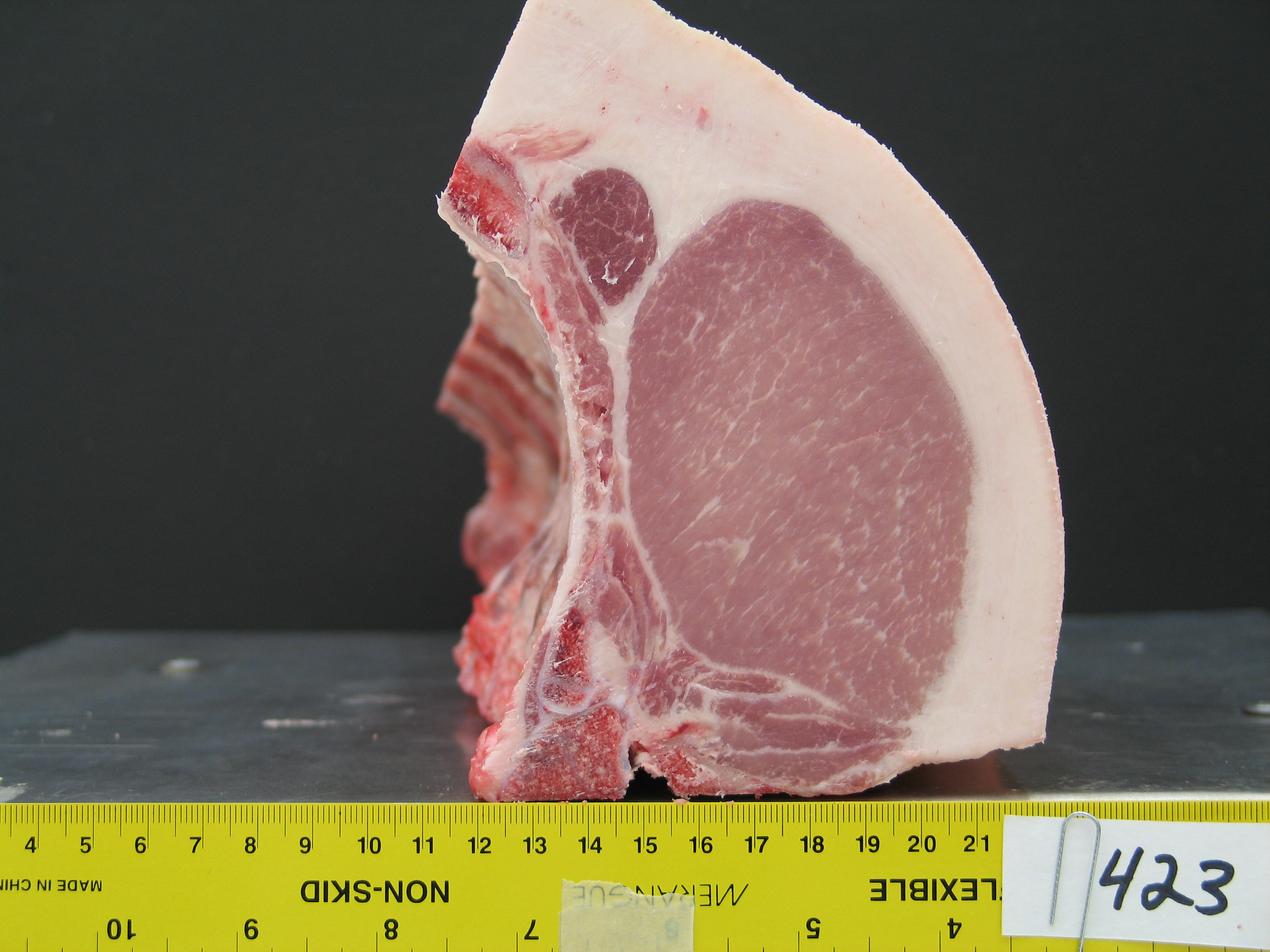
The amount of lean pork from a carcass and the corresponding payment to producers is estimated from backfat thickness and loin depth measured in the warm carcass. The loin was therefore sawn through between the third and fourth last ribs. This is the site where the grading probe was inserted at the slaughterhouse. A digital picture was taken of the cross-section (Figure 1) and used to measure backfat thickness and loin muscle depth. The picture was also used to measure the ribeye length and width and to calculate the area of this important muscle cut to consumers.
Loin marbling
Marbling refers to the small specks of fat within the muscle (intramuscular fat). The amount of marbling fat in pork chops can influence consumer perceptions of flavour and juiciness. The amount of marbling in the loin for each carcass side was subjectively scored in the cross section pictures taken (Figure 1). Scores were assigned using photographic marbling standards produced by the US National Pork Producers Council (NPPC). A marbling score of 2 or 3 corresponds to approximately 2 or 3% intramuscular fat, respectively.
Pork yield of the primal cuts
As mentioned previously, the amount of lean pork from a carcass can be estimated from backfat thickness and loin depth. To first establish such a relationship, carcasses need to be cut out into primal cuts. The amount of lean, fat and bone is then weighed for each primal cut. Thus, on Wednesdays, the cold carcass sides were weighed prior to splitting them up into the five primal cuts: the picnic, the butt, the loin, the ham and the belly (Figure 2).
Each of the primal cuts, except for the belly, was then carefully separated into fat, bone and lean pork (Figure 2). Each of these tissues was then weighed separately for each primal cut. The yield of the half carcass side for each hog was then calculated as the weight of the dissected lean pork in the picnic, butt, loin and ham plus the weight of the trimmed and squared belly (the bacon piece) and the side ribs. The added weight of lean pork from the primal cuts was then expressed as a proportion of the cold side weight.
The pork loin or back is the most valuable cut from the carcass. The loin eye muscle, referred to as the Longissimus, extends along the length of the back. This muscle is often evaluated as the most representative indicator of pork quality by meat researchers because of its high value to consumers.
Loin colour, structure and firmness
The appearance of fresh pork is what primarily motivates a consumer to select one tray over others in a store display. Two highly experienced observers evaluated the front half of the loin eye muscle for colour, structure and firmness using several scales.
First, they rated the colour of the muscle using a five-point scale according to AAFC standards, ranging from one as extremely pale to five as extremely dark. Second, the observers rated the firmness and structure according to AAFC standards on a five-point scale, ranging from one as extremely soft, sweaty, dough-like, usually 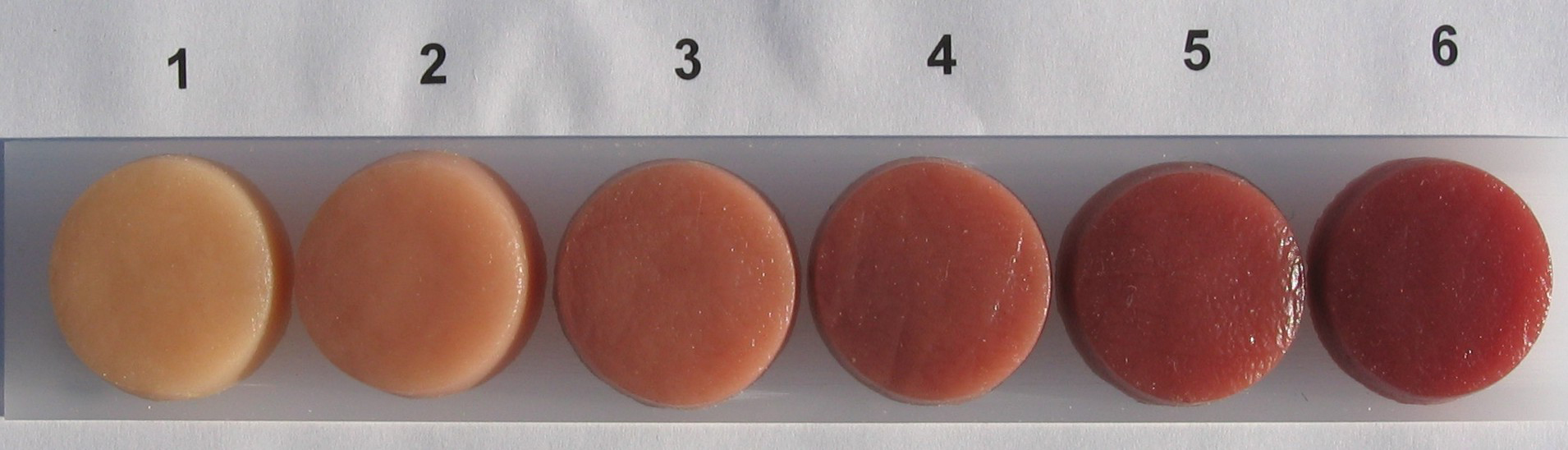 with open and grainy texture, to five as extremely firm, dry, sticky, with closed and grainless texture. Third, theyrated the colour of the pork loins again using plastic resin models developed by the Japanese that can be useful when considering exporting to that country (Figure 3). Scores range from a one being extremely light to a six, which is extremely dark. Values of 3, 4 and 5, are generally desirable for the Japanese export market. Fourth, the color and firmness, respectively, were also subjectively rated using the standards from NPPC. Colour was rated on a six-point scale; the palest loins rated 1 through the darkest loins rating six. Firmness was rated on a five-point scale with one being very soft through to five being very firm.
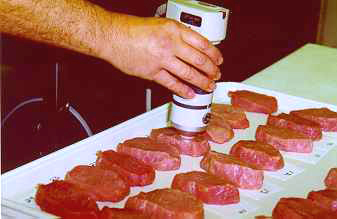
To make the colour appraisal more objective compared to the subjective rating of the observers, a special instrument called a colour meter was used to measure light reflectance off the surface of the muscle (Figure 4). The colour meter was placed in full contact with a chop. When activated, the meter flashes a light and measures the characteristics of the light reflected back to it. The meter records four reflectance values: L* is a measure of lightness; higher values indicate more light is reflected back making the surface appear brighter. Increasing positive values of a*, indicate increased levels of red, while higher positive values of b*, indicate increasing yellow. C* (chroma) indicates the degree of saturation, that is, how intense the colour is. Hue angle describes a specific tint, for example, light pink.
Loin moisture and fat content
To consumers, the concentration of moisture in pork is important for juiciness and perceived tenderness. Thus, after evaluating the quality characteristics of the front portion of the loin eye muscle, it was ground for determination of water and fat content. The ground sample was dried in a convection oven at 102ºC for 24 hours. The difference in weight between the wet sample and the dried sample indicated the moisture content.
Consumers have become more aware of the food they eat and are becoming more concerned about reducing fat intake. Fat around a retail cut can be trimmed with a knife, but the fat among muscle fibres (intramuscular) cannot. While consumers desire and select leaner pork in the retail counter, most meat researchers consider a certain amount of marbling fat necessary to ensure a consistent, satisfactory tasting experience unless the product is marinated or otherwise enhanced. So, to evaluate the amount of intramuscular fat, the fat among muscle fibres was extracted by boiling ground loin samples in petroleum ether. The amount of fat was then weighed after evaporating the ether. Loins from pigs with low marbling can have as little as 1% intramuscular fat. A desirable level of marbling that is thought to ensure eating quality without reducing the consumer intent to buy is 2.5 to 3%. Values above 5% fat are indicative of highly marbled pork.
Loin drip loss
When consumers buy fresh pork and take it home, they don’t want to see excess juice in the package. So to evaluate drip loss, a chop was fabricated and weighed into a retail display tray. After 48 hours, it was unwrapped and weighed again. We considered the difference in weight as drip loss.
Loin tenderness
 Consumers like moist, tender pork that is easy to cut and chew. We therefore evaluated tenderness by the amount of force required to slice through a core of cooked meat (shear force; Figure 5). A portion of the loin eye muscle was frozen and stored at approximately -25ºC. After thawing at 4ºC, two 2.5 cm thick chops were fabricated and cooked on a grill. Round cores were removed from the chops and sheared in a device called the Warner-Bratzler shear cell (Figure 5). Lower values indicated a more tender pork chop. Usual shear force values for broiled pork loin average between 4 and 6 kg.
Results
Table 1 summarizes the effect of dietary supplemental protein source on pork yield of the primal cuts. The diets fed had no effect on the proportion of lean, fat and bone in any of the four leanest primal cuts (the picnic, the butt, the loin or the ham), the four leanest cuts combined, or the four leanest cut plus the bacon piece and side ribs. Feeding ZT fababean thus resulted in similar proportions of lean, fat and bone in primal cuts when it replaced field pea or soybean meal in the diet.
Typical sex differences were evident on pork yield in the primal cuts (data not shown). As expected, gilts had greater lean and lower fat compared to barrows. But the proportion of bone was not different between gilts and barrows.
Table 1: The effects of supplemental protein source (SBM, FABA, 50% SBM:50% FABA or PEA) in diets fed to hogs on the proportions of separable lean, fat and bone in the primal cuts and the amount of lean in the four leanest pork cuts (except belly) combined expressed as a proportion of cold carcass side (excluded head, tail, leaflard or kidneys)
|
|
SBM |
FABA |
50% SBM: |
PEA |
|
|
|
|
|
|
|
No. of sides dissected per diet |
24 |
24 |
24 |
24 |
|
|
|
|
|
|
|
Picnic: |
|
|
|
|
|
Lean, % |
64.2 |
63.7 |
63.6 |
63.7 |
|
Fat, % |
27.2 |
27.4 |
27.8 |
27.6 |
|
Bone, % |
8.3 |
8.7 |
8.3 |
8.3 |
|
|
|
|
|
|
|
Butt: |
|
|
|
|
|
Lean, % |
59.1 |
58.7 |
58.2 |
57.9 |
|
Fat, % |
36.1 |
36.1 |
36.9 |
37.0 |
|
Bone, % |
4.5 |
4.6 |
4.6 |
4.7 |
|
|
|
|
|
|
|
Loin: |
|
|
|
|
|
Lean, % |
55.5 |
54.5 |
54.8 |
53.3 |
|
Fat, % |
32.1 |
32.8 |
32.5 |
34.1 |
|
Bone, % |
12.1 |
12.4 |
12.3 |
12.5 |
|
|
|
|
|
|
|
Ham: |
|
|
|
|
|
Lean, % |
61.5 |
61.1 |
61.0 |
60.8 |
|
Fat, % |
23.7 |
24.0 |
24.4 |
24.5 |
|
Bone, % |
8.5 |
8.5 |
8.4 |
8.4 |
|
|
|
|
|
|
|
Four primal cuts, kg |
31.148 |
30.994 |
31.097 |
30.922 |
|
Lean in 4 cuts, % |
61.1 |
59.4 |
60.5 |
59.3 |
|
Fat in 4 cuts, % |
29.2 |
30.6 |
29.7 |
30.9 |
|
Bone in 4 cuts, % |
9.5 |
9.7 |
9.6 |
9.4 |
|
Yield in 4 cuts + bacon + sideribs, kg |
24.350 |
23.829 |
24.083 |
23.640 |
|
Lean as % of side |
56.9 |
55.7 |
56.3 |
55.3 |
|
|
|
|
|
|
Table 2 summarizes the effect of dietary supplemental protein source on fat hardness, backfat thickness, loin dimensions and loin quality measurements. The diets fed had mostly no effect in loin quality traits except for the Japanese colour scores, loin ultimate pH and drip loss.
Table 2: The effects of supplemental protein source (SBM, FABA, 50%SBM:50%FABA or PEA) in diets fed to hogs on fat hardness, backfat thickness, loin dimensions and loin quality measurements
|
|
SBM |
FABA |
50% SBM: |
PEA |
|
Number of sides evaluated per diet |
24 |
24 |
24 |
24 |
|
Fat hardnessz, Durometer units |
67.47 |
67.31 |
68.73 |
71.53 |
|
Measurements on digital picture taken between the 3rd and 4th last ribs (grading site): |
|
|
|
|
|
¾ faty, cm |
1.68 |
1.72 |
1.74 |
1.86 |
|
7cm fatx, cm |
1.59 |
1.58 |
1.68 |
1.78 |
|
Muscle depthx, cm |
6.24 |
6.15 |
6.31 |
6.17 |
|
Ribeye max. length, cm |
9.95 |
9.94 |
9.90 |
9.97 |
|
Ribeye max. width, cm |
6.16 |
6.03 |
6.26 |
6.11 |
|
Ribeye area, cm2 |
45.46 |
45.31 |
46.16 |
46.06 |
|
NPPC marbling score |
2.67 |
2.60 |
2.42 |
2.48 |
|
Subjective assessment of meat quality of the loin eye muscle: |
|
|
|
|
|
AAFC colourw score |
3.06 |
2.98 |
3.25 |
2.99 |
|
AAFC structurew score |
2.98 |
3.00 |
3.10 |
3.01 |
|
NPPC colourw score |
3.02 |
3.15 |
3.21 |
3.01 |
|
NPPC firmnessw score |
3.27 |
3.17 |
3.25 |
2.88 |
|
Japanese colourw score |
3.02 a |
3.17 ab |
3.40 b |
3.04 a |
|
Objective assessment of meat quality of the loin eye muscle: Minolta CR-300 colour meter |
|
|
|
|
|
CIEv L* (lightness) |
53.40 |
52.25 |
52.05 |
53.78 |
|
CIEv a* (redness) |
8.02 |
7.55 |
7.97 |
8.08 |
|
CIEv b* (yellowness) |
5.30 |
4.68 |
4.84 |
5.31 |
|
CIEv C (saturation) |
9.63 |
8.90 |
9.34 |
9.70 |
|
CIEv hue angle (tint) |
33.38 |
31.67 |
30.91 |
33.09 |
|
Ultimate pH |
5.51 a |
5.56 b |
5.55 b |
5.49 a |
|
Moisture, g/100g |
73.72 |
73.78 |
73.71 |
73.81 |
|
Fat contentu, g/100g |
3.02 |
3.01 |
2.97 |
2.99 |
|
Drip loss after 48h, % |
6.12 a |
4.83 b |
4.87 b |
5.94 a |
|
Shear forcet, kg |
5.11 |
5.22 |
5.27 |
4.94 |
|
|
|
|
|
|
a,bValues in a row with different letters beside them, indicate that the dietary treatments were statistically different.
zMeasured in the second layer of fat beneath the skin above the second thoracic vertebra. Higher values indicate firmer fat.
yDepth of subcutaneous fat over the loin eye muscle measured at a point ¾ the length of the eye from the chine bone.
xBackfat thickness and loin muscle depth measured 7 cm off the carcass midline between the 3rd and 4th last ribs.
wHigher values indicate darker colour, better structure and greater firmness.
vHigher values indicate: L* brighter in appearance, a* more red, b* more yellow, C* more intense colour; Hue indicates a tint (e.g., light pink, brownish).
uChemical analysis of the intramuscular fat to confirm the subjective marbling scoring.
tForce required to shear through cooked chop cores. Lower values indicate a more tender chop.
The loin muscle of hogs fed the diet containing half ZT fababean and half soybean meal was slightly darker than that of hogs fed field pea or soybean meal. The loin muscle colour of hogs fed ZT fababean as full replacement for soybean meal or field pea was intermediate to the other diet treatments.
The loin muscles of hogs fed ZT fababean, either as a full replacement for field pea or full or partial replacement for soybean meal, had higher ultimate pH and lower drip loss. Both of these results indicate that hogs fed ZT fababean have greater muscle water holding capacity (juiciness), resulting in lower drip loss and therefore darker colour compared to feeding soybean meal or field pea.
Implications
The results of this second part of the study indicate that ZT fababean can fully or partially replace either locally grown field pea or imported soybean meal as dietary supplemental protein source in hog diets. Instead of negative effects on fat hardness, backfat thickness, loin dimensions and loin quality traits, there were a few advantages of feeding ZT fababean. Pork from hogs fed ZT fababean was slightly darker, retained more water (juiciness) and had lower drip loss compared to pork from hogs fed either field pea or soybean meal.
The results of the live animal portion of this study reported in the previous issue of WHJ, also showed no detrimental effect of feeding ZT fababean on growth performance and carcass characteristics of hogs. Therefore, Snowbird ZT fababean planted in Alberta’s Black or Grey Wooded soil zones is likely to result in more pork produced and higher income per cultivated land area compared to field pea in years with adequate rainfall (greater than 370 mm).
Take home message
Alberta pork producers can be confident when feeding locally grown zero-tannin (ZT) fababean in substitution for locally grown field pea or imported soybean in hog diets. Our results show that feeding ZT fababean (Snowbird) as the sole source of supplemental protein in hog diets had no detrimental effects on pork fat hardness, backfat thickness, loin dimensions and loin quality traits. Consumers around the world may find slightly darker, juicier pork from hogs fed ZT fababean to be a bit more attractive to purchase than pork from hogs fed soybean or field pea.
Acknowledgements
Alberta Agriculture and Food funded the animal performance part of this project. We wish to recognize the superb in-kind contribution of Agriculture and Agri-food Canada for evaluating pork yield and loin quality traits. The Alberta Pulse Growers, the Saskatchewan Pulse Growers and SaskPork contributed partial funding to Chathurika Gunawardena as the project graduate student. Special thanks to Stan Landry as well as Chuck Pimm and his staff at the Lacombe Research Centre meat lab for their expertise and methodical approach to evaluating the carcass sides. We commend Ken Lopetinsky and Mark Olson at Alberta Agriculture and Food for their leadership in pulse research agronomy and extension
Correction
In the previous article on feeding zero-tannin fababean to hogs, there was an error in Table 1 on page 48 of the magazine – “Test phase diets offered to hogs (31 to 118kg liveweight”. The four headings denoting the diets used should have been SBM, Faba, SBM-Faba and Pea.
Photos for Figures 1 to 5:
- Pork loin section.jpg – Caption: Figure 1. Cross-section image of a pork loin used to evaluate muscling (loin eye area), backfat thickness and marbling (specks of fat within the muscle).
- pork cut2007-8.jpg – Caption: Figure 2. AAFC Lacombe Research Centre personnel cutting carcasses to determine lean yield and collecting muscle samples for pork quality evaluations
- Japan pork standards.jpg – Caption: Figure 3. Trained observers rated the colour of the pork loins using plastic resin models developed by the Japanese that can be useful when exporting to that country. Values of 3, 4 and 5, are generally desirable for the Japanese export market.
4. reflectance meter-1.jpg –Caption: Figure 4. To measure light reflectance off the surface of the muscle, the Minolta CR-300 colour meter was placed in full contact with the chop, flashed a light beam and recorded four reflectance values.
5. Instron big.jpg – Caption: Figure 5. Tenderness was evaluated by the amount of force required to slice through a core of cooked meat (shear force) using an Instron Materials Testing System equipped with a Warner-Bratzler shear cell.
Effects of chronic stress: A comparison between tethered and loose sows
Posted in: Production by admin on | No Comments
The present study aimed to investigate whether long-lasting, recurrent tethering of sows leads to enduring effects on measures that may be indicative of chronic stress. Sows that had experienced tethering for about 1.5 or 4.5 years and age-matched sows kept in a social housing system (loose sows) were compared. Immediately after slaughter, blood samples were taken to measure plasma cortisol levels, and the brain, spleen, and adrenals were dissected and weighed. Gene expression in the frontal cortex and hippocampus was analyzed. Plasma cortisol levels were higher in the tethered sows than in the loose sows. The older, but not the younger, tethered sows had heavier adrenal glands than their loose counterparts. The weight of the spleen was not affected by the housing conditions, but the pituitary gland was lighter in tethered sows than in loose sows. Microarray analyses revealed an increased expression of β-globin mRNA in the hippocampus and to a lesser extent in the frontal cortex of the older tethered sows, compared with the older loose sows. Taken together, the findings indicate that chronically stressed pigs develop depression-like symptoms. However, it can be questioned whether the pig subjected to repeated, long-term stress can be regarded an animal model of major depression.
To view this complete article please visit: http://www.journals.elsevier.com/physiology-and-behavior/
Prenatal flavor exposure affects growth, health and behavior of newly weaned piglets
Posted in: Production, Welfare by admin on | No Comments
Young animals can learn about flavors from the maternal diet that appear in the amniotic fluid and mother’s milk, which may reduce neophobia for similarly flavored food types at weaning. Flavor learning may be beneficial for piglets, which after the rather abrupt weaning in pig husbandry frequently show a period of anorexia, reduced health, and stress-induced behaviors. We investigated the effects of pre- and postnatal flavor exposure through the maternal diet on acceptance of a similarly flavored food and subsequent growth, health and behavior of newly weaned piglets. Sows were offered anise-flavored (F) or control (C) food during late gestation. Piglets were cross-fostered after birth, with each sow fostering 5 piglets from an F sow and 5 from a C sow. During lactation, sows were offered F or C food, resulting in FF, CF, FC and CC piglets. Piglets were weaned on day 25 and were given both control and flavored food for two weeks using a double food choice approach. The flavored food was not preferred. Yet, prenatally exposed animals showed a higher food intake and a higher body weight in the first days after weaning, and a lower occurrence of diarrhoea than non-exposed piglets. Prenatal exposure also increased the latency to fight, and reduced oral manipulation of pen mates and mounting during the first two weeks after weaning. Prenatal exposure, but not postnatal exposure alone, to anisic flavor through the maternal diet reduced weaning-associated problems in piglets and enhanced their health and welfare in the period after weaning.
To view this complete article please visit: http://www.journals.elsevier.com/physiology-and-behavior/
Phosphorus utilization in starter pigs fed high-moisture corn-based liquid diets steeped with phytase
Posted in: Environment, Production by admin on | No Comments
The application of phytase in conventional dry swine diets has been shown to improve P availability and utilization. The effectiveness of phytase may be further improved by steeping feedstuffs with phytase before feeding. A study was conducted to determine the value of steeping high-moisture corn (HMC) with phytase in P-deficient liquid diets for starter pigs. A total of 384 pigs were weaned at 19 to 23 d of age and 6.7 kg of BW. Pigs were randomly assigned to pens, with 8 barrows and 8 gilts per pen and 5 pens per dietary treatment (only 4 pens for the control treatment). The 5 dietary treatments (all HMC-based 3-phase feeding programs) were 1) negative control with no added phytase, 2 and 3) negative control with phytase added to the HMC to achieve 62.5 or 125 phytase units (FTU)/kg of HMC (DM basis) of phytase added to the HMC and allowed to steep for 24 h before feeding, and 4 and 5) negative control with the same amount of phytase added to the base mix without steeping before feeding. Total P content (88% DM basis) averaged 0.49% in phase I and 0.37% in phase II and III diets. Individual pig BW and per pen ADFI were measured on a weekly basis. Apparent total tract digestibility of DM, OM, CP, P, and Ca were measured using titanium dioxide as an indigestible marker in phase III diets. At the end of the study (7 wk postweaning), 4 pigs from each pen were killed for assessment of body composition, breaking strength and mineral content of metacarpals, total and soluble P content in duodenal digesta, and urinary P content. There was no effect of added phytase on ADG, ADFI, or G:F. The soluble P:total P ratio in duodenal digesta was increased with the addition of phytase. Steeping HMC with phytase resulted in greater digestibility of DM and CP. A trend toward increased digestibility of Ca with added phytase was observed, but there was no effect of dietary treatment on P digestibility. Urinary P content was considerably greater in pigs fed diets with exogenous phytase. Additional phytase resulted in increased P and Ca content in the empty body. Metacarpal content of P and Ca and breaking strength were improved with added phytase. Despite a lack of effect on P digestibility, added phytase improved retention of Ca and P in starter pigs fed P-deficient HMC-based liquid diets. There was little benefit from steeping HMC with phytase before feeding.
For more information the full article can be found at http://jas.fass.org/
Oral administration of Saccharomyces cerevisiae boulardii reduces mortality associated with immune and cortisol responses to Escherichia coli endotoxin in pigs
Posted in: Production by admin on | No Comments
The effects of active dry yeast, Saccharomyces cerevisiae boulardii (Scb), on the immune/cortisol response and subsequent mortality to Escherichia coli lipopolysaccharide (LPS) administration were evaluated in newly weaned piglets (26.1 d of age). Barrows were assigned to 1 of 2 treatment groups: with (Scb; n = 15) and without (control; n = 15) the in-feed inclusion of Scb (200 g/t) for 16 d. On d 16, all piglets were dosed via indwelling jugular catheters with LPS (25 μg/kg of BW) at 0 h. Serial blood samples were collected at 30-min intervals from −1 to 6 h and then at 24 h. Differential blood cell populations were enumerated hourly from 0 to 6 h and at 24 h. Serum cortisol, IL-1β, IL-6, tumor necrosis factor-α (TNF-α), and interferon-γ (IFN-γ) concentrations were determined via porcine-specific ELISA at all time points. In Scb-treated piglets, cumulative ADG increased by 39.9% and LPS-induced piglet mortality was reduced 20% compared with control piglets. White blood cells, lymphocytes, and neutrophils were increased in Scb-treated animals before LPS dosing compared with control piglets before being equally suppressed from baseline in both treatments after LPS dosing with a return to baseline by 24 h. Suppression of circulating cortisol concentrations was observed in Scb-treated piglets from −1 h to 1 h relative to LPS dosing compared with control animals before both peaked equally and subsequently returned to baseline. Peak production of IL-1β and IL-6 was less in Scb-treated piglets after LPS administration compared with controls before both equally returned to baseline. Peak TNF-α production in Scb-treated animals was accelerated 0.5 h and was greater than peak production in control piglets, after which both equally returned to baseline. The peak production of IFN-γ was greater and had increased amplitude persistence for 3 h in Scb-treated animals compared with control piglets before both equally returned to baseline. These results highlight the previously unidentified effects of Scb administration on immune and cortisol responses and the subsequent impact on growth and endotoxin induced mortality in weaned piglets.
For more information the full article can be found at http://jas.fass.org/
Effect of potential multimicrobe probiotic product processed by high drying temperature and antibiotic on performance of weanling pigs
Posted in: Production by admin on | No Comments
In this study, the effect of a potential multimicrobe probiotic subjected to high-temperature drying was investigated. Potential multimicrobe probiotics produced by solid substrate fermentation were dried at low (LT, 40°C for 72 h) or high (HT, 70°C for 36 h) temperature. In Exp. 1, 288 weaned pigs (BW, 6.43 kg) were allotted to 4 treatments on the basis of BW (4 pens per treatment with 18 pigs in each pen). Dietary treatments were negative control (NC; basal diet without any antimicrobial), positive control (PC; basal diet + 0.1% chlortetracycline), basal diet with 0.3% probiotic LT, and basal diet with 0.3% probiotic HT. Diets were fed in 2 phases, phase I (d 0 to 14) and phase II (d 15 to 28); and growth performance, apparent total tract digestibility (ATTD, d 28), and fecal microflora (d 14 and 28) were evaluated. Over the 28-d trial, pigs fed PC and probiotic diets had greater ADG, ADFI, and G:F than pigs fed NC diet. The ATTD of DM and GE was greater in pigs fed probiotic diets when compared with pigs fed the NC diet. At d 28, fewer Clostridia were identified in the feces of pigs fed PC and probiotic diets than pigs fed the NC diet. However, the performance, ATTD of DM and GE, and fecal Clostridia population were similar among pigs fed probiotic LT and HT diets. In Exp. 2, 288 weaned pigs (initial BW, 5.84 kg) were allotted to 4 treatments in a 2 × 2 factorial arrangement on the basis of BW. The effects of 2 levels of probiotic HT (0.30 or 0.60%), each with or without antibiotic (chlortetracycline, 0 or 0.1%), on performance, ATTD, intestinal morphology, and fecal and intestinal microflora were investigated. Feeding of 0.60% probiotic HT diet improved overall ADG, ATTD of DM and GE, and Lactobacillus population in the feces and intestine, and reduced the population of Clostridium and coliforms in feces (d 14) and ileum. Inclusion of antibiotic improved the overall ADG, ADFI, and ATTD of DM at d 14 and reduced fecal Clostridium population at d 28. Increased villus height at jejunum and ileum, and villus height:crypt depth at the ileum was noticed in pigs fed 0.60% probiotic HT and antibiotic diets. In conclusion, high drying temperature had no effect on the efficacy of potential multimicrobe probiotic product. However, the probiotic product dried at high temperature was more effective at 0.60% inclusion, whereas inclusion of an antibiotic improved pig performance but did not show any interaction with probiotics.
For more information the full article can be found at http://jas.fass.org/
Soybean-derived β-conglycinin affects proteome expression in pig intestinal cells in vivo and in vitro
Posted in: Production by admin on August 11, 2011 | No Comments
It is well known that β-conglycinin, a soybean allergen, induces allergies and causes intestinal damage in fetuses and neonates. However, the underlying mechanisms responsible for the adverse effects of β-conglycinin remain elusive. In particular, it is unknown whether or not this dietary substance causes direct damage affecting the proliferation and integrity of intestinal cells. This study evaluated the effect of different concentrations of β-conglycinin (0 to 1,500 g/mL) and the duration of culture (48 or 72 h) on the proliferation and proteome of porcine intestinal epithelial cells. Eight individually housed piglets (10 d old; initial BW, 3.79 kg) were randomly divided into 2 groups (n = 4) and challenged with or without β-conglycinin via oral administration d 10 through 28. After the last administration of β-conglycinin or PBS, piglets were killed and jejuna mucosal samples were collected for proteomic analysis. Supplementing β-conglycinin to either culture medium or weanling pigs increased the expression of proteins related to apoptosis, stress, and inflammation, but decreased the expression of proteins related to cytoskeleton and nucleus replication in intestinal cells. Further analysis confirmed an increase in caspase-3 expression in the cells exposed to β-conglycinin in vivo and in vitro. Collectively, these novel results indicate that β-conglycinin directly induces intestinal damage by depressing intestinal- cell growth, damaging the cytoskeleton, and causing apoptosis in the piglet intestine.
For more information the full article can be found at http://jas.fass.org/