

SEARCH
Industry Partners




Prairie Swine Centre is an affiliate of the University of Saskatchewan

Prairie Swine Centre is grateful for the assistance of the George Morris Centre in developing the economics portion of Pork Insight.
Financial support for the Enterprise Model Project and Pork Insight has been provided by:







Portable sorter designed for small group systems
Posted in: Environment, Production, Uncategorized by admin on July 14, 2011 | No Comments
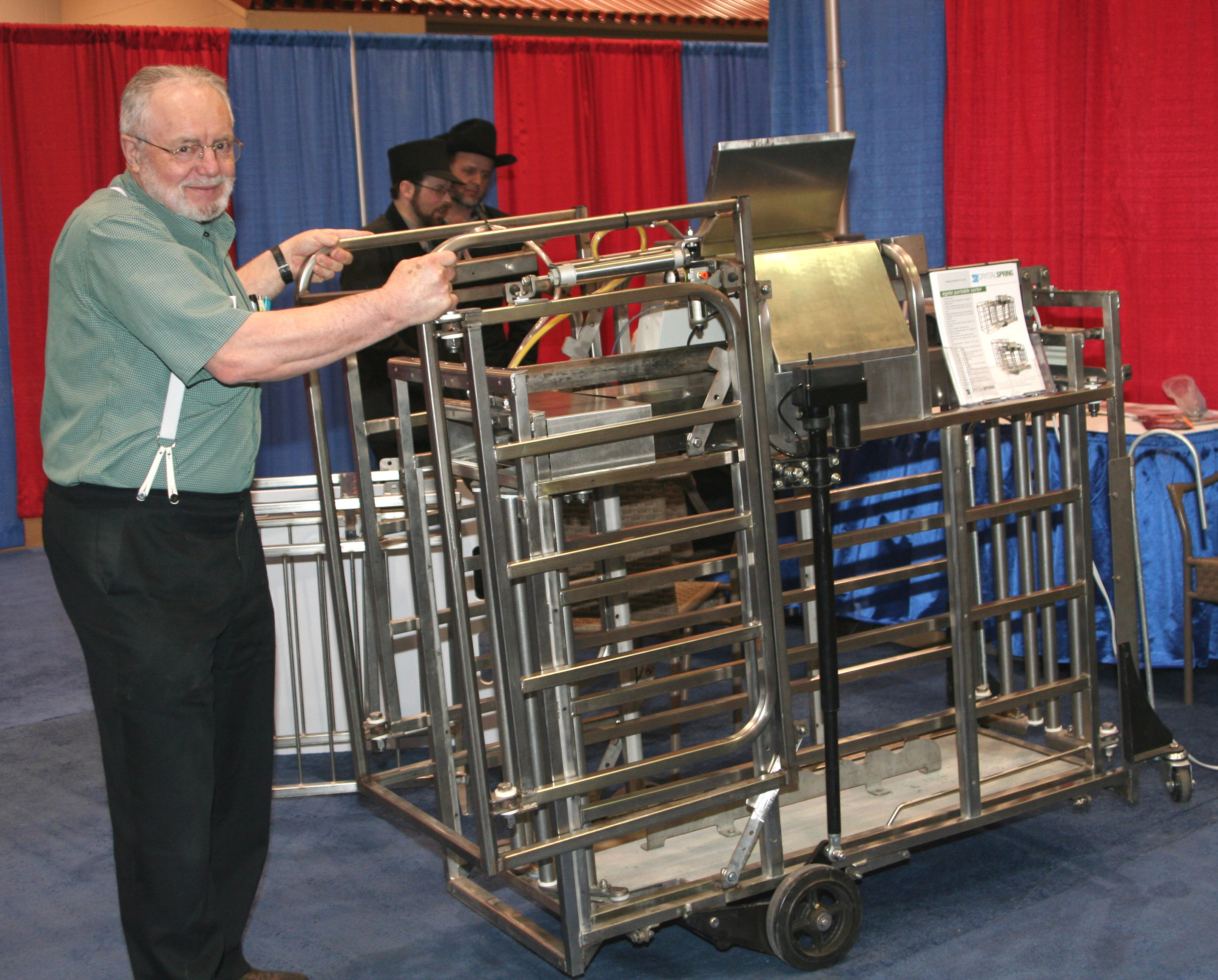 Automatic sorting systems for finishing pigs are becoming more and more common. However, they are only justified economically where group size is 500 or more. In order to gain the same benefits where pigs are housed in smaller groups, Crystal Spring Hog Equipment, based in St. Agathe, Man., have developed the “egate” portable electronic sorter. Constructed in stainless steel, its unique feature is that the rear end of the weighing crate folds up, reducing the length of the scale, which allows it to be moved around in conventional barn layouts with a central alleyway. Jonathan Kleinsasser, Managing Director of Crystal Spring, says that the scale marks pigs automatically if they are ready for market and also marks pigs that will be ready the following week. It displays the average weight of these two groups of pigs and the average weight of all the pigs weighed, so that growth rate can be calculated. The crate has an automatic sorting gate, which allows selection and removal of market weight hogs, while the others can be returned to the pen.
For further information, contact Jonathan Kleinsasser on (204) 433-7178, email info@crystalspringhog.com or visit www.crystalspringhog.com
Photo:
Portable sorter – The egate portable sorter has a fold-up rear section making it easier to move around
New Product Showcase – Intervet introduces Circumvent™ PCV vaccine
Posted in: Production, Welfare by admin on | No Comments
Intervet Canada Ltd. has announced the registration of Circumvent™ PCV vaccine for use in the prevention of PCV2 (Porcine Circovirus, type 2) infection in pigs.
Circumvent™ PCV, a proven efficacious vaccine against circovirus infection (PCVAD – Porcine Circovirus Associated Diseases), is now fully licensed in Canada and the US. This product has been available in limited quantities since spring 2006 through emergency use provisions to assist in the circovirus emerging disease crisis.
“Circumvent™ PCV has saved a lot of bacon”, said Dr. Jorgen Jorgensen, General Manager of Intervet Canada. “Two years ago we received the first supply of this product to be tested in Canada. It wasn’t long before we witnessed significant results. Mortality rates of 40 to 50% were reduced dramatically down to low single digits.”
“Veterinarians and producers are also seeing secondary benefits when vaccinating with Circumvent™ PCV,” said Dr. Jorgensen. “Along with the dramatic decrease in mortality, producers are also experiencing better growth rates, heavier pigs and healthier herds. The use of antibiotics has been reported to have dropped, even in the presence of PRRS and feed gain has improved, demonstrating that the investment of vaccination is returned many times,” said Dr. Jorgensen.
Circumvent™ PCV is registered for use in healthy swine, three weeks of age or older, as an aid in the prevention of viremia and virus shedding caused by Porcine Circovirus, type 2.
For additional product, technical or order information please contact your Intervet Technical Sales Representative, log on to www.intervet.ca or call 1-800-268-4257.
Electronic feeder increases sow lifetime production
Posted in: Environment, Production by admin on | No Comments
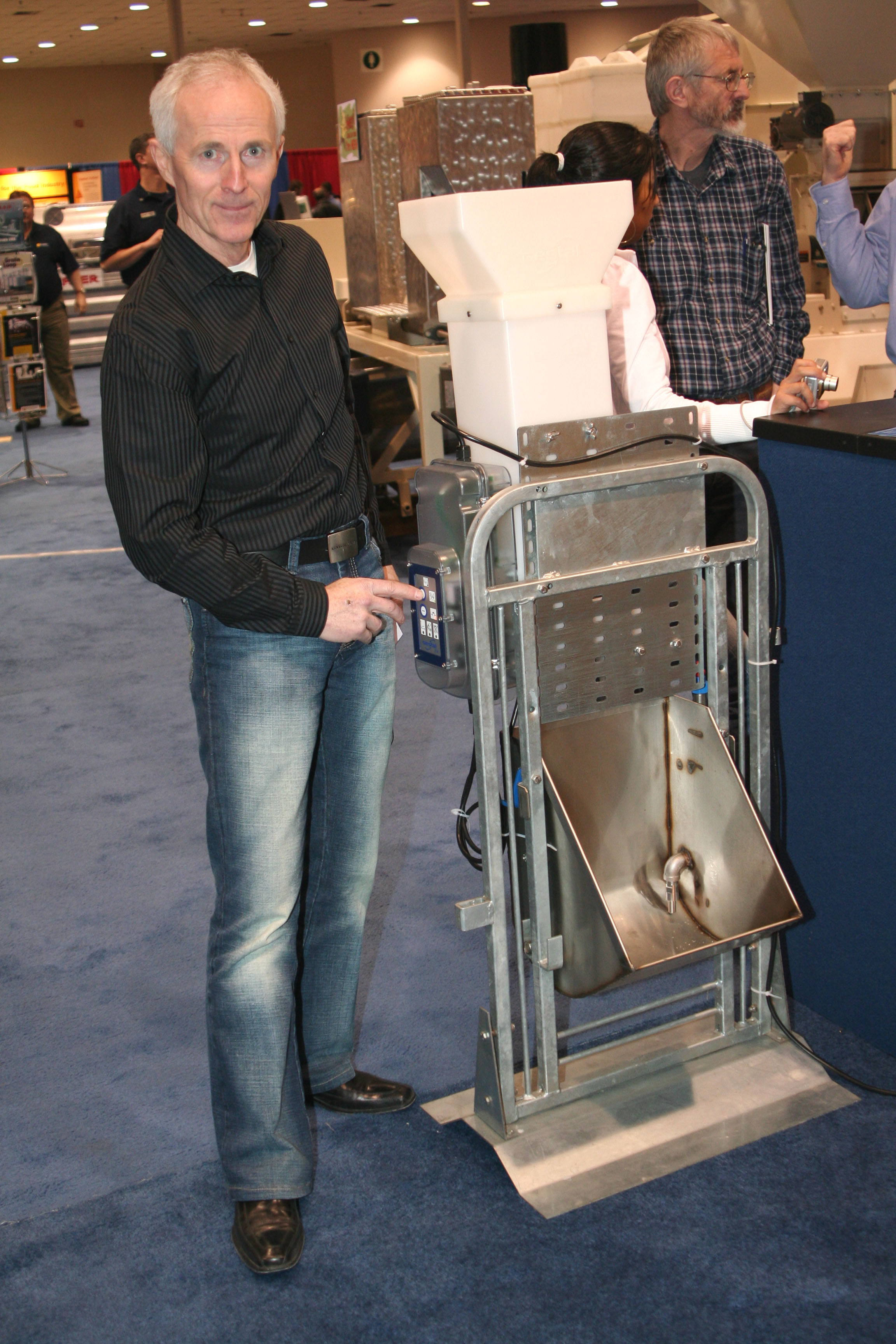 Recently introduced to western Canada, the Gestal electronic lactation feeder from Quebec-based Jyga Concept, allows feed curves and times of feeding to be implemented automatically. The system was developed to maximize lactation feed intake and reduce sow backfat loss over the suckling period, which leads to a shorter interval to breeding and higher subsequent litter size. Experience in Quebec over the last 10 years suggests that sow longevity and piglets weaned per sow lifetime are improved where lactation intake is increased through the use of this feeder. The Gestal system allows different feed curves to be set for gilts and older sows, which helps to avoid both under and over-feeding and maximizes individual feed intake. “Feeding the correct amount in the first 7 days after farrowing is critical in order to maximize intake during the rest of lactation,” says Gestal Sales Representative Blair Gordon. “Following a curve during this period avoids the problems associated with ad-lib feeding during the first week.” The feeding computer tracks feed intake for individual sows and flags up any “problem eaters”, which can be checked by the farm staff. A useful feature is the ability to adjust individual sows intake using a control on the feeder itself after the trough has been inspected, increasing or decreasing the feed curve depending on whether sows have eaten all their feed or not. Feed is dropped into the trough in 2lb doses when sows activate a mechanism that looks like a hockey puck. The operator can set the amount of feed for each period during the day. During hot weather, the system can be programmed to provide more feed during the early morning and late evening periods when it is cooler and sows are more likely to eat.
For further information, contact Blair Gordon on (519) 274-3224, email blairgordon@rogers.com or go to www.jygaconcept.com
Photo caption: Gestal lactation feeder – Blair Gordon, of Jyga Concept, demonstrates the Gestal lactation feeder
Natural pork provides niche market opportunity
Posted in: Economics, Environment, Meat Quality, Production by admin on | No Comments
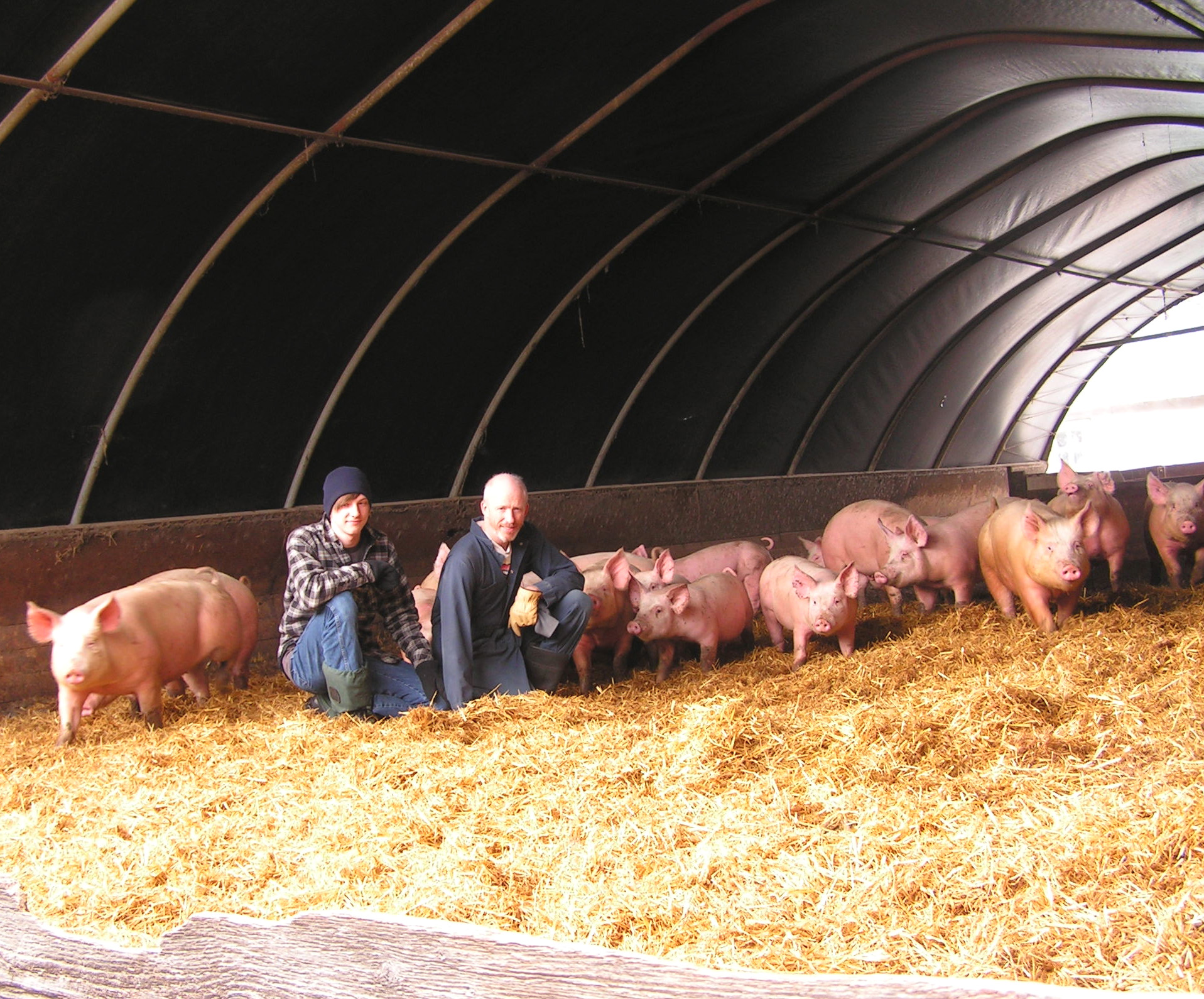 The economic pressures faced by small-scale pig producers have caused many to quit the business, unable to compete with larger, more cost efficient operations. The alternative is to look for a niche market opportunity to add value to the pork in order to remain profitable. Two years ago, George and Shelley Matheson, of Stonewall, Manitoba decided to downsize their 100-sow unit and focus on developing retail sales of “natural” pork. Being only half an hour from Winnipeg, with 600,000 potential customers, they saw an opportunity to capitalize on the increasing interest in how food is produced. “When you sell direct to the public and people come to the farm, they are very interested in how the pigs are reared, the diets we are using, the ages of the pigs and the breeds,” George explains.
Although there is no official definition of “natural”, the Mathesons believe that it means operating a production system where pigs can fulfil their natural behaviour and are fed simple rations made on the farm from homegrown cereals. Sows are kept outside all the year round and have small sheds with deep straw to keep warm in the winter. They go indoors into conventional crates to farrow and, after weaning, the piglets stay inside until they are 50lbs, when they move into biotech barns with deep straw bedding. Although most of the finished hogs are still sold into the commodity market, eight per month go to Interlake Packers at St. Laurent. There they are custom killed, butchered into retail sized cuts, the hams and bacon smoked and everything vacuum packed. “We sell quarter, half or whole hog packs with 33, 66 or 132 pounds of pork and each has nine different cuts,” says George. “Good packing ensures the product will last at least a year.”
With many customers coming to the farm to collect the pork, the Mathesons are keen to show them the animals and explain how they are produced. “People are detached from agriculture these days, so they really enjoy seeing what we are doing and are very interested,” George explains. “They see the pigs outside or on deep straw and they like it.” The Matheson also rear 1000 chickens on pasture each year, during the summer and say they are so popular, they could easily sell 10,000. “People tell us that the taste is very different from mass produced chickens,” says George.
In addition to selling directly from the farm, the Mathesons attend farmers’ markets and produce markets in the area. They recently participated in a seminar on buying food locally, which was attended by 140 people and try to attend as many local food-related events as possible. “Shelley is the marketing guru and has produced a leaflet on our products and is working on a website,” George says. “We want to increase the pork sales and eventually be able to sell all our pigs direct to the public.” He believes that adding value in this way and producing feed from grain produced on the farm can be profitable. “We can definitely improve our marketing and Shelley has a good way of making our products sound attractive.”
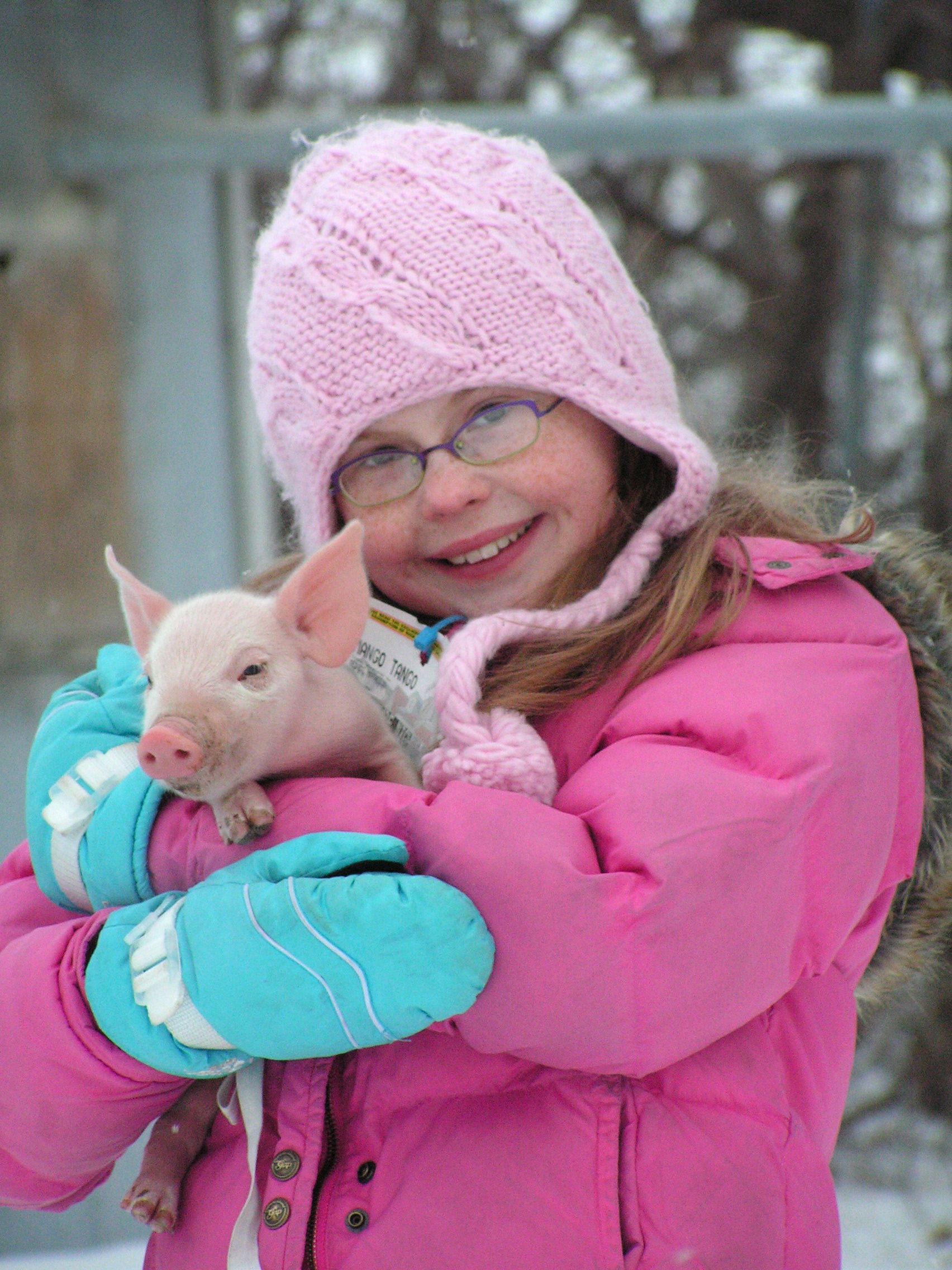 The Matheson’s four children are also involved on the farm on a daily basis. “They all have their chores to do and this gives them an exposure to farming life, says George. “Most kids don’t know that the little pigs grow up so quickly and become pork and bacon!” The children also help out showing visitors the animals and go to the farmers’ markets.
With the mainstream pork industry in such dire straights, selling direct to the public is an attractive option for some small producers, despite the additional work involved. It has an added benefit for the industry at large through helping the public understand livestock rearing methods and letting them talk directly to the people producing their food.
Photo captions:
Hannah Matheson – The Mathesons’ youngest daughter, Hannah, who helps with chores on the farm
Biotech pigs – George Matheson (right) and his son Austin with pigs in one of the biotech shelters
Manitoba Swine Seminar – Hiring the right staff requires thorough planning
Posted in: Economics, Production by admin on | No Comments
Making sure you are hiring the right person requires thorough planning, says Shirley Hoult, Director of Human Resources for the Puratone Corporation, speaking at the Manitoba Swine Seminar 2008 on January 31, in Winnipeg.
The first step, she said, is to review the job you are hiring for and study your options. Are you looking for full time, part time or casual workers? Did the last person leave because of a problem related to your business? If so, how can you fix the problem before hiring someone new?
There are many ways to advertise for new workers, Hoult noted. In addition to the usual means of communication – newspaper ads, websites, job fairs, word of mouth, school presentations and local bulletin boards, Hoult also suggested using cinema ads, flyers in mailboxes, billboard signs, placemat and menu ads, windshield flyers and accessing foreign worker programs. Advertising, she said, should include an introduction to your business, with clear and concise information about the job and the qualifications required, contact information and the deadline for applying.
Once you have the applications in, make sure that the candidate is able to comply with biosecurity requirements and is able to work in a farm environment, for example doesn’t have any allergies or suffer from asthma.
In preparing to interview prospective workers, Hoult urges that you make sure the person(s) conducting the interview is knowledgeable about the job. “Ask each applicant the same questions,” she said. “Provide information about the company culture. Listen rather than talk. Set a minimum score and identify the top two candidates.”
It is important to ascertain that the new employee is comfortable with the pay range for the position and to check all references, Hoult said. She also recommended that the new hire be tested out with a trial day on the farm to see if he is up to the work and fits in with the farm culture. She also advised following up with new employees at 30 day intervals to make sure that all is going well and to be able to correct any problems quickly.
Puratone, she said, provides a disciplined on-the-job training program with a 12-week training manual that covers all sections of its farms. Each employee also has his own development plan. “You should also provide frequent performance feedback for new
employees over the first 90 days and at regular intervals thereafter,” she said. “Pay should be linked to performance and there should be annual evaluations tied to both team and individual results.”
Of course, she noted, it is better to be able to retain existing staff than have to hire someone new. “The key is to create a positive, respectful workplace where workers receive recognition for a job well done and everyone is treated fairly and consistently.”
Manitoba Swine Seminar – Fresh markets still favourite for Chinese consumers
Posted in: Meat Quality by admin on | No Comments
Although packaged meats sold in supermarkets are beginning to catch on in Chinese cities, 85% of pork consumed in China is still purchased in open markets where the hogs have been butchered the same morning. That was one of the findings that Claude Vielfaure, executive vice-president of Hytek Ltd., shared with producers attending Manitoba Swine Seminar 2008 in Winnipeg on January 31.
Vielfaure has visited China several times in recent years to meet with Hytek partners in the region. His most recent visit was as part of a Canadian trade mission attending the World Pork Congress in Nanjing last September. The group also visited some hog farms and a major hog processing operation – the Yurun Food Industry Group – in Nanjing.
He reported that pork and pigs are a central part of Chinese culture. The Chinese pictogram for “family”, he noted, is a picture of a pig under a roof. China, he said, accounts for 50% of world pig production. Total pork production – 53 million tonnes last year – is almost triple what it was 18 years ago. At the same time, imports (400,000 tonnes last year) are almost double what they were 15 years ago.
Chinese per capita pig consumption is 39.6 kg, a third more than in the US and Canada and accounts for three-quarters of Chinese meat consumption. However, Vielfaure reported that pork prices in China are soaring, with the price last August 77% higher than the year before. “The government is making an effort to keep hog and pork prices down,” Vielfaure said, “but chronic low profitability turned into severe losses after corn prices jumped. To save on costs, many producers stopped vaccinating and forgot about biosecurity. The result is that PRRS has become rampant. While the government estimates that 20,000 pigs were lost, private estimates put the figure in the millions.”
Vielfaure reported huge potential for increased sow productivity in China through improved genetics and biosecurity and a decline in backyard producers. There is also enormous potential for increased feed grain production. On the other hand, he noted, lack of infrastructure and availability of water are problems. Also, feed transport costs are substantial because the grain production is mainly in northern China while hog production is principally in the south.
The Chinese government, he reported, recently announced a 7 billion RMB program to address pork price inflation which includes subsidies for breeding sows, money for building new breeding systems, vaccination subsidies and a campaign to encourage a move toward more intensive, large scale production.
For Canadian companies in the hog production industry, Vielfaure identified opportunities in China for genetic suppliers and providers of feed manufacturing infrastructure. The government’s push for better food safety practices will also diminish the importance of open markets and increase the sale of packaged meat
Manitoba Swine Seminar – Animal nutritionist touts benefits of auto sort finishing
Posted in: Economics, Production by admin on | No Comments
With equipment, feed and production costs near record high levels, hog producers have to be pro-active at finding new ways to raise their pigs more efficiently, says Dr. Marvin Wastell. One solution discussed by the Omaha, Nebraska-based animal nutritionist (he is associated with Gro Master, Inc.) is the use of large group auto sorting systems for managing growing/finishing pigs. Wastell was in Winnipeg on January 31 to explain the
benefits of the systems to producers attending Manitoba Swine Seminar 2008. In addition to higher production costs, he noted, consumers are demanding consistent quality and many care that the animal products that they buy come from animals that were raised in a friendly environment.
In December 2005, Wastell reported, swine producers from five different countries met with a group of scientists in Le Mars, Iowa, to discuss and evaluate raising hogs in large pens using Auto Sorters. The producers learned that there is an economic improvement potential of up to $16 US per pig marketed by raising pigs in this way.
He noted that there were rumours at one time that Auto Sorters resulted in some pigs dying. He dispelled that myth by citing results in northwest Illinois where 21,000 Auto Sort spaces have been installed with no fatalities.
He compared the results of using an Auto Sort system versus a small pen on the Blue Marsh Hog Farm near Plum Coulee. Manitoba. The Auto Sort system resulted in slightly higher average daily weight gain, considerably less man hours involved in marketing (2.7 as compared to 32 for the pigs in the small pens) and more than $1 per pig less in labour costs.
A South Dakota producer found he could sell his Auto Sort-raised hog carcasses for $5.44 more than carcasses from hogs raised in small pens. His production costs were $1.31 a head less. Wastell added that Hormel, an American packer in attendance at the Le
Mars meeting, reported that pigs marketed by producers with auto sorters have a $5.70 increased value over producers who don’t use auto sorters.
“A second question that is frequently asked is how many pigs can be sorted by a given sorter.” Wastell noted. “One manufacturer recommends 1000-1400 pigs per sorter, but there are several different systems.” Food court design can also have an effect on pig gains, he said. A Saskatchewan producer was able to increase average daily gain by 160 g/day by changing the design of his food court. Large pen auto sorting is not for everyone though, Wastell noted. “Preplanning is a must,” he said. “The system must be designed for pig flow and people and training for pigs and people is a must. There also
has to be changes in management procedure. “To be successful the AutoSort system requires a commitment from the producer, the employees managing the barns, the distributor and the manufacturer.”
Manitoba Swine Seminar – Segregating sows by parity improves performance
Posted in: Production, Welfare by admin on | No Comments
Segregating gilts and sows into sub-populations based on parity and providing different nutritional regimes can increase the number of pigs born per litter and per sow lifetime, says Dr. Dean Boyd, of the Hanor Company, Franklin, Kentucky. This is because the amount and type of nutrients required by young, immature sows (1-2 litters and older females (>5 litters) is very different, he told delegates at the Manitoba Swine Seminar. Furthermore, such an approach compliments health and reproductive considerations, he says.
The fist litter female is especially vulnerable to body protein loss during lactation, explains Boyd. “The foremost consideration is to formulate and feed to conserve body protein loss, since there is a direct effect of this on wean to estrus (WEI) interval and second litter size,” he says. “For example, a 4kg body protein loss during first lactation is sufficient to reduce second litter size by 0.75 pigs, whereas, in contrast, limiting protein loss to less than 2 kg can result in a second litter size 1.0 higher than the first.” WEI increases in proportion to body protein loss and it is not uncommon for it to be extended by up to 10 days for gilts that have raised a large litter, milked well and suffered too much protein loss. “Unfortunately, this is sometimes interpreted as ‘reproductive failure’ and may result in early culling from the herd,” notes Boyd.
Total pigs born and born alive increase until the third litter, are then constant until about litter 5 or 6 and, thereafter, a progressive decline is observed. Boyd says this parity-related decline seems premature from a reproductive perspective. “The lost opportunity is probably in the order of 1.8 to 3.3 pigs per sow lifetime, depending on whether productive life is 8 or 10 litters,” he believes. “We hypothesize that this is due in part to the progressive decline in micro-nutrient profile as the sow ages.”
Micro-nutrient deficiency in older sows
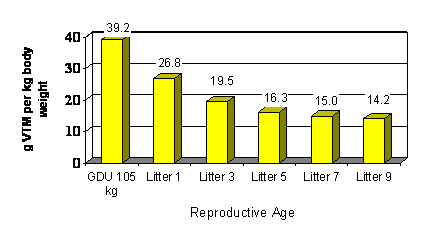
Micro-nutrients consist of Vitamins and Trace Minerals (VTM) and represent 0.12-0.15% of the diet but about 50% of the nutrients. In theory, micro-nutrients are formulated in diets at levels that prevent deficiency and include a margin of safety. However, says Boyd, there is a steady decline in the “safety margin” with increasing reproductive age. The reduction in body mineral levels that has been observed is most likely because pregnancy feed intake is held about constant (once body condition has been restored) across all parities, in order to limit growth. However, body weight progressively increases with reproductive age, Boyd points out. “This ‘constant’ feed policy is appropriate for protein and energy needs, however, it probably does not work for VTM because the amount that is required to support normal tissue metabolism increases with the increase in tissue mass,” he says. This results in a marked decline in the grams of VTM/kg body weight with increasing parity (Figure 1). “The problem is that this occurs with each pregnancy and, to a lesser extent, in lactation,” Boyd explains. “Thus, the older, heavier sow is placed at increasing nutritional risk, reproductively and immunologically.”
Figure 1: Example calculation of declining Vitamin – Trace mineral intake
with advancing reproductive age, g VTM / kg body weight
(Calculated by Boyd and Hedges, 2004, using PIC USA 2002 ADFI x
sow weight by parity, assuming 0.149% dietary VTM )
The hypothesis that an age-related decline in litter size might be nutrition related was tested in the mature sow (parities 3-10) sections of two Hanor farms. In each farm, parity segregation is practiced by designating one section for sows of parity 3 or more. In the trial, control sows received 0.15% VTM as usual, whereas the test diets for older sows were designed to provide the same VTM per kg bodyweight for a P-7 female as would be provided to a P-3 sow. The annual cost of this increase was approximately $1.69 per sow, compared to the control diets. Evaluation of herd data showed that the diets equalized for VTM did, in fact, improve performance. “Litter size weaned was improved for sows in parities 4 to 10 by an average of 0.6 pigs per litter of 1.44 pigs/sow/year,” notes Boyd. “However, sow viability was not significantly improved during the term of this study”.
The concept of organizing the sow farm in order to nutritionally manage younger and older females differently, was originally demonstrated in the Hanor system by dividing the herd into three sub-populations, however, this has now been reduced to two. This nutrition-specific approach has been shown to lead to increased lifetime pig output and reduced risk to sow viability with no increase in feed cost per weaned pig. “For young females, the expected outcome is to improve lifetime pig output by producing a large first litter and then to manage her in a way that does not compromise second litter size,” say Boyd. “Once P-1 females are successfully re-bred and managed to 30 days of gestation, then the need for specialized ‘young sow’ nutrition probably ends.” However, he notes, there may be health-based reasons for also keeping younger sows in this sub-population.
Manitoba Swine Seminar – British researcher suggests high fibre feeds for sows
Posted in: Environment, Production, Welfare by admin on | No Comments
With the cost of feed ingredients continuing to increase, hog producers may want to consider some non-conventional and less costly sources of animal nutrition, suggests Professor Peter Brooks of the University of Plymouth. Sources include silage materials (grass, maize, corn cobs), food industry by-products (from the production of bio-ethanol,
for example) and root crops (fodder beets and potatoes).
Peter Brooks, head of the School of Biological Sciences at the British university and a professor of animal production, was in Winnipeg on January 30, to speak to Manitoba hog producers attending Manitoba Swine Seminar 2008 about the importance of fibre in sow diets. He noted that researchers over the past 20-25 years have come to recognize that recommended feed intake levels for gestating sows are considerably less than the amount of feed they actually require.
“The stereotypical behaviour often observed in confined gilts was generally put down to boredom and frustration,” he noted. “But a study in 1987 (by Appleby and Lawrence) demonstrated that an increase in a sow’s feed intake from 1.25 to 4 kg a day almost completely eliminated the behaviour.” He added that incorporating fibre in diets to increase bulk, without changing the dietary energy supply, resulted in at least a doubling of eating time, a 20% reduction in feeding rate and a decrease in restlessness and aggression. “It would appear that foraging behaviour is an intrinsic drive in pigs and that bulkier diets that take longer to consume help to satisfy this need,” he said.
Brooks reported that other studies show that providing sows with straw bedding also reduces the stereotypical behaviour. Although the use of straw is widespread in the UK, he noted, elsewhere in Europe producers use slatted floors, which are geared for liquid manure systems rather than solid manure. In Northern Ireland, Brooks reported, producers have tried putting straw in racks for the sows to eat. That hasn’t been that successful because too many of the sows spend time exploring the racks instead of
eating the straw.
Offering grass rather than straw in the racks seems to be more appealing to the sows. Brooks cited studies that show that sows will consume an average 2kg of grass silage a day and that the grass is easily digestible. He reported that some commercial units have successfully tried grass and maize silage and corn cob mix in conjunction with electronic sow feeders.
Other potential fibre sources for sows that Brooks identified were wheat and rice bran, malt culms, oat husks, soya bran hulls, sugar beet pulp and citrus pulp. There have been some experiments in Europe with chicory pulp, too. Studies indicate that feeding sows sugar beet pulp and citrus pulp produce the best results.
Brooks added that in Europe as many as 30% of sows are being fed liquid diets which makes the animals more restful. That is because the solid fraction of the diet becomes hydrated more quickly, altering the viscosity and rate of gut transit of the diet. High fibre diets, in particular those that include sugar beet pulp, reduced water consumption by sows with an accompanying reduction in urinary output.
In concluding, Brooks observed that higher prices for traditional feed ingredients combined with a greater understanding of the nutritional needs of sows and the growing public demand for more humane housing solutions means that producers have to rethink how they house, feed and manage sows.
Manitoba Swine Seminar – PRRS continues to be major health challenge, says Minnesota vet.
Posted in: Production, Uncategorized, Welfare by admin on | No Comments
Despite good success in controlling and reducing PRRS in North America, the virus continues to be a leading cause of illness among sows, says Dr. Tim Loula. “PRRS has been the major health challenge in the industry since the 1980s,” said Loula, a veterinarian working out in the Swine Vet Center in St. Peter, Minnesota.
Loula was in Winnipeg on January 30 to address producers attending Manitoba Swine Seminar 2008. This past winter, he reported, a large percentage of the American
Midwest was infected with PRRS and there was an outbreak in China in January. He noted that outbreaks are worse in winter. Among the effects of the disease, Loula listed lower litter size, lower farrowing rate, lower average daily gain, increased feed conversion, increased cost of medications and vaccinations, increased variation, decreased number of full value market hogs and higher mortality rates.
Loula described the creation of a North American PRRS Eradication Task Force that was initiated at the AASV board of directors meeting in Kansas City in 2006. The Task Force’s goal is the complete eradication of PRRS. Members, Loula said, have been starting local task forces in their regions bringing together producers, production systems, vets, industry partners and researchers to eliminate the disease region by region. He reported that such task forces have already been established in Ontario, North Carolina and Minnesota. Three counties in Minnesota have eradicated PRRS in their area.
“The first step is to map out where the pigs and the viruses are so that we can track where they are going,” Loula said. He discussed some current methods of eliminating the disease in specific herds. One way is to depopulate and then repopulate the site. By moving the entire herd out of the barn, the producer is able to clean and disinfect the entire site. The herd is brought back in after everything has dried and the process takes about a week. Follow-up studies, Loula reported, show that 49% of farms are still clear after 120 weeks and 39% after 150 weeks.
Herd closure is another method of controlling or eliminating PRRS by stopping the introduction of replacement animals to the sow herd for an extended period of time. Those farms that have kept out replacement sows for more than 200 days have generally been successful. This method allows the herd to develop a strong immunity to the virus. New sows can be brought in 30 days after the last clinical signs of the disease.
Producers can also try a direct virus exposure using serum. Of more than 150,000 sows thus treated, Loula said, there were only two bad experiences. A test and removal approach, Loula noted, is not in common use and works best alongside a second type of stabilization program.
Loula spoke of biosecurity measures intended to keep PRRS at bay in the first place. He suggested filters to keep insects out of the barns and having visitors remove their shoes.
He also noted that vaccines are also available for some strains. “Hog producers need to become knowledgeable about epidemiology, sanitation and biosecurity,” Loula said. “That will benefit you long after the herd is free of the disease.”