

SEARCH
Industry Partners




Prairie Swine Centre is an affiliate of the University of Saskatchewan

Prairie Swine Centre is grateful for the assistance of the George Morris Centre in developing the economics portion of Pork Insight.
Financial support for the Enterprise Model Project and Pork Insight has been provided by:







Remodelling expands Big Sky sow base
Posted in: Environment, Production, Uncategorized, Welfare by admin on July 14, 2011 | No Comments
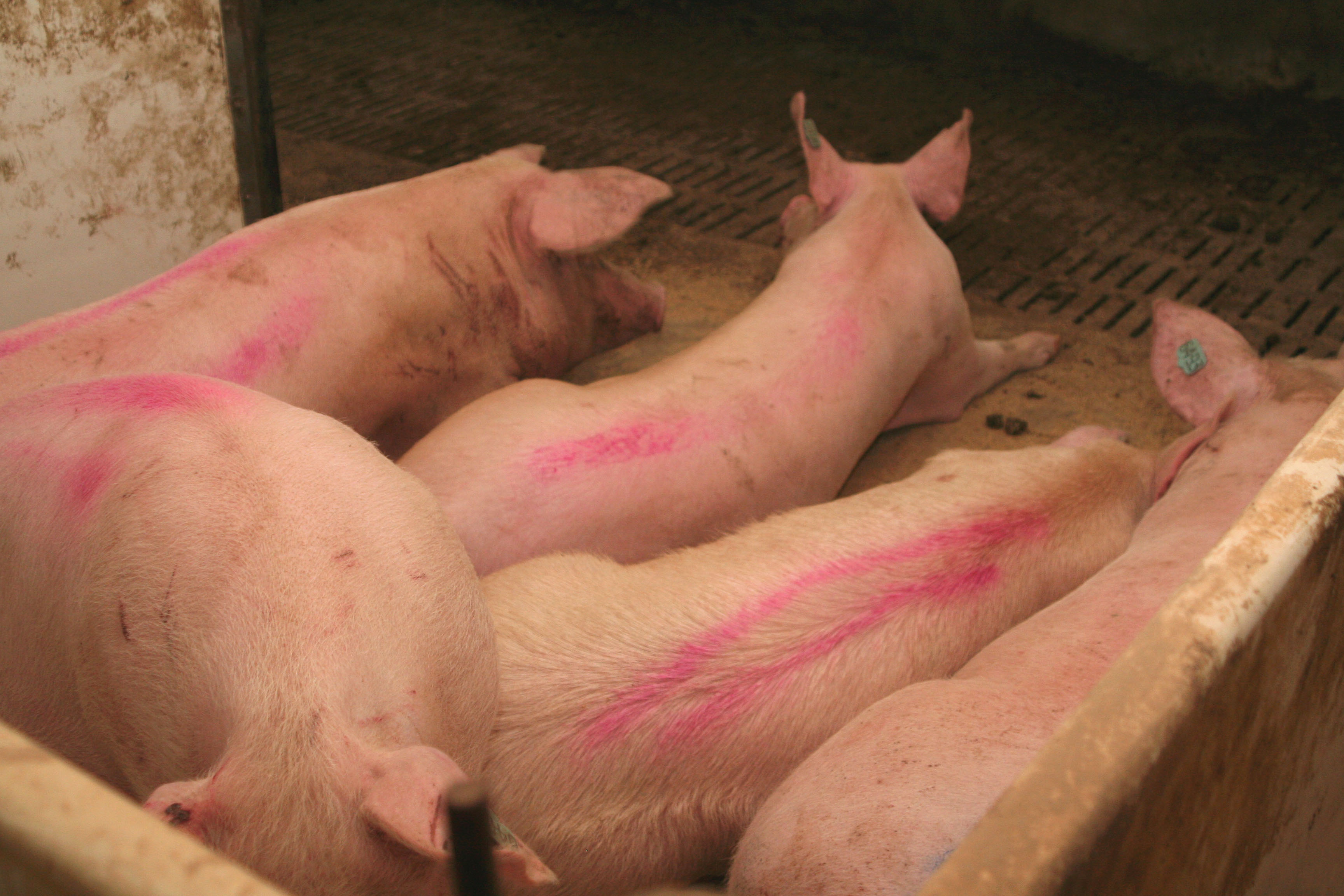 Complete remodelling of 600-sow farrow to finish barns into 1800-sow units producing isowean pigs is the route to expanding the sow base at Humboldt, Sask. based Big Sky Farms, which currently has 49,000 sows. And, says production manager Richard Johnson, it will cut overhead costs per sow leading to a lower cost per piglet produced. The company purchased the assets of Community Pork Ventures (CPV) in 2005, a production system that had been based on 600-sow farrow to finish barns, with four units in the 12,000 sow operation holding 1200 sows. However, the Big Sky production model was based on three-site production, with large-scale breeding units, off-site nurseries and contract finishing barns. “As we got to know and work with the CPV system, we thought there was an opportunity to expand and/or retrofit the systems, which in turn would give us a greater return on capital invested,” explains Johnson. “Not only can we spread our central overhead and management costs over more sows but the specialization in just breeding and farrowing leads to better results.”
The first unit to undergo the transformation was the company’s Kelsey barn, located near Melfort, Sask. Additional sow pens were made by modifying the existing part slatted finishing rooms, which had pens of 23 pigs. Three pens were made into one, although the pen divisions between the lying areas were left in place. Each pen now holds 30 sows, which are fed on the floor using volumetric drop dispensers. One of the finisher rooms was left with 12 small pens in order to house sick, lame or thin sows, something Johnson knew was essential in a floor-fed system from his previous experience with group housing in the UK. In addition, two of the grower rooms were also converted to sows pens, giving a total capacity for 1120 sows from 30 days into gestation up to removal for farrowing. The remaining 6 grower rooms were used to construct a further 240 farrowing pens, while the original nursery rooms hold piglets ready for shipping. From weaning until 30 days, sows are housed in stalls in the existing breeding and gestation areas.
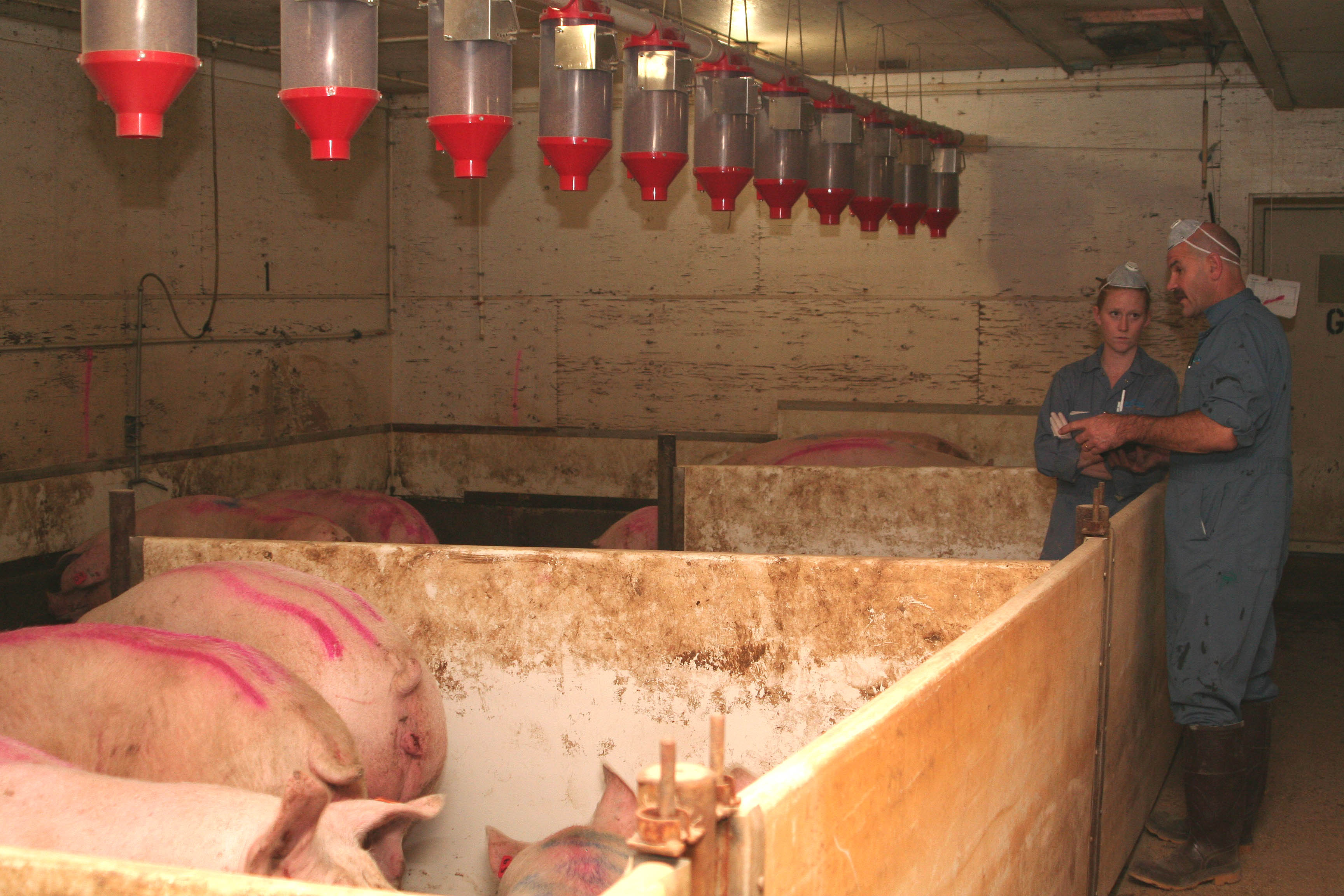 Experience with the group sow pens has been generally positive, but not without its teething problems, says unit manager Susan Armstrong. “Our biggest problem has been variation in the weight of feed dispensed, which has ranged from 7-12 lb per drop, making it difficult to feed accurately.” Gilts are penned separately and sows are grouped by body condition in order to feed more accurately, something that’s necessary when floor feeding. However, that makes it more difficult to remove sows for farrowing, says Armstrong. “We can’t remove all the sows at one time as we would if they were grouped strictly by breeding date,” she explains. Also, sow behaviour is rather aggressive with floor feeding, although no vulva biting has been noted so far. Scanning sows in the group has proved more difficult than when sows are in stalls. “We carry out the first scan when sows are in stalls in the implantation area, but we also like to do a second confirmation of pregnancy at 65 days,” Armstrong says.
Farrowing the target of 85 sows per week started at the beginning of December and the goal is to wean 900 pigs per week at an age of 20-21 days. These are shipped to the USA with another 900 pigs from another barn to make up a full load of 1800. Big Sky has a contract in place for these pigs to be raised in wean-to-finish barns in Iowa, managed by South Central Management Services, but they retain ownership. Finished pigs will be marketed in the US Mid-West but, initially at least, not tied to a specific packer.
While the decision at the time was to finish pigs in the USA, they could just as easily be reared in low-cost contract finishing barns in Saskatchewan, says Richard Johnson. “It’s currently a lot more attractive to finish in the US, but that could change.” The main motivation for the unit remodelling was to improve return on capital, he stresses. “We will make more money doing this than operating a farrow to finish operation. We modelled a range of different scenarios for these barns with a range of feed prices and in every case the farrow to isowean option was the most profitable.”
Big Sky plans to convert more of the ex-CPV units, drawing on the experience of this first one, especially how the group housing works. “It may prove best to remove the partial pen divisions in the group pens, to allow for sows to move around freely while feeding.” Johnson feels. “Also, we may need to fine-tune space allowances and how we group sows according to age and condition.” So far, though, performance has been up to expectations, with the mainly gilt herd farrowing 11.9 born alive per litter.
In time, converting all the ten 600-sow barns would allow an increase in the company’s sow base of 12,000, but Johnson says that’s a long-term goal. “We do want to expand in order to reduce cost,” he says. “Also, having a lot of sows in group housing will give us additional marketing opportunities and could allow us to develop added value pork products.”
Photo captions:
- New_Sow_pens-1.jpg: Richard Johnson discusses the group sow pens with unit manager Susan Armstrong
2. Sows in group pens-1.jpg: Sows lie quietly in the converted finishing pens
Pigs Down Under
Posted in: Economics, Environment, Production, Uncategorized, Welfare by admin on | No Comments
High feed prices and low hog prices have led to a huge increase in sow slaughterings in Australia and there is a low level of confidence among producers, says production consultant John Riley. Meanwhile, imports of pork products soar, including those from Canada, putting even more pressure on producers.
The winter edition of the Western Hog Farmer summarizes the Canadian industry’s response to high feed costs, the weakness of the US dollar and unsatisfactory market returns.
The dismal picture in Canada is mirrored in the Australian industry. In the last month, one of the largest production units in Queensland that is owned by a Japanese company has been put on the market. If this 7,000 sow, farrow to finish business closes, there will be serious repercussions for the local feed mill and the two abattoirs in the state.
Another company to call it a day is the breeding company Hyfarm-JSR. They have sold their 600-sow high health nucleus unit to a Dutch family who recently settled in the state. In addition, the Hyfarm-JSR multiplication unit is now on the market with limited expressions of interest by prospective purchasers.
Ironically, the Dutch family were encouraged to settle in Australia by a state government in 2002 which promoted the financial benefits of investing in the pig industry in Queensland.
 The Productivity Commission report that handed down its findings in December, determined that the unprofitability of the Australian industry was not due to imports from the USA, Denmark and Canada, but was due to high feed costs.
In parts of New South Wales and Queensland, harvesting of the sorghum crop is well advanced with record yields being recorded. Sorghum is a summer grain crop used in animal feeds. Normally the price is around $AU160 per tonne but this year the price is holding firm at around $AU$260 per tonne due to the high demand worldwide for wheat and barley. The usual seasonal reduction in average feed costs has not materialized so far in 2008.
During the last quarter of 2007, sow slaughtering was 49.5% higher than in the last quarter of 2006. The level of imports of processed pig meat during the 12 months ending December 2007 was 29% higher than in 2006 with imports from Canada totalling 43,415 tonnes shipped weight, an increase of 24.8% on the previous year. In the same period imports from the United States increased by 52%.
The lack of confidence in the industry has resulted in very little investment in housing systems that comply with the new welfare codes. The codes dictate that within ten years, housing of sows in stalls for more than four weeks during gestation will not be allowed.
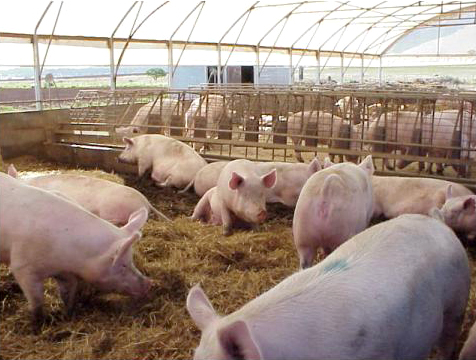
A few producers in the east that have moved to group housing in gestation have adapted grower pens and introduced feeding of small groups.
In some instances in Western Australia sows have been housed in larger groups on deep litter in shelters and fed through traditional feeding stalls on a concrete pad in or adjacent to the shelter. The feeding stalls service more than one group of pigs on a rotation system. The main disadvantage of the system is the high labour required in moving sows.
There is only limited interest in electronic feeding systems. In the past Australia’s isolation in regard to after sales services has led to frustration and a few systems that were installed in the early 1990’s were subsequently removed. However, interest has been rekindled in recent months and two large-scale producers have installed Mannebeck systems in naturally ventilated slatted floor sheds.
In addition to high feed costs and poor market returns, producers in Queensland were shocked to read in March of their state government’s proposal to increase the cost of meeting the environmental legislation. The proposal, if implemented, will see a producer with 100 sows producing bacon pigs paying $52 per sow per year to government and a producer with 600 sows with progeny to bacon will pay about $9,800 per annum. The State government has decided on a policy of full cost recovery from potential polluters of the environment for the implementation and the policing of the legislation. Interestingly a local mining company selling gold worth $108 million will pay just $20,000 if the legislation is passed.
A further major change will dictate that multi-site operations will pay the fee on every site because multi site discounts will be withdrawn. Pig producers in Queensland are far from happy and more could well exit the industry in the next six months.
Photo caption:
Group sows-1 – Producers in Australia are moving towards group sow housing
News and Views – Shock at Manitoba regional moratoriums
Posted in: Economics by admin on | No Comments
The announcement March 3rd by Manitoba Conservation that it was implementing indefinite moratoriums on the construction of new or expanded hog operations in three regions of the province led to reactions of shock and outrage from industry representatives. Conservation Minister Stan Struthers said that the restrictions applied to southeastern Manitoba, the Red River Valley and the Interlake, while the moratorium for the rest of the province was lifted. However, the report of the Clean Environment Committee also made 48 recommendations aimed at making the hog industry more environmentally sustainable. These include a requirement for new manure storage facilities to have synthetic covers and a complete ban on winter manure spreading from 2013.
Manitoba Pork Council chairman Karl Kynoch says imposing a permanent moratorium will hurt the value of existing farms in the affected area, especially small family farms, and may end any opportunity to attract a new processing plant to the province. “We were expecting, after the public consultations, that there weren’t too many huge issues and that it would be a fairly neutral report,” he explains. “We have some concerns with the CEC report but what just blew us out of the water was the fact that the government went outside of the report and implemented a permanent moratorium on the eastern side of the province.”
Kynoch believes that the moratorium will affect at least two thirds of the production because most of the production is in those regions. He says that his big concern is the potential devaluation of buildings and the effect on the viability of family farms that are unable to expand or develop their facilities. “There’s going to be a lot of hard decisions made, especially on some of the small family farms whether to continue on or whether to shut the operation down.”
Kynoch says that singling out the hog industry, which accounts for only about 1.5 percent of the phosphorus runoff ending up in Lake Winnipeg, is the wrong way to go, especially when farmers will still be allowed to use chemical fertilizer. He also notes that swine manure contains a wider range of nutrients needed by crops and the moratorium will limit access to that source of crop nutrients at a time when farmers are looking for every opportunity to reduce input costs.
In response to the government’s decision, Manitoba Pork Council, Keystone Agricultural Producers and the Manitoba Chambers of Commerce announced they had formed an alliance that will work to have the decision overturned. A working group will be formed to examine the CEC report and its recommendations and identify the best way to implement those recommendations, engage in lobby efforts to convince the government to reverse the decision and conduct public education to build awareness of the issue.
Karl Kynoch says targeting one industry is unjustified. “What’s really concerning is the fact that the government spent $750,000 doing a Clean Environment Commission review of our industry and has now gone outside of those recommendations. The CEC did not recommend putting a moratorium on the hog industry and we feel that the government has announced this moratorium, at the same time the report has come out, just trying to blame it on the commission. It’s very disappointing for us to see them do that kind of an investigation on our industry and then go outside the recommendations and put this moratorium on.”
Keystone Agricultural Producers president Ian Wishart observes that only the hog industry is being targeted which makes you wonder about the science behind all of this. “You can generally explain that approach to farmers and get good cooperation but, if it isn’t based on science, it’s pretty hard to get farmers to act,” he says.
Manitoba Chambers of Commerce policy and communications director Dan Overall agrees the government has not dealt with the hog industry in an evenhanded manner. “It’s bad not only for that specific industry but for our reputation as a province. Government needs to deal with industry in an even-handed manner and it needs to know that it can’t get away with not doing that,” he says.
News and Views – Saskatchewan slaughter plant remains on track
Posted in: Meat Quality, Production by admin on | No Comments
The Chair of the Saskatchewan Slaughter Plant Initiative says that efforts to bring a new primary pork processing plant to Saskatchewan remain on target for a projected September 2009 opening.
Partners in the project include Saskatchewan First Nations, the Saskatchewan Pork Development Board and Big Sky Farms. The proposed new plant will be located in Saskatoon’s north industrial area and have an initial capacity of one million head per year, expandable to two million head on a double shift.
Initiative Chair Jim Ramsay says an extensive evaluation shows the plan is economically feasible and that it is a sound business concept. “We took an extra month to make sure that we had full consideration of the pressures that are in the industry and we reworked the numbers a couple of times over just to make sure we had a good conservative view of what was happening to see if this was based on sound business principles,” he explains. “Our plan was to get things going into the summer, possibly into the fall with opening in September of 2009 and we have not had to adjust those dates as of yet.”
Ramsay says the business development process focused on marketing and there is interest being expressed by potential marketing partners. He notes discussions aimed at securing the 100 million dollars needed to finance the first stage of development are underway and remain on track.
News and Views – Safeway makes welfare moves
Posted in: Meat Quality, Welfare by admin on | No Comments
North America’s third largest grocery retailer, Safeway, has taken steps to improve animal welfare in its food purchasing decisions of pork and poultry. It will increase the amount of pork sourced from production systems that do not use gestation stalls by 5% per year over the next three years to a total of 15% in 2010.
The company also said it will favour the purchase of eggs from cage-free systems, stating that it will more than double the percentage of cage-free eggs it offers to over 6% of its total egg sales within two years.
The Humane Society of the United States (HSUS) applauded Safeway’s announcement. It has been in dialogue with the retailer since last November about improving its farm animal welfare standards.
News and Views – Expedited LMO process will speed up foreign worker recruitment
Posted in: Economics, Environment by admin on | No Comments
Alberta Pork, in conjunction with Alberta Agriculture and Food and Service Canada, has established an Expedited LMO Program that will drastically speed up the process of obtaining a Labour Market Opinion. Obtaining an LMO document is the first stage in the process of employing a worker from overseas.
The Alberta Pork website is currently being updated in order to provide producers with all the information they need to understand the processes involved in recruiting and employing a foreign worker, including how to complete the LMO application form.
The process involves Alberta Pork receiving completed LMO applications from producers and checking them to ensure they are correct prior to forwarding them to Service Canada. In this way, it will provide a means of “quality control” so that all applications are of the required standard, allowing them to be processed quickly. Producers are, of course, free to make an application directly to Service Canada, who will deal with it in the normal manner, points out Alberta Pork.
In order to assist producers further, a database of foreign workers who have been interviewed in their country is being established in order to provide a pool of suitable candidates, initially from the Philippines, Mexico and Europe. Producers will be offered a shortlist of candidates depending on the job position and the skills and experience required.
Bernie Peet, of Pork Chain Consulting Ltd., has been contracted to assist with this project and will be carrying out the day-to-day work on behalf of Alberta Pork. Alberta Agriculture and Food has provided funding for the project. For further information, please contact Stuart McKie of Alberta Pork – Phone: (780) 491-3527 Cell: (780) 307-5853, or Bernie Peet, Pork Chain Consulting Ltd. – Phone: (403) 782-3776 Cell: (403) 392-3104
News and Views – End of KVD to benefit livestock producers
Posted in: Environment, Production by admin on | No Comments
Minister of Agriculture Gerry Ritz announced on February 11th the full removal of kernel visual distinguishability (KVD) as a variety registration screening criterion for all classes of Western Canadian wheat as of August 1, 2008. “Canadian farmers need access to the best crop science and varieties to be successful and the Government of Canada is working to give producers every advantage,” said Minister Ritz. “Moving beyond KVD will allow Canadian farmers to harness the potential of new crop varieties tailored to livestock nutrition and biofuel production.”
The Canadian Grain Commission (CGC) announced in June 2006 that KVD would end for the minor classes of wheat by August 1, 2008. The recent announcement extends the
removal of KVD in 2008 to all classes of Western Canadian wheat, including Canada
Western Red Spring and Canada Western Amber Durum.
Removing the KVD requirements for wheat registration and segregation will allow for the development and registration of new high-yielding varieties of wheat suitable for other uses such as feed and biofuels, without requiring that they look different than milling wheats.
News and Views – Dr. John Patience honoured in Alberta
Posted in: Prairie Swine Centre by admin on | No Comments
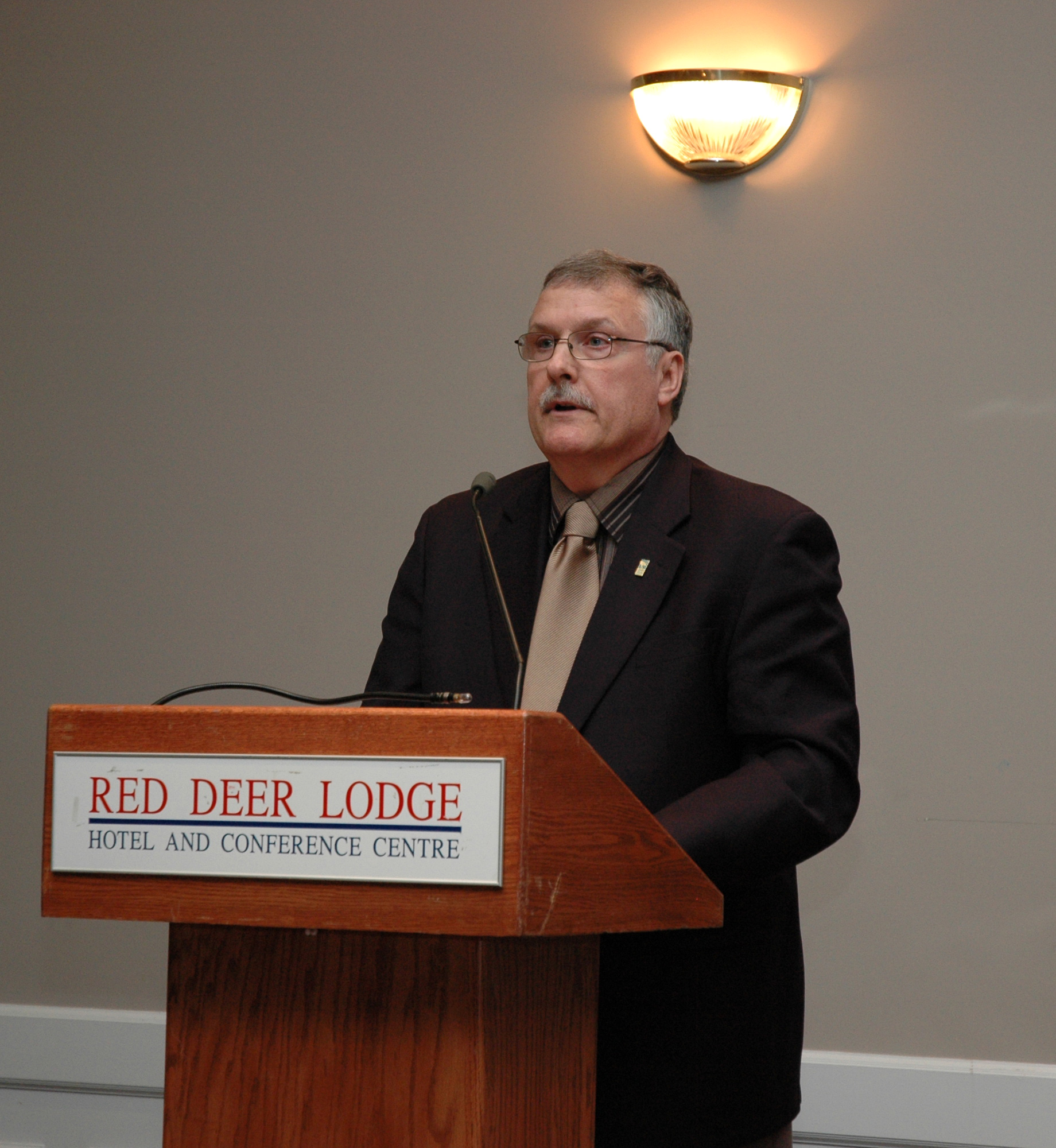 For the second time in six months, President and CEO of the Prairie Swine Centre, Dr. John Patience, received a Lifetime Achievement Award; this time at the Alberta Pork Congress held March 12-13. The Saskatchewan Pork Development Board presented Patience with a similar award last November. He is leaving his position in June, after 20 years at the centre.
Dr. Patience is a graduate of the University of Guelph, where he received a B.Sc. (Agr) in 1974 and a M.Sc. in animal nutrition in 1976. After leaving the University, he began his career in Saskatchewan as a provincial swine specialist. Three years later he moved to Saskatoon where he worked for Federated Co-op as the company’s swine nutritionist and then head nutritionist. He held that position for four years before deciding to return to school. He received a Ph.D. in nutritional biochemistry from Cornell University in 1985.
Dr Patience was instrumental in gaining international recognition for the Prairie Swine Centre for its practical research and communication of information to the industry. Under his leadership the centre has grown and now has a staff of over 50. He is a well-known speaker and has addressed conferences in many parts of the world.
Also presented at the Pork Congress banquet was the Elanco Pork Industry Leadership Award, which went to Jurgen Preugschas of Mayerthorpe, Alberta, a former chairman of Alberta Pork and currently First Vice-President of the Canadian Pork Council.
Photo: John Patience
News and Views – Consumer study reveals meat purchase preferences
Posted in: Meat Quality by admin on | No Comments
Early results from an ongoing consumer data project are yielding significant information on consumers’ meat purchase habits. Data on chicken, lamb, pork and veal shows that while price and value for money are important factors in driving consumer meat purchases, neither is the most influential. For all meat choices, the biggest driver is whether or not the entire family will enjoy eating the product.
Colin Siren of Ipsos-Reid, who collected the data using their consumer online I-Say Panel, notes that “one of the most intriguing findings, something that is common among chicken, pork, veal and lamb consumers, is the degree to which meat and specific cut preference is influenced by the type of dining occasion. This information is critically important for meat producers to understand, as it illustrates how their products are
positioned in the minds of their consumers.”
In addition to identifying other leading purchase drivers, such as taste, nutrition, product information, and reduced preparation time, the research shows that buyers value quality and are willing to pay for it. In fact, of all the meats, veal is purchased least on promotion. As well, organic or antibiotic-free meats, particularly chicken and pork, appear to have tremendous market opportunities.
According to Martin Gooch, coordinator of the project for the George Morris Centre, “with knowledge comes the ability to innovate successfully. The results of this study will allow members of the agriculture and agri-food sector to identify potential market opportunities and add value to their products.”
The three-year consumer data initiative is a joint effort from the Canadian Pork Council, Chicken Farmers of Canada, Canadian Sheep Federation, Ontario Veal Association and the George Morris Centre. The project is funded, in part, by Agriculture and Agri-Food Canada through their Advancing Canadian Agriculture and Agri-Food (ACAAF) program.
“Think Plastics” for barn applications
Posted in: Environment by admin on | No Comments
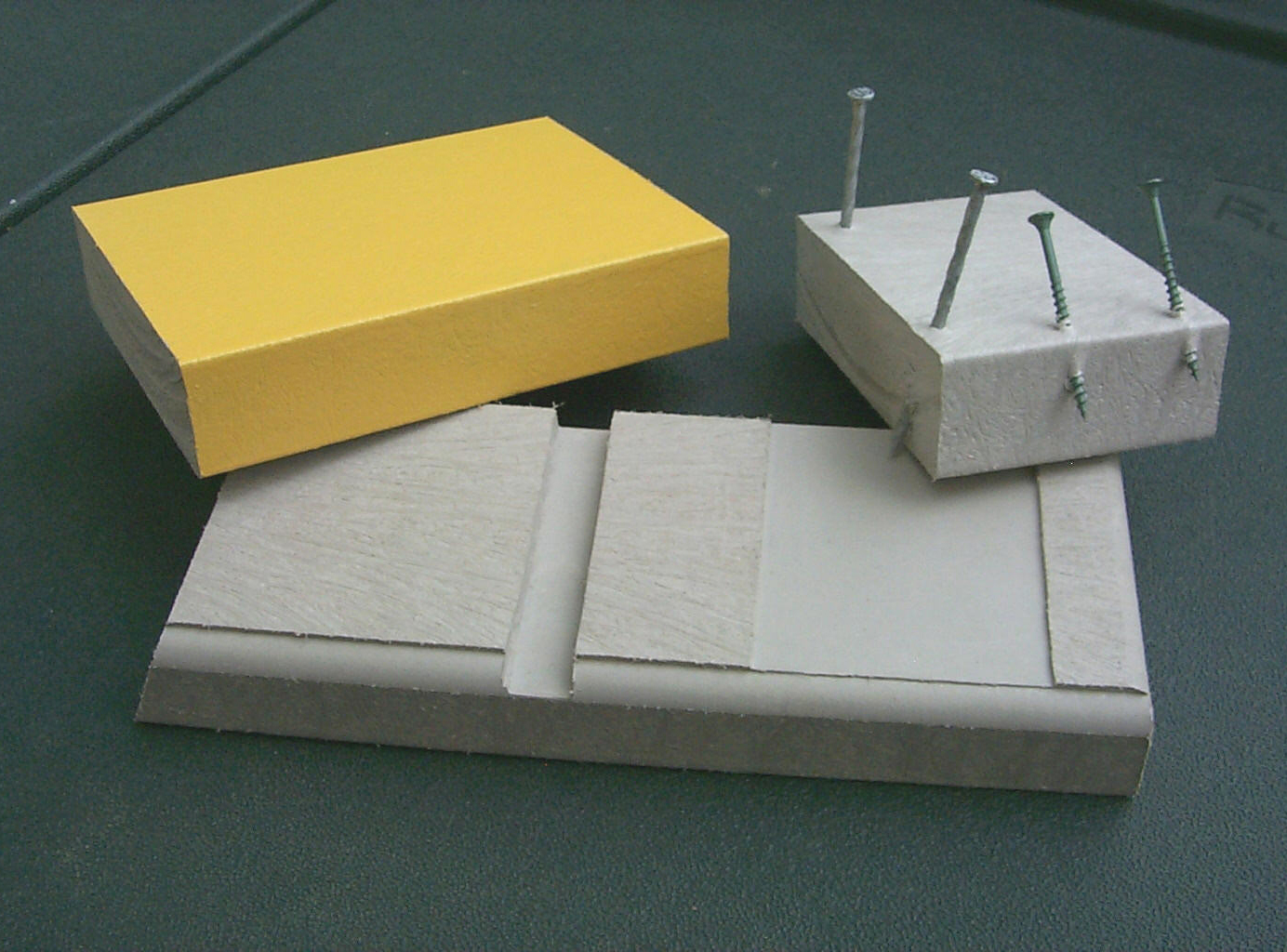 Two innovative environmental products, ideal for pig barns and other farm applications, are now available in western Canada.
Think Plastics Inc. of New Hamburg, Ontario manufactures Baleboard®, a 100% solid polyethylene plastic lumber made from recycled agricultural bale wrap and greenhouse film. Since 2005, the company has diverted more than 636-tonnes of scrap plastic from landfill sites and burn barrels in south central Ontario.
Baleboard® can be used in any non-load bearing application where wood and composite products are used. It contains no wood or other fillers. Company President Chuck Sparks says that’s the reason the product is so popular. “Baleboard® is one polymer – polyethylene – which makes it extremely strong and versatile. It is a popular choice for home decks and cottage docks. But its resistance to ammonia, oil and gas, and the fact that the boards are not slippery when wet, also make it an excellent choice for use on the farm.” Baleboard® can be power-washed and steam-cleaned. Lab tests show it does not rot or leach. Sparks adds, “We haven’t found an animal yet that can chew it.”
Baleboard® is available in two colours, Sandstone and Cedartone, and five sizes: square-edged 2” x 4” x 12’, 2” x 6” x 12’, 4” x 4” x 10’, and round-edged Custom 2” x 6” x 12’ and 5/4” x 6” x 12’. The Ontario company also manufactures “Nusheet”, a flexible 4’ x 8’ off-white sheet, 1/8” thick, made from recycled greenhouse film. Nusheet is being used to line barn walls, horse wash stalls, shelves, trucks interiors and sheds.
Baleboard® and Nusheet are available in the west through Riverbend Building Supplies. Contact Michael Maendel at (204) 761-0252, email Michael@rb.hbni.net, or visit www.riverbendbuilding.com
Photo Caption:
(Baleboard) Baleboard can be routed and planed – even painted. It can be nailed and screwed close to the edge without splitting or breaking.