

SEARCH
Industry Partners




Prairie Swine Centre is an affiliate of the University of Saskatchewan

Prairie Swine Centre is grateful for the assistance of the George Morris Centre in developing the economics portion of Pork Insight.
Financial support for the Enterprise Model Project and Pork Insight has been provided by:







Eye on Research – The effect of space and group size on finisher performance
Posted in: Prairie Swine Centre, Production, Uncategorized, Welfare by admin on July 14, 2011 | No Comments
With the current shift in the industry toward housing pigs in groups of 100 to 1,000 per pen, questions have been raised as to whether pigs can perform as well in large groups as they do in small ones. Recent work at the Prairie Swine Centre examined how housing finishing pigs in two group sizes and at two floor space allocations affects production, health, behaviour, and physiological variables. The studies looked at the effects of small (18 pigs) vs. large (108 pigs) group sizes provided with 0.52 m2/ pig (crowded) or 0.78 m2/pig (uncrowded) of space on production, health, behaviour, and physiological variables.
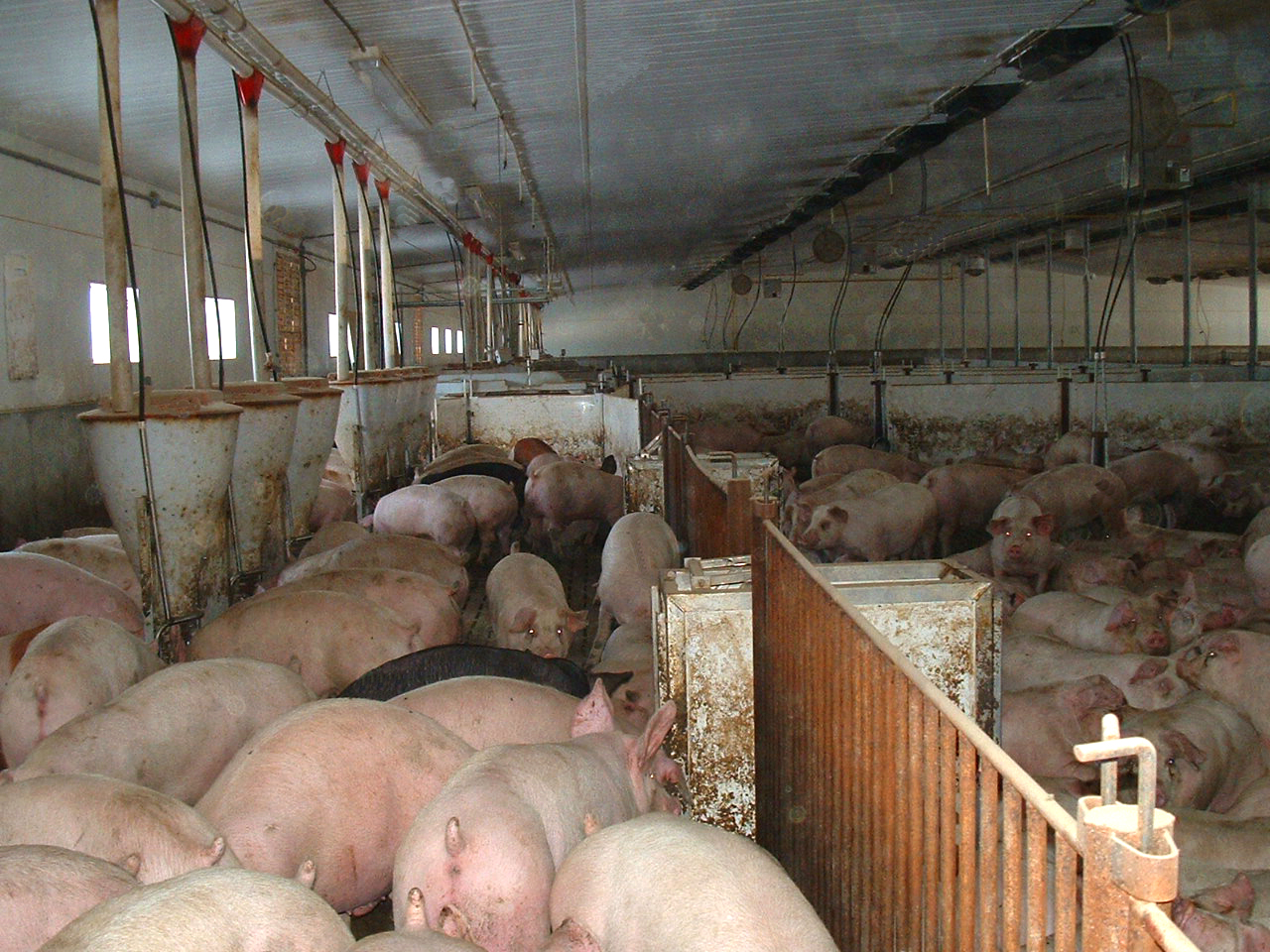 Eight, 7-8 week-long blocks, each involving 288 pigs, were completed. The average liveweight at the beginning of the study was 37.4kg. Overall, average daily gain (ADG) was 1.032 kg/day and 1.077 kg/day for crowded and uncrowded pigs respectively, which was a highly significant difference. Differences between the space allowance treatments were most evident during the final week of study.
Pigs in the crowded groups spent less time eating over the eight-week study than did pigs in non-crowded groups. However, average daily feed intake (ADFI) did not differ between treatments. Overall, ADG of large-group pigs was 1.035 kg/day, whereas small group pigs gained 1.073 kg/day. Average daily gain differences between the group sizes were most evident during the first two weeks of the study.
The investigation found that, over the entire study, large groups were less efficient than small groups. Although large-group pigs had poorer scores for lameness and leg scores throughout the eight-week period, morbidity levels did not differ between the group sizes. Minimal changes in postural behaviour and feeding patterns were noted in large groups.
An interaction of group size and space allowance for lameness indicated that pigs housed in large groups at restricted space allowances were more susceptible to lameness. Although some behavioural variables, such as lying postures, suggested that pigs in large groups were able to use space more efficiently, overall productivity and health variables indicate that pigs in large and small groups were similarly affected by the crowding imposed in this study.
The trial indicated no difference in the response to crowding by pigs in large and small groups. Little support was found for reducing space allowances for pigs in large groups.
WHJ comment: There is no doubt that the North American pork industry has enthusiastically embraced large group grow-finish systems in order to obtain the benefits of auto-sorting equipment, which leads to more optimal market weights and saves labour. However, little is known about the implications for pig performance and welfare. This study suggests that space allowance has a bigger effect on growth than group size, although ADG was better for the small groups. The suggestion that pigs in large groups make better use of space and therefore need less space per pig seems to be disproved by this work. Even though there are disadvantages in both performance and some measures of welfare, the trend towards large groups is likely to continue due to the magnitude of the benefits.
Reference: B. R. Street and H. W. Gonyou. – Effects of housing finishing pigs in two group sizes and at two floor space allocations on production, health, behaviour, and physiological variables.
J. Anim Sci. 2008. 86:982-991. doi:10.2527/jas.2007-0449
Eye on Research – The use of hormone treatment for single-AI gilt matings
Posted in: Production by admin on | No Comments
Optimal timing of artificial insemination (AI) in gilt breeding programs is crucial to ensure successful fertilization and improve reproductive efficiency. Heat detection is a key component of the effective use of AI, but is time consuming and labour intensive. The use of hormone treatment to control the timing of ovulation can eliminate the need for heat detection and facilitates the use of fixed-time AI procedures. Recent research has demonstrated that porcine luteinizing hormone (pLH) can reliably synchronize ovulation in weaned sows as a part of fixed time AI protocols, but its application in gilts for this purpose has not been studied.
In a study carried out at the University of Alberta, 45 cyclic gilts received altrenogest (Regumate, Intervet) treatment for 14-18 days, followed by 600 IU of equine chorionic gonadotropin (eCG), given 24 hours after the last altrenogest. They were then treated with either 5 mg pLH, 750 IU human chorionic gonadotropin (hCG), or with saline (controls), 80 hours after the eCG treatment.
Injection with pLH or hCG will induce ovulation.
Estrus detection and ultrasound scanning was performed every 8 hours, beginning 8 hours before the pLH/hCG/saline treatment to determine the time of onset of estrus and ovulation. The pLH and hCG treated animals were inseminated at 32 hours and, if ovulation was not yet confirmed, again at 40 hours after the pLH/hCG treatment. Control animals were inseminated 16 hours following the initial detection of standing estrus and then every 24 hours until ovulation was confirmed.
The results of the trial showed that the pLH and hCG treated gilts ovulated sooner after treatment compared to the control group. Gilts treated with pLH exhibited significantly less variation in the timing of ovulation than the hCG or control groups. Ovulation rate and number of embryos recovered was highest in the pLH treated gilts and lowest in those treated with hCG. For gilts given pLH or hCG, the diameter of the largest follicle prior to the onset of ovulation (8.1mm and 8.1mm respectively) was smaller than control animals (8.6mm). The pLH and hCG groups ovulated sooner after treatment compared to the saline treated group (43.2, 47.6 and 59.5 h, respectively), with significantly less variation in the timing of ovulation for the pLH-treated animals. Embryo quality, evaluated using total cell counts and embryo diameter, was not affected by hormone treatment.
WHJ comment: Fixed-time AI, with a single insemination, has been successfully used for sows following weaning. These results indicate that pLH can be used in cyclic gilts, and will reliably synchronize ovulation without detrimentally affecting ovulation rate, number of embryos or embryo quality. This suggest that pLH based fixed-time AI protocols in could also be applied in gilts.
Reference: K.L. Degenstein, R. O’Donoghue, J. Patterson, E. Beltranena, D.J. Ambrose, G.R. Foxcroft and M.K. Dyck – Synchronization of ovulation in cyclic gilts with Porcine Luteinizing Hormone (pLH), Advances in Pork Production (2008) Volume 19, Abstract #26
Eye on Research – Feed and water system affects performance of lactating sows
Posted in: Production by admin on | No Comments
A recent experiment carried out at Michigan State University looked at the effects of two ad libitum feeding and watering methods on the performance of lactating sows. The first was a self-fed wet/dry feeder and the second a hand-fed feed system with a separate water source. In the wet/dry feeder, feed and water were dropped into a trough, with the sow deciding how much feed and water to release. Because feed and water became mixed together in the trough, the sow also determined the wetness of the feed consumed. In the hand-fed system, sows were given dry feed twice daily in a J-shaped feeder that was independent of the sow’s water source. Total feed disappearance per sow during a 20-day lactation was greater with the wet/dry system than with the hand-fed system (120 vs. 110 kg, respectively). The sows fed with the wet/dry feeder also had greater body weight gains during lactation than hand-fed sows (6.2 vs. 1.85 kg, respectively). Backfat depth change during lactation did not differ between treatments, nor did the percentage of sows displaying estrus by day 11 post-weaning. Piglet weaning weight was greater (6.63kg) with the wet/dry system than with the hand-fed system (6.12kg). The sows’ average daily water intake and total feed wastage during lactation did not differ between treatments. However, sows using the wet/dry feeders wasted less water than those with the hand-fed system (15 vs. 232 L, respectively). The authors noted that the difference in waste water volume would result in a significant variation in costs associated with manure storage and distribution. In conclusion, use of a sow-operated wet/dry feed-water system in lactation, which provides sows choices of when to eat, how much to eat, and if dry feed should be mixed with water during consumption, enhances sow appetite, improves litter growth performance, and wastes less water than a hand-fed feed-water system.
WHJ comment: With the vastly increased nutritional demands on todays sows, any means of improving the amount of feed consumed during lactation will be beneficial because there is a direct relationship between body weight loss during the suckling period and subsequent litter size. The 10kg difference in total lactation feed intake is considerable, even though it did not result in a difference in backfat at weaning or wean to estrus interval. However, the biggest benefit was in weaning weight, which increased by over 0.5 kg. Bearing in mind the effect of weaning weight on subsequent growth rate, this is an extremely valuable improvement. The difference in water wastage between a drinker over the trough and a regular crate-mounted nipple is quite staggering and is another reason for considering a wet/dry type feeder. Overall, this trial indicates the big impact of lactation feed intake on sow performance and suggests that producers should be paying more attention to this crucial area.
Reference: J. J. Peng, S. A. Somes and D. W. Rozeboom – Effect of system of feeding and watering on performance of lactating sows, J. Anim Sci. 2007. 85:853-860. doi:10.2527/jas.2006-474
Danes average 25psy but sow longevity a problem
Posted in: Production, Welfare by admin on | No Comments
Danish pig producers reached the milestone of an average 25 pigs per sow during 2006/7, and that’s the figure for 30kg pigs produced, not numbers weaned per sow. However, sow longevity continues to be a problem, with an annual sow replacement rate of over 50% and sow death loss at a staggering 15%. Producer organization Danish Pig Production (DPP) is carrying out research which, it is hoped, will lead to a substantial reduction in sow wastage, according to its Annual Report.
Overall breeding herd performance averaged 24.9 pigs/sow/year, with the top 25% of producers reaching 27.8. Liveborn piglets averaged 13.5, with the top 25% of herds producing 14.0 per litter. However, the average number of stillbirths per litter remains high, at 1.7 per litter. Weaning age is around 30 days and weaning weight averages 7.3kg.
The Danish breeding program continues to focus on improving the number of piglets alive at five days of age (called LP5) and this strategy has been producing excellent productivity gains. Over the 4 years to 2007, there was a 0.34 pig increase each year in Landrace sows and 0.38 in the Large White breed. Recently, there has been much more emphasis on increasing sow longevity, defined as the number of litters produced per sow lifetime, which is included in the breeding objectives. Because this cannot be defined until the sow is culled, other measures are being used as an indication of longevity. One of these is conformation, which has been used for many years. More recently, the ability of gilts to reach breeding after weaning their first litter has been used and this is highly correlated with sow longevity. The Danish report notes that the genetic traits for carcass lean content and daily gain are negatively correlated with longevity, whereas conformation is positively correlated. These relationships are now being used when estimating breeding values for longevity.
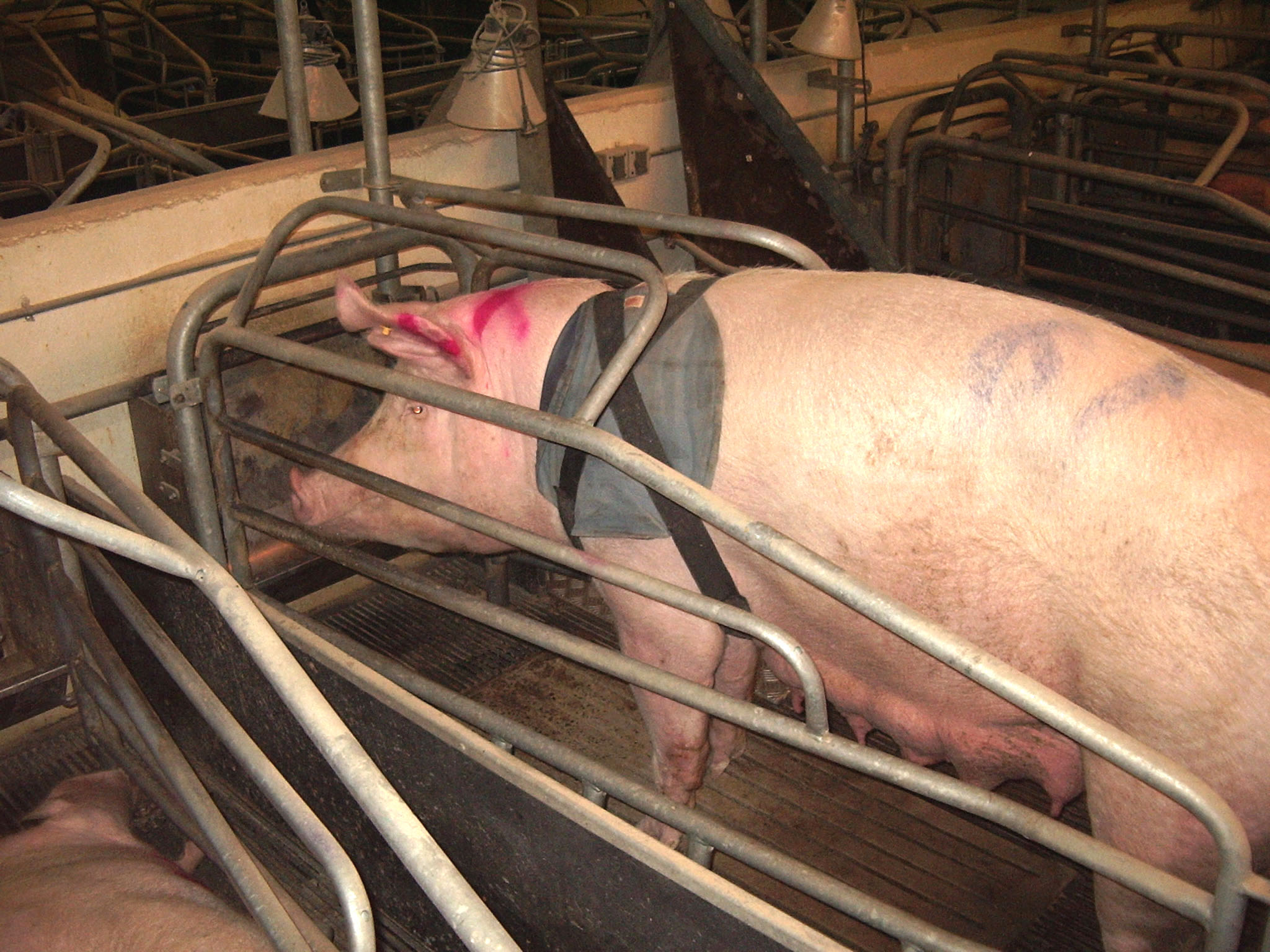
An increase in the incidence of shoulder ulcers in sows has prompted DPP to launch an investigation to find out whether there is a genetic variation or resistance to shoulder ulcers and whether the incidence can possibly be reduced by genetic means. In the meantime, the DPP report stated that it wants to see the number of reported shoulder ulcers halved and entered into an agreement with the Danish Veterinary Association to try to achieve this. The herd vet must regularly check the prevalence of ulcers and, if this is high or increasing, formulate an action plan with preventive measures. DPP is also looking at the influence of types of treatment, nutrition and design of housing on shoulder sores. The use of rubber mats has been shown to reduce the incidence and severity of ulcers.
 A reduction in sow mortality is also a key aim of DPP research to increase longevity. It points out that a high death loss is not necessarily an indication of poor sow welfare in a herd. Many sows that have to be destroyed today would have been sent to slaughter five years ago, DPP notes. Sow mortality, it says, is reduced through prompt intervention, good prevention and consistent handling of unthrifty, sick and injured sows.
Hospital pens must be used early on to minimize the recovery period. It has initiated a demonstration project involving 20 farms around the country where data on sow longevity will be gathered and the measures that lead to improvements identified, so that this information can be communicated to producers. Hospital pens for sows are a key weapon in the fight for higher longevity. Trials have shown that it is possible to reduce the percentage of sows that die or have to be destroyed if there sufficient hospital pens available and a treatment strategy is drawn up by the vet. Preliminary results suggest that lameness was the primary cause (75% of sows) for transfer to a hospital pen. Sows stayed in the hospital pen for an average of 22 days and 80% of sows were able to return to the gestation pens or move to the farrowing house. Of the sows that were due for culling, there were 25% fewer deaths or destroyed sows.
With high and increasing litter size the use of nurse sows is very common in Denmark and DPP has investigated many aspects of this practice. A recently reported trial looked at whether the use of Oxytocin after foster piglets have been placed on the sow affected piglet growth and survival. One-step nurse sows were compared with two-step nurse sows and sows that only suckled one litter. Oxytocin was given ten minutes and three hours after new piglets were placed on the nurse sow. The first successful suckling occurred after 5.6 hours for the nurse sows that did not receive Oxytocin and 6.3 hours for the treated sows. The report notes that 50% of sows stood up during the Oxytocin treatment and suggested that this could be the reason why treatment did not help to make sows accept the piglets more quickly. Piglets weighed 100 grams less at weaning for every hour’s delay between introduction to the sow and suckling. However, there were no differences in survival rate or weaning weight between the two groups.
DPP has also compared the impact of being a nurse sow on subsequent performance, comparing one and two-step nurse sows with those that suckled just one litter. One-step nurse sows had an average 51-day period, two-step sows had 32 days and sows that were not used as nurse sows suckled for 27 days. Nurse sows took an average of one day longer to come on heat after weaning, which the authors suggest could be due to loss of condition in the long lactation period or because the sows showed heat during lactation. They also tended to have a lower farrowing rate but the one-step sows had a significantly higher subsequent litter size. The report suggests that the lower farrowing rate may be because nurse sows do not suckle for 3-12 hours after piglet introduction, which can induce a “weaning heat”. These sows have a much more variable onset of post-weaning estrus and therefore staff in the breeding area should be made aware of the nurse sows so they can pay special attention to heat checking and serving them when in standing heat.
Photo caption: SowShoulderPad-2 – Shoulder sores are a major problem in Danish breeding herds and pads like this one are used for protection
Alberta Pork tackles labour shortage
Posted in: Economics, Meat Quality, Production by admin on | No Comments
Over the last few years, the availability of skilled labour, or indeed any labour at all, has been an increasing challenge faced by the Alberta pork industry. The only solution for most producers is to recruit foreign workers, but the process is long and cumbersome, resulting in a delay of up to 12 months before a new employee arrives. Alberta Pork has been working with Alberta Agriculture and Rural Development (AARD) and Service Canada since the Fall of 2007 to address producer concerns over this issue.
“As with all the livestock industries, the pork industry’s success is vitally dependent on experienced managers and technicians as well as inexperienced people who wish to pursue a career caring for pigs,” says Stuart McKie, Policy Specialist with Alberta Pork. The lack of available employees in Alberta is not a crisis unique to the pork industry, he notes. “It has come to the point where businesses are cutting back their hours of operation due to a lack of staff. Unfortunately, the livestock industry does not have this as an option except to close its doors completely. Without a dependable labour supply, production units can suffer either in productivity or possibly compromise animal welfare – two unacceptable solutions to this crisis.”
The main delay is the time taken to obtain a Labour Market Opinion or LMO, a prerequisite to hiring a foreign worker. Applications to the Foreign Worker Recruitment Branch of Service Canada have been taking up to 30 weeks to process due to the large numbers received – over 80,000 applications over the last 12 months. However, more recently, processing times have been reduced to about half that time. Following discussions with Service Canada, it has agreed to review applications from producers who find themselves in a crisis situation with regard to labour. “The process involves Alberta Pork handling completed LMO applications from producers,” explains Stuart McKie. “They are then checked to ensure applications are correct and complete prior to forwarding them to Service Canada, providing a means of ‘quality control’, so that all applications are of the required standard.”
The applications are prioritized according to their urgency, with non-urgent applications going into the regular Service Canada administration system and urgent applications being dealt with on a case-by-case basis. Bernie Peet of Pork Chain Consulting Ltd has been contracted to assist with this project and is carrying out the day-to-day work on behalf of Alberta Pork. Alberta Agriculture and Rural Development has provided funding assistance. “Producers are encouraged to plan ahead and apply for an LMO in plenty of time, even if they don’t need a worker immediately,” stresses McKie. “The LMO is valid for six months and there is no fee to pay, so it’s best to have one tucked away for a rainy day.”
With a number of producers going out of business over the past year, some foreign workers have needed help to find new employers, although this still requires an LMO to be obtained because work visas are specific to the employer, the employee and the job. “There’s no shortage of people wanting to employ a worker that’s already here because it’s a quicker process,” says Bernie Peet. “However, the waiting time for an LMO has been the sticking point, but, working with Service Canada, we have been able to rush these through so that the foreign worker has not been left without a job or had to leave the country.” Visa applications are processed at Citizenship and Immigration Canada (CIC) at Vegreville, which is currently taking about a month, he notes.
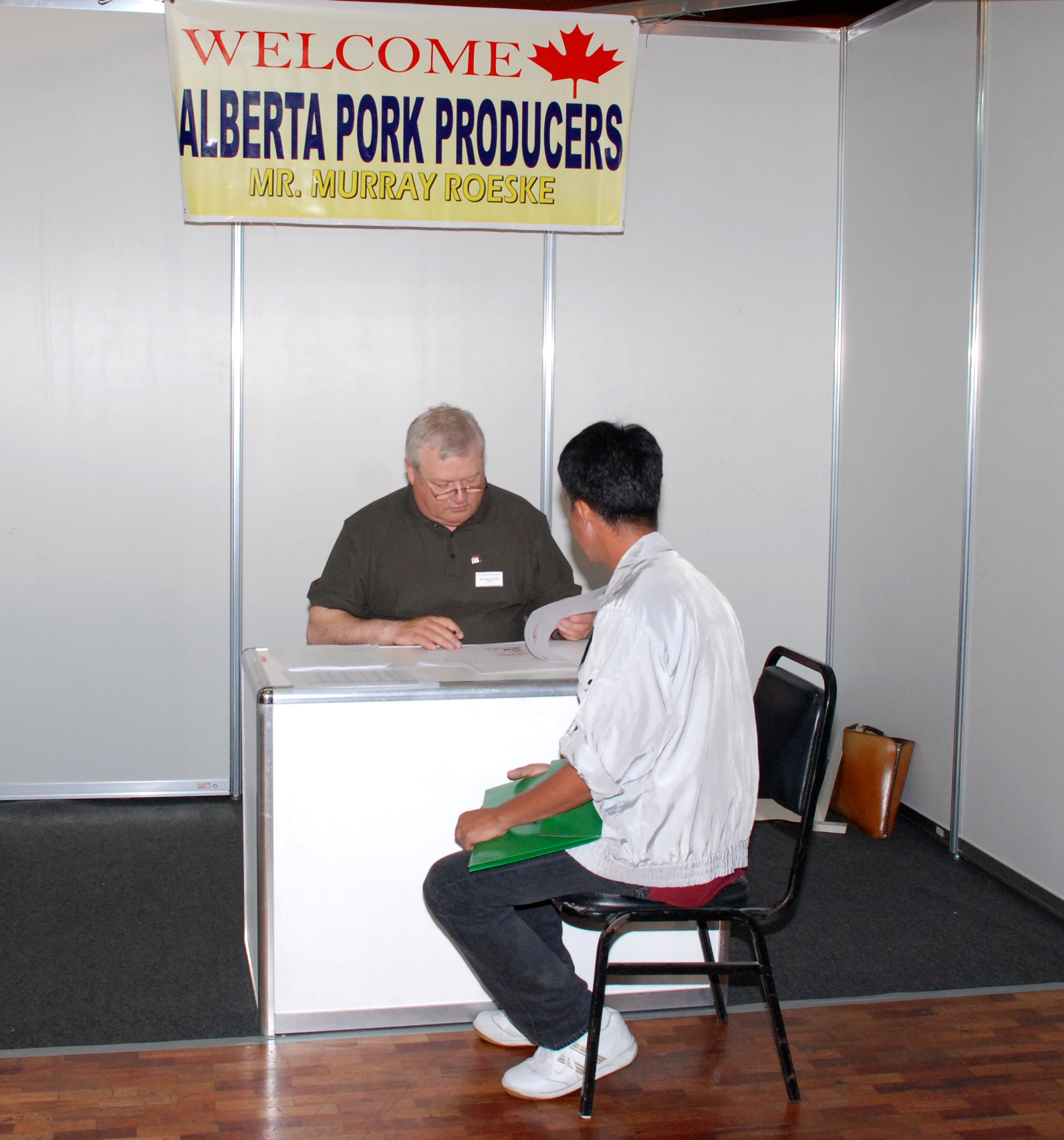
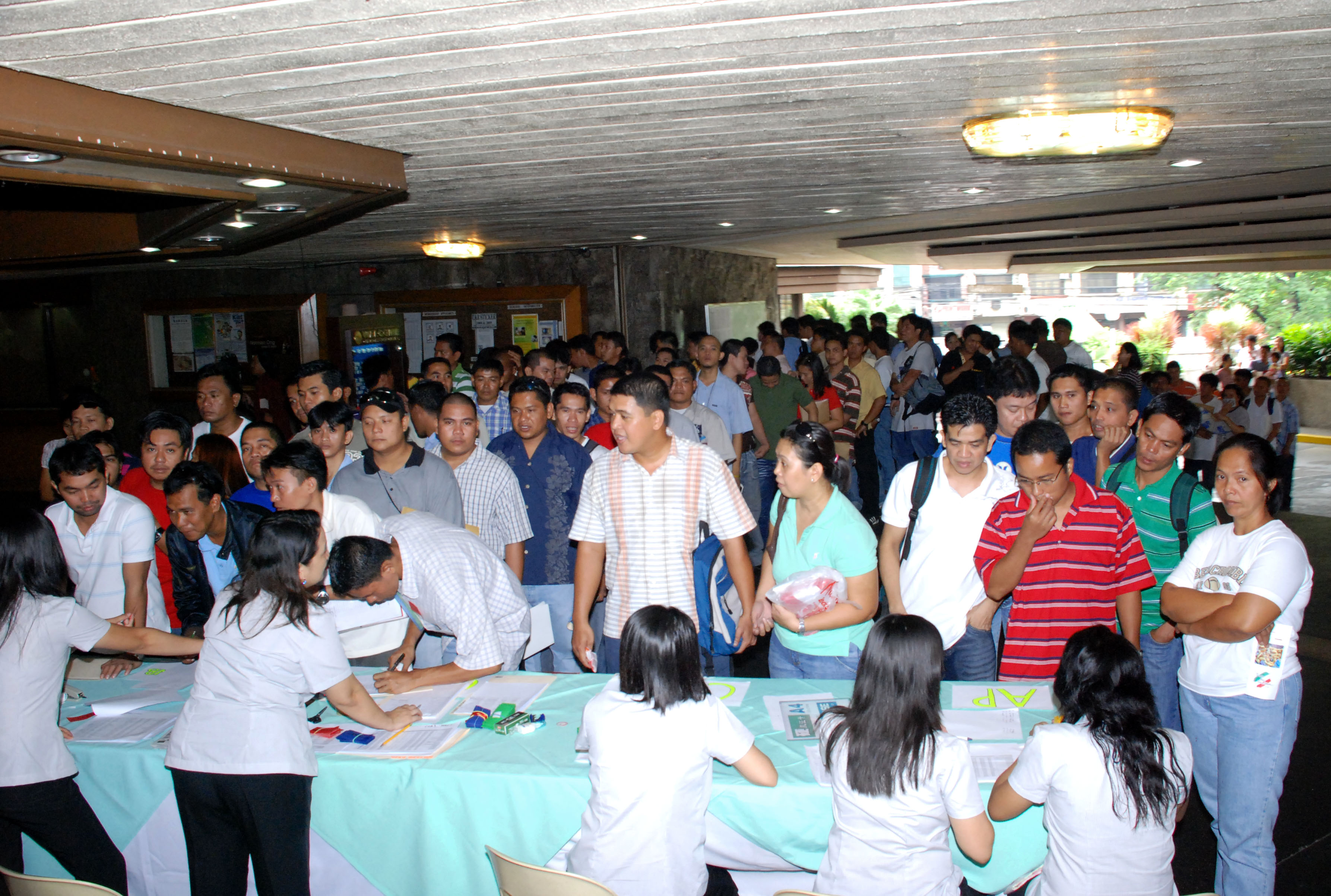 The second part of the Alberta Pork project is to establish a “database” of foreign workers that is available to producers so that they can select suitable individuals. This is being done by attending overseas Job Fairs, interviewing potential candidates and selecting the best for consideration by producers. In April, Murray Roeske, Alberta Pork’s Field Services Specialist and Bernie Peet took part in a three-day job fair organized by AARD and held in the city of Manila, Philippines. Marvin Salomons and Scott Dundas of AARD coordinated the event, which included three other employers from the food processing industry. More than 1,400 Philippine job seekers attended the venue. Food processing employers interviewed 904 qualified candidates and made 241 job offers on-site. A total of 157 selected job applicants were interviewed on behalf of Alberta pork producers by Peet and Roeske over the three days. “The qualifications of these potential employees were found to be excellent, with a majority of them having a Bachelors of Science in Agriculture degree or are Veterinarians,” comments Murray Roeske. “As English is the second language in the Philippines, all of the interviews were conducted in English and therefore, on-farm communications should not be a problem.” Bernie and Murray returned to Alberta with 111 potential resumes and these are now available for review by producers.
Assisting the process in the Philippines was a recruitment agency called Golden Horizon, which has developed a good working relationship with Philippine government organizations and the Canadian Embassy in Manila. This has helped with processing times for visa applications and working with this company has also proved very cost effective in the applicant selection process. Once a candidate has been selected, Golden Horizon ensures that the process of obtaining the work visa goes as quickly as possible, shortening the time taken to get a worker into Canada.
 Further job fairs, in Mexico and Europe, will be attended in the near future, in order to maintain and develop a pool of potential workers for the industry. One objective of these overseas missions is to understand the processes involved in obtaining a work visa, especially the potential hold-ups, with the objective of reducing processing times. This involves contact with the Canadian Embassy and organizations in the country being visited that have an influence on the process. “We want to raise our profile and name recognition as a responsible employer, while working to make the process as efficient as possible,” explains Stuart McKie.
If you would like more information about the Foreign Worker Project or help with recruiting a worker from overseas, please contact Stuart McKie on (780) 491-3527 or Bernie Peet on (403) 782-3776.
Alberta Pork gratefully acknowledges the assistance and financial support for this project given by AARD and especially the help given by Marvin Salomons, Scott Dundas, Alan Dooley and Ab Barrie.
Photo captions:
1. Registration-1 – A throng of hopefuls waiting to register at the job fair in Manila
2. Murray Roeske – Murray Roeske of Alberta Pork interviews a candidate at the job fair
Achieving a 90% farrowing rate and 13 born alive
Posted in: Production by admin on | No Comments
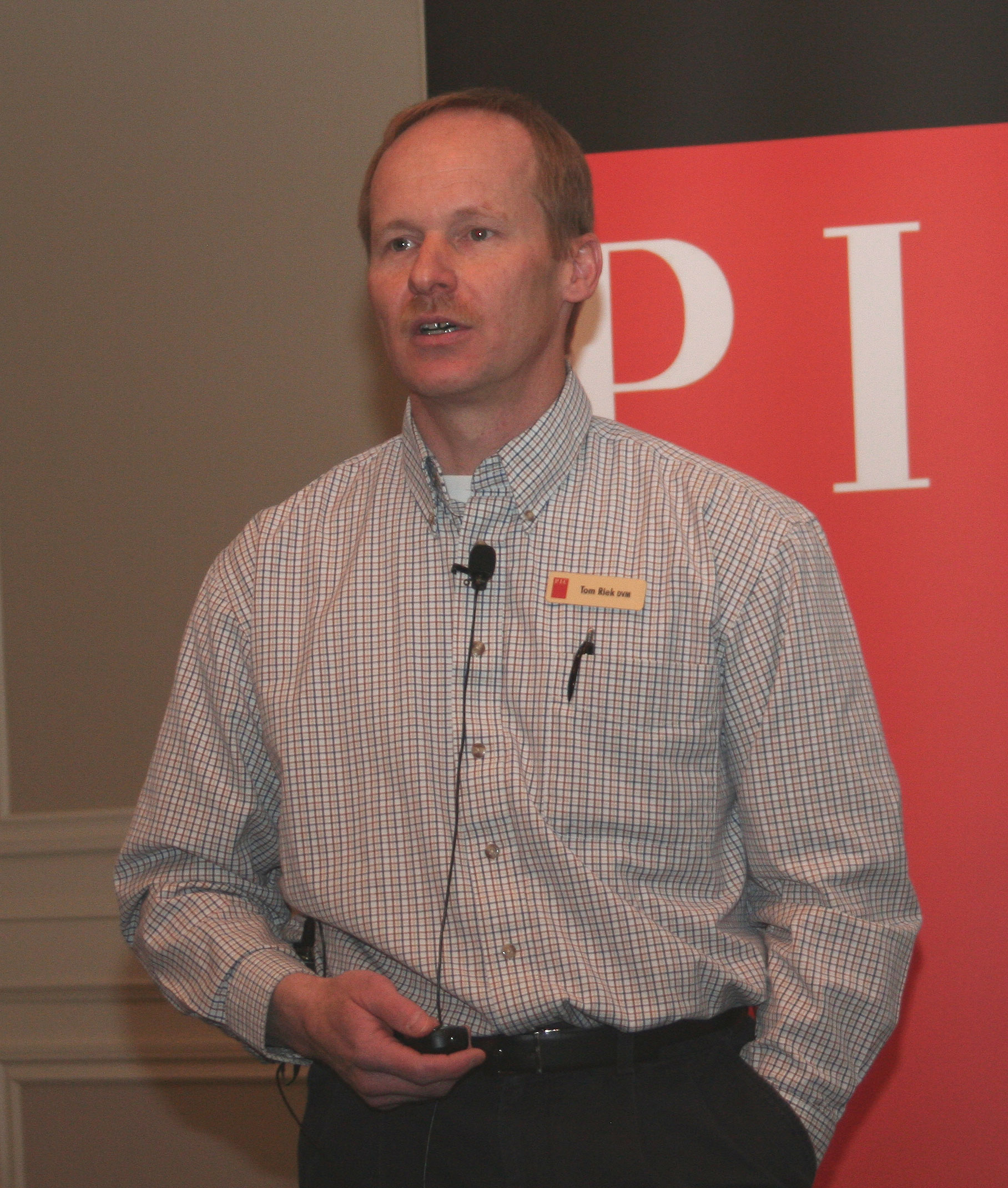 Targets for the breeding herd of 90% farrowing rate and 13.0 pigs born alive are realistic with good management, veterinarian Dr. Tom Riek told producers at a series of PIC Farm Manager Boot Camp meetings held across western Canada in April. If these figures are not being achieved, the reasons must be identified and action taken, he said. The difference between the top 10% of herds in the PIC League List, which have an average of 88.9% farrowing rate, and the top third, with 85.8%, is equivalent to an extra one pig weaned per sow each year. In order to reach the farrowing rate target, returns to service must be around 8%, with a further 2% of dropouts due to abortions, discharges, NIPs and deaths, Dr Riek suggested.
“Regular returns, which occur at 18-23, 40-44 or 60-64 days after breeding, are usually when something went wrong at service, for example timing or semen quality issues, or in the first two weeks of gestation, before implantation,” Dr. Riek explained. “Non-regular returns, which are usually 25-35 days after breeding, are related to the presence of less than five embryos beyond the implantation stage.” The ratio of regular to irregular returns should be around 3:1, he noted.
Feed levels important
Giving adequate amounts of feed is essential for good reproductive performance, Dr Riek stressed. “From a metabolic point of view, reproduction is a luxury. Breeding can only happen when the sow’s maintenance requirements are fully met.” In the three weeks prior to breeding, the gilt’s feed intake should be maximized, he said. “Also, during this time, any stress from movement, disease, lameness, vaccination or inadequate feed or water availability should be avoided.” Similarly, weaned sows should be fed as much as possible between weaning and breeding and then fed to recover any body condition loss sustained in lactation, Dr. Riek said. “Thin sows not fed to recover body tissues could lose embryos or even return.” He suggested a simple feeding program during gestation, based on the need to regain or control body condition. “Feeder boxes should be adjusted so that thin sows receive 6lbs per day in order to regain condition, to 5lbs in order to limit weight gain in normal sows and to 4lbs to control weight gain in fat sows,” he advised. Body condition should be evaluated and feeder adjustments made four days after breeding and at weeks 4, 10 and 14, he said.
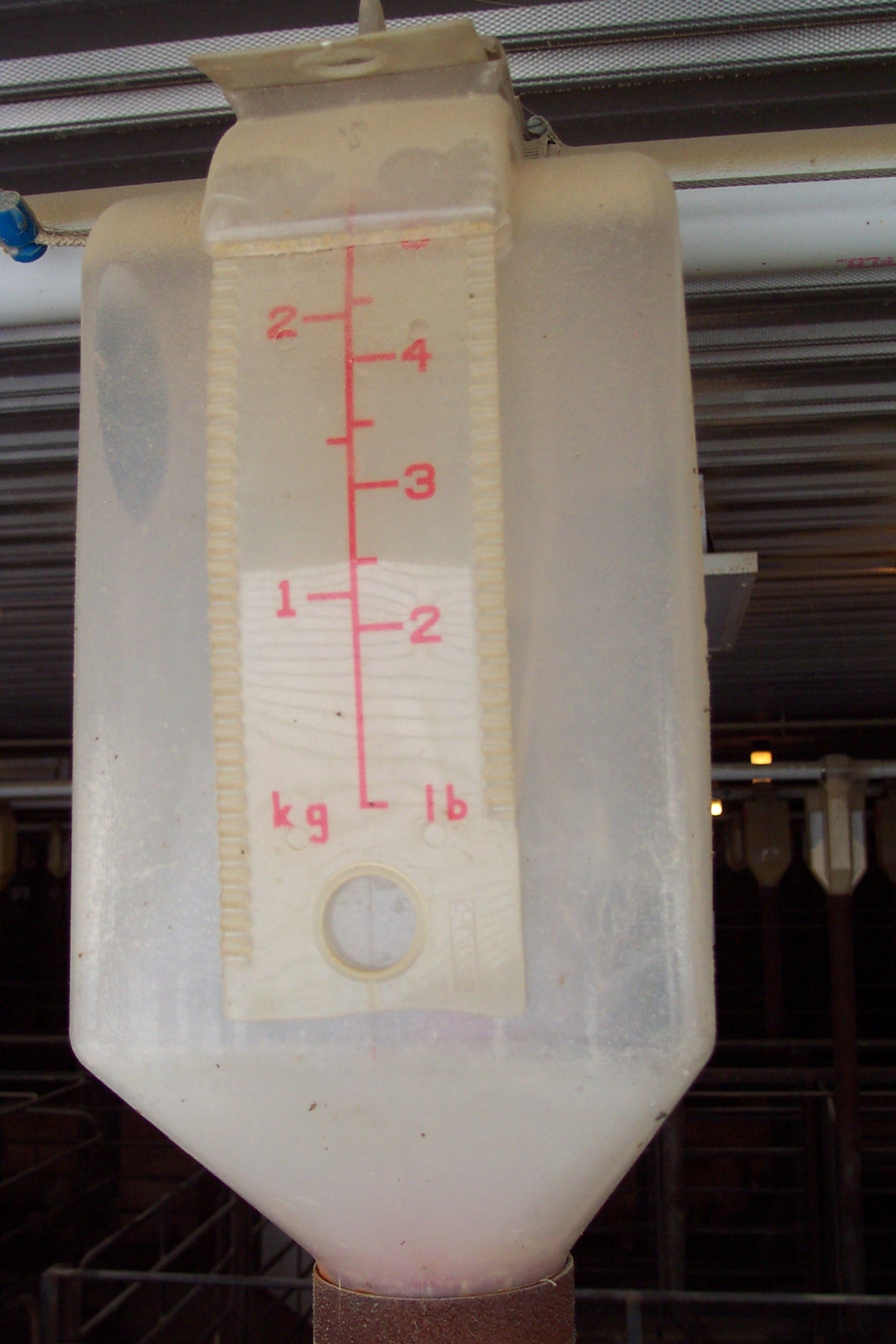
During lactation, sows should consume an average of 13lbs (5.89kg) per day or 280lbs (127kg) during a 21-day suckling period, Dr. Riek suggested. “In order to maximize feed intake, feed should be mildly restricted pre-farrowing and for 2-3 days after farrowing and then full-fed,” he said.
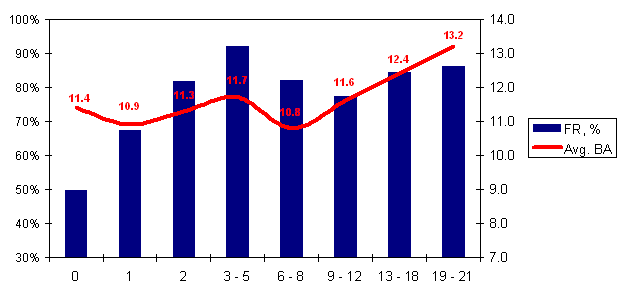
Weaning to estrus interval has a major effect on both farrowing rate and litter size, with the maximum fertility occurring 3-5 days after weaning (see Fig. 1). From day 6 onwards, fertility drops and then recovers again after day 13. “In order to achieve the 90% farrowing rate target, it is essential to have as many sows as possible bred within the first 7 days after weaning,” Dr. Riek pointed out.
Figure 1: Reproductive performance according to WEI duration
From: Poleze et al., 2006
Service timing and semen quality are key factors
Timing of insemination is another key factor in achieving a high farrowing rate. “Sperm survives for up to 24 hours in the sow’s reproductive tract, but the eggs only live for 8-12 hours after ovulation,” explained Dr. Riek. “The best results are obtained when sows are inseminated 0-24 hours prior to ovulation. However, although we know that ovulation takes place in the last third to the last half of the heat period, we don’t know exactly when, so multiple mating is the answer.” Good timing will result in 90% or more multiple matings, he said. “Using a simple system, with heat detection once a day, in the morning, is the best approach for many units. Sows are bred one hour after heat detection and then every morning as long as they are in solid standing heat, regardless of parity.” However, gilts, returns and sows that have delayed estrus after weaning should be bred in the morning and the afternoon, ensuring that there is a minimum of 8 hours between matings, Dr. Riek advised.
Good semen storage practices are essential in order to ensure semen quality. “Semen must be stored in a narrow range of temperatures from 15-18oC (50-64oF),” Dr. Riek pointed out. “High temperatures are more detrimental to the viability of the doses than lower temperatures.” One third of refrigerators were found to be at an unacceptable temperature in a survey published in 2005, he noted. “Make sure the refrigerator is working well by using a Hi/Lo thermometer to evaluate the internal temperature,” he advised. “Also, do an annual check and service on the refrigerator before each summer.” In order to ensure an even temperature for semen, room should be left around the semen containers to allow air circulation. Ideally, semen should be used within 4 days of collection to ensure maximum motility, Dr. Riek advised. “Use semen as fresh as possible and keep in mind the policy of first in-first out.”
Culling of the less productive sows is necessary to boost overall herd performance, Dr Riek noted. “It’s hard, if not impossible, to improve when you do not cut the bottom 20%,” he stressed. Gilts that have not shown heat within 6 weeks of boar exposure and those with a low weight for age should be culled, he said. “Sows with no heat 4 weeks after weaning, sows that abort, sows with true vaginal discharges and second returns should also be removed.”
Photo captions:
- Tom Riek
- Drop box – Regular adjustment of sow feeders is required to maintain the correct body condition
Creep feeding – the “Three Threes” – and why they are important
Posted in: Production by admin on | No Comments
C’mon guys, you really must creep feed these days!
In the Winter issue I talked about the ‘Shattered Sow Syndrome’, which is the result of excellent world-wide progress in the breeding barn, with large litters of 13 being seen more and more often. In fact the last three farms I visited over here were averaging a whisker under 13 born-alive. Terrific!
But moving on into their mating units, there were too many sows already well into the body-condition ‘nose-dive’, especially those in the vulnerable 1st and 2nd parities – ‘shattered sows’, which should have had the weight of a prolific and rapidly growing litter taken off them. Feeding a well-designed and carefully made creep feed early on is a primary line of defence, yet two of the breeders were not doing so, and the third unskillfully.
Why no creep feed?
I asked the two defaulters who had recently stopped. “Too much bother and we’ve not enough labour”. “Very expensive”. “Last time we tried it we saw no definite benefit.” “It caused scour”. “The little pigs don’t seem to like it” …. and so on.
The last three reasons were almost certainly due to the creep feed itself. I looked at their specifications, smelled the feed, tasted it* and asked the price. Not impressed!
A really well designed creep feed contains expensive ingredients – even nucleotides, which you probably haven’t even heard about – but you will soon. It is the cheap formulae which cause scour. The new creep formulae do not do so and ensure the vital palatability – they can even produce better performance than sow’s milk alone, some nutritionists are now able to claim. Yes, and this particular choice of raw materials and very careful, specialized manufacture costs dollars – a lot of dollars – per tonne. So let’s look at the cost aspect.
The econometrics (cost-effectiveness) of creep feeding
There are now several statistically-valid trials of well-designed creep feeds providing another whole kilogram at 28 day weaning (for example Varley, Pig World 2006, p. 39). This gave 8.4 kg vs 7.4 kg – and 7.4kg is not bad, is it! There are dozens that show at least a 500g advantage.
An half- kilogramme advantage at weaning can provide 50 to 60 g/day better growth to slaughter, worth another CDN$8 – $12 per pig at our current European finished pig prices. And what is the cost per finished pig of feeding a really sophisticated creep feed? With 700g consumed by weaning, this cost about CDN$3.50/pig, and with the extra labour needed, another 50 cents. These are pessimistic assumptions but they still give an REO (Return on Extra Outlay) ratio of 2 to 4:1.
* Don’t do the latter, it could be dangerous. But I’m a risk-taker and on-farm I am tempted to be a bit of an idiot in my enthusiasm to get a message across. So far I’ve got away with it!
This payback doesn’t include the value of a better immune response later in life
(helped by things like nucleotides), a well-primed enzyme system at weaning and fewer ‘shattered sows’, especially in the earlier parities when the big litters now being achieved as routine shorten the sow’s productive life. Sow longevity is a major problem worldwide and I will address this “scandal in our midst” in the next issue.
Do it properly guys!
The experts tell us that the piglet needs to eat at least 400g of solid food so as to precondition the absorptive area of the gut wall so that solid food can be safely digested once the sow is removed.
Start early: Sure, they will waste a lot but reduce this by offering a light scattering of creep on a small shallow plastic tray with a 1 cm – high flange. You will need two of these to be removed at least once or twice a day or when soiled.
Feed fresh: Along with a water supply nearby, this is easily the most significant benefit to rapid, trouble-free uptake of a good creep feed. Freshness in the creep receptacle is materially helped by adopting my “Three-Threes” approach.
The Three-Threes: This means for the first three days, ie from day 3 to 4 from birth until day 6 to 7, the creep must be offered three times a day and only enough should be offered to last three hours. Any creep starter feed not consumed should be given to sows in the least-good condition, being heavily milked, one suspected of a low milk yield, or to smaller gilts. This way it will not be wasted. Now I know this is a chore – a darned nuisance. But a survey I published a while ago showed that skilled pig technicians must spend more “quality-time” with the pigs and less on heavy-duty tasks which can be done adequately enough by less-skilled or contract labour.
During these intensive “care days” the small, first-stage creep receptacles must be taken up and cleaned once a day. Indeed as staff are busy enough at that time, spares are a boon so that a daily bulk cleaning and drying period can be accommodated with the minimum of work and disturbance to routine.
Creep feeders
Fortunately these creep feeders are small and inexpensive. I illustrate three of them.
Another not shown is a heavy, cast-iron circular bowl with metal rod dividers falling from a central carrying handle. But they are heavy things to cart around and keep clean. A concrete/resin heavy bowl is more convenient. Plastic or steel designs are cheaper and lighter but need to be anchored to the farrowing pen perforated floor, in which case a central, spring-loaded handle is depressed and twisted to lock a small ‘T-piece’ under the slat and keep it from being overturned. Preferably do not use those with solid dividers as piglets like to see others eating and the more timid will start eating that bit sooner.
Another more costly but intelligent design, which does not need such frequent replenishment, is one I’ve seen used and made by Osborne, Kansas. This has a mini tray under a small dispensing hopper which itself keeps the creep away from flies and odours. The larger tray underneath the fixed mini tray can be taken off and washed, but ask for an extra number of these so that the device can be kept as clean as possible by cleaning and replacing with the spares. I hope they are still available, as we always got good results with them. Many creep feeders are what I call “permanent” – heavy, well made, the trough partitioned and with a generous feed hopper. Fine! But they tend to be overfilled and thus the feeding space is not cleaned frequently enough during those first vital 4 to 7 days of use.
Spotless cleanliness is the keystone of successful early-starting creep feeding – once you have summoned up courage to buy a really good creep feed, of course.
Plenty of spare small creep receptacles, frequently sanitized, enables this to be done.
Because the larger conventional creep hoppers are so permanent, they are not placed in the farrowing pen until too late, in other words when the technician thinks the piglets will eat the creep feed willingly, which is at about 10-12 days. Use them later by all means – providing the trough is kept clean.
For the ‘Three-Threes’ it is better to have a smaller dedicated dispenser and change to a conventional feeder later on – if kept clean and sweet.
Placing of the creep dispenser
This is a big subject, too complex to be described here as it involves “best locations” in the four main farrowing pen designs – central crate/side creep (preferred), central crate/forward creep, central crate/corner creep and diagonal crate/corner creep. In the limited space left to me here, suffice it to say that you should, in all cases, keep the creep dispenser away from a heat source, place it as near as possible to a water source (but not that of the sows), never overfill and keep it away from the sow’s urine splashings.
A tip to finish with
Can you get potato starch in Canada? If so, mix a little in with the creep pellets or sprinkle a little over the shallow pre-starter tray on the first day of weaning – you will be surprised how quickly they take to it.
Understanding the response of your ventilation controller to changing conditions
Posted in: Environment, Production by admin on | No Comments
In both new and remodeled swine production facilities, it is not uncommon to have fans, inlets, heaters and controllers supplied by up to four different companies. While the ventilation controller is the hub for all heating and ventilation system operations, many, if not most, producers rely on their many suppliers and/or builders to integrate the components into a working system.
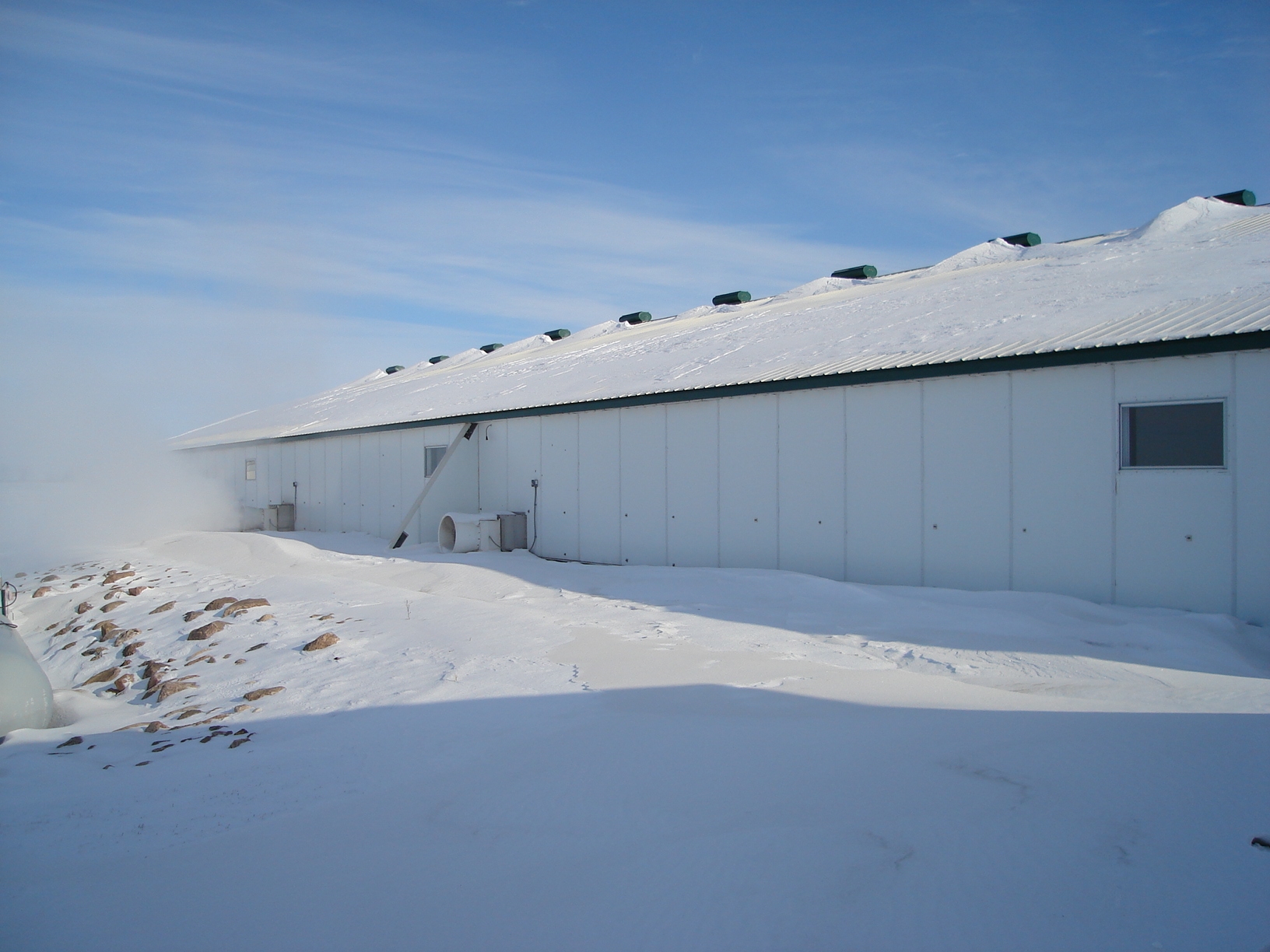 When construction and/or equipment installation is completed, there is often only a 20-30 minute ‘training’ session on the system and the producers are left to fend for themselves in management of the system. With four or more brands of equipment, there is most likely no detailed explanation of how and/or why the various components were chosen, nor is there detail as to the capacities of the components or verification of the settings most likely input into the ventilation controller by the installer.
For many producers and their employees, ventilation controllers are something to be feared, meaning that operation of the entire heating and ventilation system remains a mystery.
The obvious place to start in understanding your ventilation system is to list the fans, furnaces and inlets installed, and the capacities of these devices. It is not enough to list the fans as ‘24 inch Multifan pit fans’ since that tells potential users of the information nothing about the capacity of the device or specific model number, an important criteria when ordering parts or estimating performance. For example, Multifan has 6 different 24” fans listed in the BESS Labs manual (www.bess.uiuc.edu) with capacities at 0.05 in. w.g. static pressure (1.25 mm w.g.) ranging from 4,520 to 7,280 cfm (7,680 to 12,370 m3/hr). Armed with fan specific information, it is possible to predict how a ventilation system will respond to various pig size during varying seasons and to compare the installed capacity versus recognized ventilation needs (Table 1).
Table 1: Recommended minimum (cold weather) ventilation rates for moisture control in growing pig facilities. MWPS (1990)
| Pig Wt, kg | CFM | m3/hr |
| 5-13 | 2 | 3.4 |
| 13-34 | 3 | 5.1 |
| 34-68 | 7 | 11.9 |
| 68+ | 10 | 17.0 |
Assuming insulation values of R=35 for ceilings and R=20 for side walls, combining pig heat production estimates (Brown-Brandl et al, 2004) with facility heat loss equations (MWPS, 1977) make it possible to create Table 2. The balance point temperature in Table 2 is the estimated incoming air temperature at which heat production equals heat loss via the ventilation system and insulated walls at various combinations of pig weight and room temperatures. Note that the cfm’s chosen represent typical fan ventilation capacities for fully slatted wean-finish and grow-finish facilities in the US. For example, the 10 cfm rate would represent 2 -24 in. diameter pit fans at 100% of rated capacity in a 1200 head room, while the 5 cfm would be the fans operating as variable speed fans at 50% of capacity, etc.
Table 2: Balance point temperature (in C degree) for growing pig facilities
| Set Point | CFM/pig | |||||||
| Pig Wt | Temperature | 2.5 | 5 | 10 | 15 | 20 | ||
| Kg | oC | oC Balance Point Temperature | ||||||
| 11 | 26 | -17 | 4 | 16 | 20 | 23 | ||
| 23 | 22 | -42 | -11 | 6 | 13 | 16 | ||
| 45 | 18 | -33 | -7 | 3 | 8 | |||
| 68 | 17 | -49 | -15 | -4 | 3 | |||
| 91 | 17 | -62 | -22 | -8 | 0 | |||
For pigs weighing 23 kg, if the set point of the controller is 22o C, and the first stage variable speed fan has a bandwidth of 1.1o C (2o F) with the minimum speed set to ventilate at 5 cfm/pig, the room is in balance when the incoming air (outside air temperature) is -11o C. That is, if the incoming air temperature is lower than this, heat must be added to the room or facility, or the room temperature will gradually lower. If the incoming air temperature is higher than this, the ventilation system will gradually increase the amount of air removed (increased cfm), while also raising room temperature. When the stage 1 fan(s) is running at 100% speed (often 10 cfm/pig in US fully slatted finishing facilities), the room temperature is 1.1o C higher (bandwidth setting in the controller) than the set point and the incoming air will now be approximately 6o C.
In essence, Table 2 allows producers to develop an expectation of how their ventilation system should operate. When they walk into a room or facility, with pigs of a certain size, given outside air temperature, which fan(s) should be operating, and for variable speed fans, what speed should they be operating at? For example, with 45 kg BW pigs, if the outside air temperature is near 0o C, the first stage fans (10 cfm) should be operating at full speed, and the second stage fans (an additional 10 cfm in US facilities) should be cycling on and off. For 91 kg BW pigs, the same outside conditions should mean that stage 1 and stage 2 fans are at or very near to full speed (20 cfm in a typical US facility).
As Table 2 illustrates, one of the biggest ventilation challenges in many production facilities is to get the ventilation rate low enough for 11 kg or smaller pigs. In well insulated facilities, the balance point changes from -17o C to 4o C as the ventilation rate increases from 2.5 to 5 cfm/pig for 11 kg pigs. At the 5 cmf/pig rate this means that heat must be added to the system, either as room heat or supplemental zone heat whenever the incoming air is colder than 4o C.
References
Brown-Brandl, T.M., J.A. Nienaber, H. Xin and R.S. Gates. 2004. A literature review of swine heat production. Trans. ASAE 47(1):259-270.
MWPS. 1997. Structures and Environment Handbook. MWPS-1. Midwest Plan Service, Iowa State University, Ames.
MWPS. 1990. Mechanical Ventilating Systems. MWPS-32. Midwest Plan Service, Iowa State University, Ames.
Photo Caption: Hog barn-1
Survival strategies – When every penny counts
Posted in: Economics, Prairie Swine Centre, Production by admin on | No Comments
Introduction
 It is a significant challenge to suggest how a Canadian pork producer in today’s economic environment can turn a loss into a profit. Indeed the “perfect storm” of pork prices, exchange rate and input costs have made losses of $30-$50/hog the norm over the last several months. It is the intent of this paper to reinforce production practices, backed by research and actual commercial practice, that can produce savings of not just $2-3 per market animal but multiples of that. Too often do we hear “I am doing everything possible already” in reference to cutting costs. Production systems are living entities with fluctuations in productivity, management and staff that are overwhelmed with daily distractions and in-barn procedures which evolve whether you want them to or not. There are opportunities, and every dollar saved is one less dollar borrowed under the present conditions. The following is a checklist to take to the barn and help you evaluate where the opportunities exist in your operation.
The focus is on the cost areas with the greatest potential for payback for the efforts invested. These are in order of importance and relative size of annual expenditure: feed (52.7%), wages & benefits 11.2%, and utilities & fuel 4.7%. These three account for nearly 70% of all expenditures on a typical farm in western Canada in 2007, so our approach to addressing costs will be confined to these areas.
Feeding Program
This begins with defining the objective of the feeding program that can be any one of the six objectives in Figure 1.
Figure 1: Objectives of a feeding program
1. Maximize return over feed cost/pig sold
2. Maximize return over feed cost/year
3. Maximize expression of genetic potential
4. Achieve specific carcass characteristics
5. Achieve specific pork characteristics
- Minimize operational losses
Action #1: Feeding program objectives must be clearly defined;
Objectives can and indeed will change over time |
The purpose of defining the program makes it possible for the nutritionist to assist in diet formulation and ingredient selection to achieve that end. So the first opportunity for cost reduction is – Are we formulating to minimize operational losses? This includes a review of selecting optimum energy levels, defining lysine:energy ratios, defining the ratio of other amino acid levels to lysine, setting mineral levels (even withdrawing in late stage finisher diets) and making use of opportunity ingredients. The outcome should be a feed budget similar to Figure 2. The regular matching of actual feed usage by diet type to the budget is the exercise in Figure 3 which shows that after a 5 month period in fact this 600 sow farrow-to-finish farm had excessive use of some of the most expensive diets on the farm and resulted in an average cost increase of almost $6 per market hog. But the owner thought they were doing “everything they could” because they had a competitive feed budget. The problem was not the budget but the fact it was not being adhered to for any number of reasons, perhaps as simple as not explaining to the person making or delivering the feed that the number of pigs in the nursery was below budget, in this case because of a PCVAD outbreak.
Figure 2: Example of a typical western Canadian feed budget
Diet Pig Wt., Days A.D.G., A.D.F.I., Feed,
kg g/d g/d kg/pig kg.pig kg/pig
St #1 6 4 115 125 0.5
St #2 7 to 8 6 300 330 2.0
St #3 8 to 14 13 475 620 8
St #4 14 to 22 13 600 870 11
St #5 22 to 35 17 765 1,224 21
Gr #1 35 to 50 16 865 1,900 31
Gr #2 50 to 65 16 920 2,300 38
Fi #1 65 to 80 16 930 2,600 46
Fi #2 80 to 95 16 930 2,850 46
Fi #3 95 to 105 11 880 3,000 38
Fi #4 105 to Mkt 12 830 3,000 32
Figure 3: Reconciliation of actual feed usage versus budget
Diet Budget Actual (5 month avg)
Wean diet 2.5 3.3*
Starter 1 8 9.1*
Starter 2 11 12.8*
Starter 3 21 23.4*
Grower 1 31 40.1*
Grower 2 38 43.3*
Barrow fin1 46 41.6
Barrow fin2 46 42.9
Barrow fin3 38 43.1*
Barrow fin-mkt 32 46.5*
Gilt fin1 46 48.0
Gilt fin2 46 46.6
Gilt fin3 36 46.1*
Gilt fin-mkt 30 47.4*
Gestation 37 18.1
Lactation 22 18.3
Cost/pig marketed $83.42 $89.35
Difference $5.93
Numbers in RED* are greater than 10% over budget
Other aspects of the feeding program that need to be evaluated include evaluating the energy content of the final diets and implementing the Net Energy system to seek further savings by crediting the most accurate energy value available to each ingredient. Reformulating frequently is important when commodity prices move up or down. The general “rule of thumb” is to reformulate whenever the main grain and protein ingredients move by a pre-determined amount (for example $5-10 per metric tonne).
Alternative feed ingredients at times can be the single largest opportunity to reduce feed costs. This includes co-products of the ethanol, bakery and food processing industry but also includes common ingredients like corn. Currently in western Canadian diets implementing a change from wheat to corn could save as much as $4-5/pig marketed depending on your local cost of wheat.
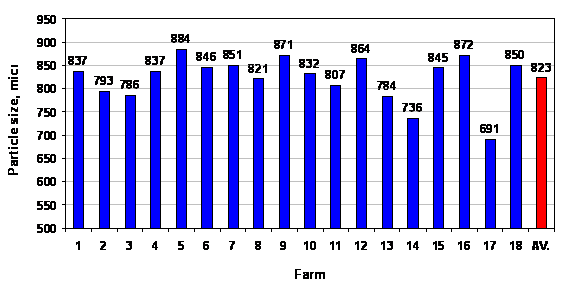
Once the diet has been formulated there are still opportunities to reduce costs by observing particle size stays within the 650-700 micron range to ensure optimum digestibility. Frequently, due to screen wear, improper screen size or hammer wear, the feeds milled on farm are significantly over the 700-micron threshold (surveys show a range of particle size 700-900 microns – Figure 4). For every 100 microns under 700 the feed conversion improves 1.2%. With feed costs today of $80 per finished hog, moving from say a 3.0 F/G to a 2.96 F/G (the effect of 1.2% improvement, or 100 micron reduction in feed particle size) is worth $1.00 per pig marketed.
Figure 4: On-farm survey of average feed grain particle size
| Target of 650 um |
From: Stirdon Betker, Alberta
Please view our Survival Strategies publications on our website www.prairieswine.ca for more tips like:
- Moving from 2 phases to 4 phase feeding programs can easily save $1-2/pig
- Trace minerals and vitamins can be removed from last three weeks of finishing diet (not for gilts for breeding or pigs on Paylean)
- Use of phytase and reduction of dicalcium phosphate in diet has saved $0.50 per pig or more under some market conditions
Labour
Which is more important – breeding sows or shipping pigs? Although the question is not really which is more important, it does point to the two areas where our people have a significant impact in our success as a production unit. Figure 5 shows one farm’s analysis of how management and labour have to respond when market conditions change. The most profitable hog in May 2006 provided a carcass of 100-105 kg whereas that same farm maximized returns by dropping carcass weights 5kg in October 2007 in response to declining hog prices and increasing feed prices. Once the new target is established, consistently hitting the target is important. Unfortunately many packers still report that only 66% of the hogs they receive fall into “core”. This is unfortunate since weighing, marking and forecasting growth rates should allow the personnel to hit 85% in core consistently. The loss due to this slippage is approaching $2.00 per hog marketed.
Figure 5: On farms analysis of carcass weight relative to returns at two time periods
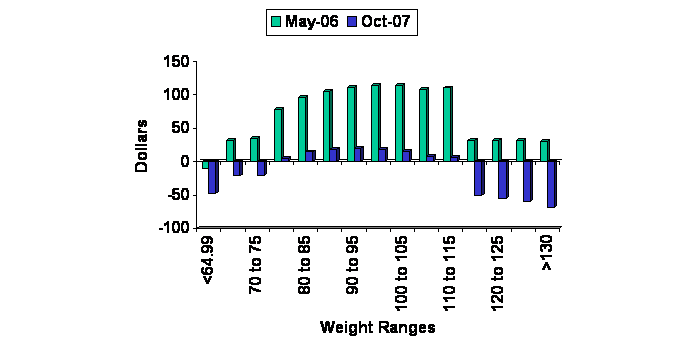
Action #8: In May, 2006, return over feed cost was maximized in carcasses weighing 100 to 105 kg; in October, 2007, returns were maximized in carcasses weighing 95 to 100kg
Utilities
Utilities are the third largest expense in pork production after feed and labour. This cost area has seen significant increases across Canada over the past 5 years. In 2003 we did extensive analysis on the effect of ventilation rate and set point temperature adjustments that can save on energy costs. At the time we found losses of $1 per pig marketed were likely when a finishing barn was over-ventilated by just 10% in the winter. Today electricity prices are three times what we paid in 2003. Our opportunity for savings of up to $3 per hog marketed is possible by ensuring our ventilation systems are performing properly.
An extensive analysis of utility costs is being undertaken in a variety of barns across Saskatchewan. The initial results reported in Figure 6 show that the range of energy use is four fold across various farrow-to-finish operations. Although disappointing for those farms at the high end, it does indicate that there is significant opportunity to reduce costs incurred for utilities – at least $3-5 per pig marketed. Some of the differences contributing to these vast differences in cost include:
- Limit use of heat lamps in farrowing and move to heat mats
- Move from incandescent to T-8 fluorescent bulbs
- Reduce the number of hours of light or amount of light in nursery and grow finish rooms
- When fans need replacing select new ones on the basis of energy efficiency
Figure 6: Survey showing range in energy use across farm types
– Energy, $/100kg pig, over 3 years
Barn type No. of barns Mean Min Max
Farrow-finish 8 6.76 3.31 12.24
Nursery 2 1.70 1.36 2.48
Finish 4 1.35 0.95 2.07
Farrow 2 13.08 11.83 13.93
Farrow-nursery 2 16.21 8.93 23.06
Nursery-finish 1 2.66 1.71 4.06
Additional information will be forthcoming in this area as research uncovers the hidden profit robbers hiding in our utility bills.
Most farms don’t receive a water bill but waste here also contributes to farm costs. Scientific and industry surveys both point to the fact that about 40% of the water delivered to the nipple is wasted. This wasted water ends up as slurry and increases our manure hauling costs by at least $0.70 per pig. The things to look for:
- In a recent survey 20-70% of nipples provided flow rates in excess of recommendations. This excess water is beyond the pig’s capacity to consume it resulting in higher waste.
- Water disappearance is 34% less on wet/dry feeders compared to dry feeders and wall mount nipples.
- Nipples installed at 90o to the wall should be located at shoulder height; nipples located 45o to the wall should be 2 inches above shoulder height (a well-positioned nipple will reduce water wastage to 25% of total volume delivered).
- Replacing nipple drinkers with swing drinkers, bite-ball nipples or bowls has also been shown to decrease wastage.
Productivity
When prices are low and losses are high it is easy to turn our attention away from the demanding management of sow reproduction, “so what if we wean a few less pigs, they are not worth anything any way”. However each pig contributes to carrying the overhead of all those fixed costs our barns incur. Actually, outside of feed and trucking, most costs are fixed in our systems so the impact of sow productivity can be profound. For example, in November we completed an analysis asking what if we move from 22 pigs weaned (20.7 pigs sold) per year to 28 pigs weaned (26.3 pigs sold) per year? During this November period our breakeven price for producing a market hog dropped from $1.60/kg to $1.47/kg when looking at just the impact of sow productivity.
Conclusions
There are opportunities for savings on every farm in Canada. Finding these savings takes a methodical and careful process of comparing our targets to what we are actually achieving – doing this on a regular basis will frequently find opportunities to save. Perhaps savings of $15/hog are possible. These savings don’t all exist on all farms but some of them exist on some farms and it is our job to find them and correct them. Then next month look again and find those that escaped our gaze the first time, and be committed to doing it over and over again as we work to maintain margins in a challenging commodity market.

Pork Insight was developed to address producer and industry needs for timely and accurate information related to pork production and is designed to help you find the information to help you fine -tune your operation. The Pork Insight database can be found online at www.prairieswine.com
Survival Checklist
| Action # 1: Feeding program objectives must be clearly defined; objectives can and indeed will change over timeAction # 2: Selecting the correct dietary energy concentration can lower costs by $1 – $13 per pigAction # 3: Adoption of Net Energy system for diet formulation can reduce feed costs by $1 and $5 per pig.
Action # 4: Aggressive adoption of a variety of ingredients can reduce feed costs by up to $5 per pig Action # 5: Regular re-formulation of diets can reduce feed costs by $3 to $4 per pig. Action # 6: Tracking implementation of feed budget can reduce costs by $5 per pig. Action # 7: Cost of particle size deviation from target can exceed $1 per pig. Action # 8: In May 2006, return over feed cost was maximized in carcasses weighing 100-105 kg, in October 2007, that same farm found returns maximized in carcasses weighing 95-100 kg. Action # 9: Achieving 85% in core, rather than 66% in core would increase return over feed costs by up to $1.80 per pig Action # 10: Increased sow productivity (from 22-28 p/s/y) can reduce breakeven $13/ckg or about 10%. Action # 11: Operating procedures and equipment can both contribute to excess power consumption. Turn lights off, switch to heat mats and reduce heat lamp use. Action # 12: Improper minimum ventilation (10% above requirement) adds up to $3 per pig Action # 13: On average 40% of water delivered to the nipple is wasted, that is an additional $070/pig in slurry hauling costs. |
Scientific review will help to define new pig transport standards
Posted in: Meat Quality, Production, Welfare by admin on | No Comments
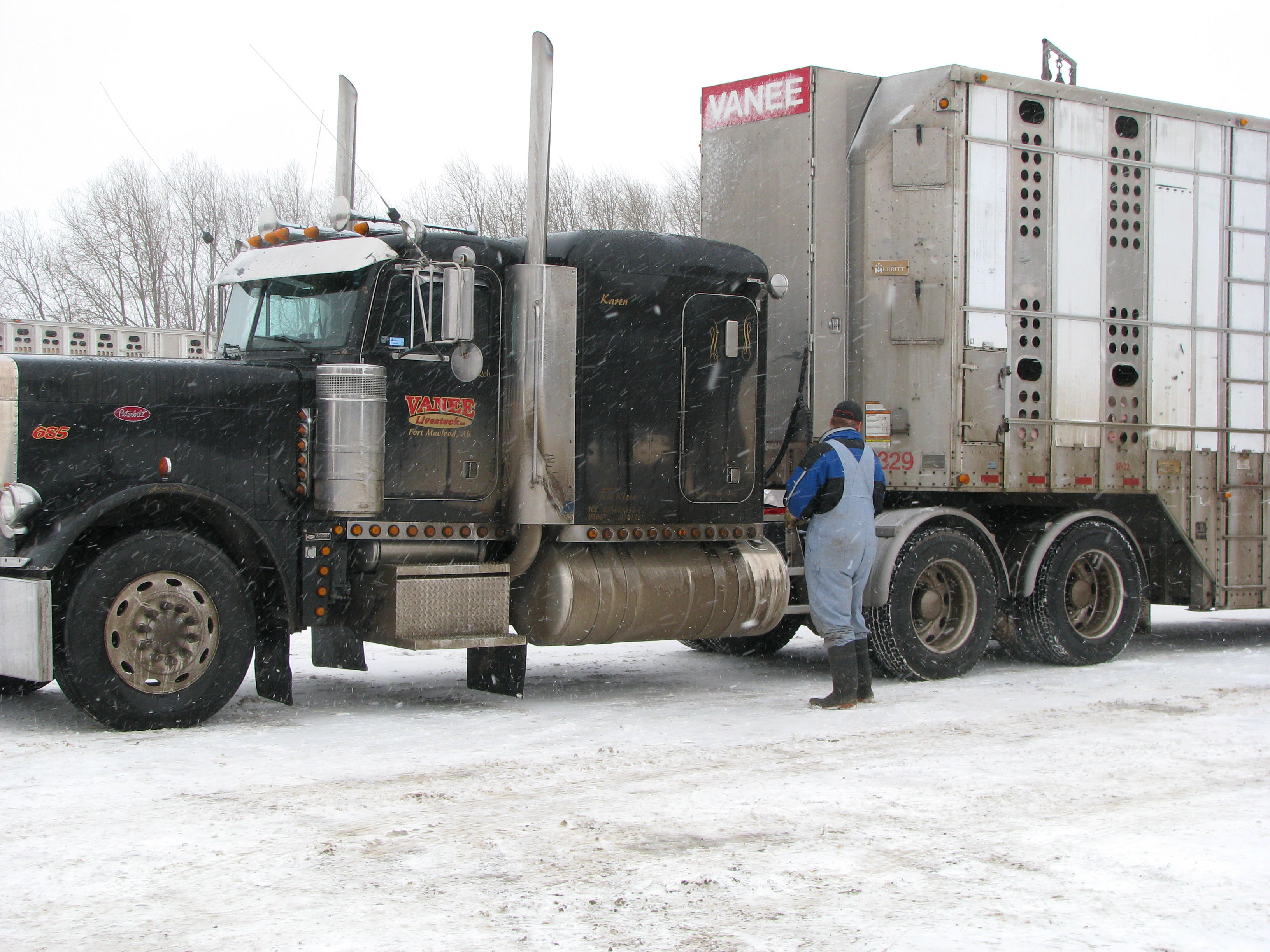 The Canadian Food Inspection Agency (CFIA) is currently in the process of revising existing regulations on the transport of animals, which have not been substantially updated since 1975. However, industry practices have changed considerably since then and new scientific research has given us a better understanding of what is required to ensure the humane treatment of animals during transport.
The World Organization for Animal Health will also soon adopt the first ever global standards for the transport of live animals, including pigs. Ensuring that transport industry standards meet international norms is critical for a country like Canada which exports about half its annual production – including nearly 10 million live hogs a year.
 Drs. Al Schaefer and Clover Bench, Agriculture and Agri-Food Canada scientists in Lacombe, Alberta have been coordinators of a review of the existing recommendations, standards, laws and regulations on pig welfare during transport, to compare them with current scientific literature that started in 2005. This review will help ensure the upcoming changes to Canada’s Livestock Transport Code of Practice are based on scientific data to improve the welfare of animals and, subsequently, maintain or improve meat quality.
“The events that affect animals, like transport stress, are linked directly to actual outcomes in meat quality, food safety and animal welfare,” notes Dr. Schaefer. “Stress causes a number of physical changes in precisely the things that affect food flavour and quality.”
His team specifically examined loading density and journey duration standards (including rest periods and the supply of food and water) in The Recommended Code of Practice for the Care and Handling of Farm Animals –Transportation and the Canadian Health of Animals Act. The review also examined recommendations and regulations in a number of other countries, including the USA, Australia, Ireland, the UK and other EU countries.
Loading density standards
At lower space allowances, pigs encounter higher ambient temperatures, decreased ventilation and air quality, as well as insufficient space to lie down in transit. At the other end of the spectrum, increased space allowance reduces vehicle temperature and increases ventilation, but it can also increase the incidence of fighting and aggression in transit.
Overcrowding can result in increased mortality rates, food safety concerns, and reduced meat quality (primarily the incidence of pale-soft-exudative (PSE) meat). Space allowances above 0.45-0.5 m2/100 kg pig can increase skin damage and the incidence of dark-firm-dry (DFD) meat.
Proper pig density can offset the effects of high temperatures by providing adequate ventilation through vehicle vents, regulating heat production within the vehicle, and providing animals with adequate space to accommodate their size, behaviour and positions during transport.
“The effect of extremely hot and extremely cold conditions during transport and its effect on loading density also needs to be studied in greater detail,” say Dr. Schaefer. “This is of particular importance in Canada due to the extremes in temperature which are experienced throughout the country and over the course of a year.”
Travel duration
The scientific literature has yet to reach a consensus on maximum transport times or the precise impact of rest periods during transport, both of which can affect meat, points out Dr. Schaefer. In fact, he says, there is one school of thought that says short journeys may be more detrimental – for instance higher mortality rates due to animals being unable to adjust to transport stress – than for longer ones and every effort to attenuate such stress during short transport journeys should be made.
The loading and unloading of animals is the most stressful component of livestock transport. Unloading animals for rest periods mid-transport may increase the stress experienced by transported animals. “Research on loading and unloading during long distance travel and the methods used to load and unload animals is urgently needed from the point of view of animal welfare and meat quality,” says Dr. Bench. “Further studies need to determine if it would be better to allow animals to remain on the transport truck and continue their journey, with access to food and water on a ‘higher standard’ vehicle, or if it would be better to transport them shorter distances on a ‘basic’ vehicle and unload them for a rest period with access to food and water.”
“As consumers globally increasingly demand higher standards for the welfare of animals both in their rearing and transport, we must maintain the highest standards of animal welfare or risk losing market share to countries that have implemented increasingly rigorous regulations,” concludes Dr. Schaefer.
Photo captions:
Al Schaefer – Al Schaefer, from Lacombe Research Station, one of the authors of the transport review
Trucking pigs – Livestock transport practices have changed and regulations are in need of updating