

SEARCH
Industry Partners




Prairie Swine Centre is an affiliate of the University of Saskatchewan

Prairie Swine Centre is grateful for the assistance of the George Morris Centre in developing the economics portion of Pork Insight.
Financial support for the Enterprise Model Project and Pork Insight has been provided by:







Does Palatability Affect the Intake of Peas in Pigs?
Posted in: Pork Insight Articles, Prairie Swine Centre by admin on July 12, 2011 | No Comments
The primary use for field peas is as animal feed, particularly swine diets, where they are an economical source of energy and protein. The palatability of peas is a signifi cant concern because it limits the use of this valuable ingredient. In this project, we studied the palatability of peas in swine diets. Our results show that peas used did not cause aversion in pigs, even when inclusion rates were as high as 60%. Pea diets did not cause a taste or post-ingestive aversion, and resulted in consumption levels equivalent to those for soybean meal diets.
For full article PDF click here
Danish Crown goes for growth, despite high costs
Posted in: Production by admin on | No Comments
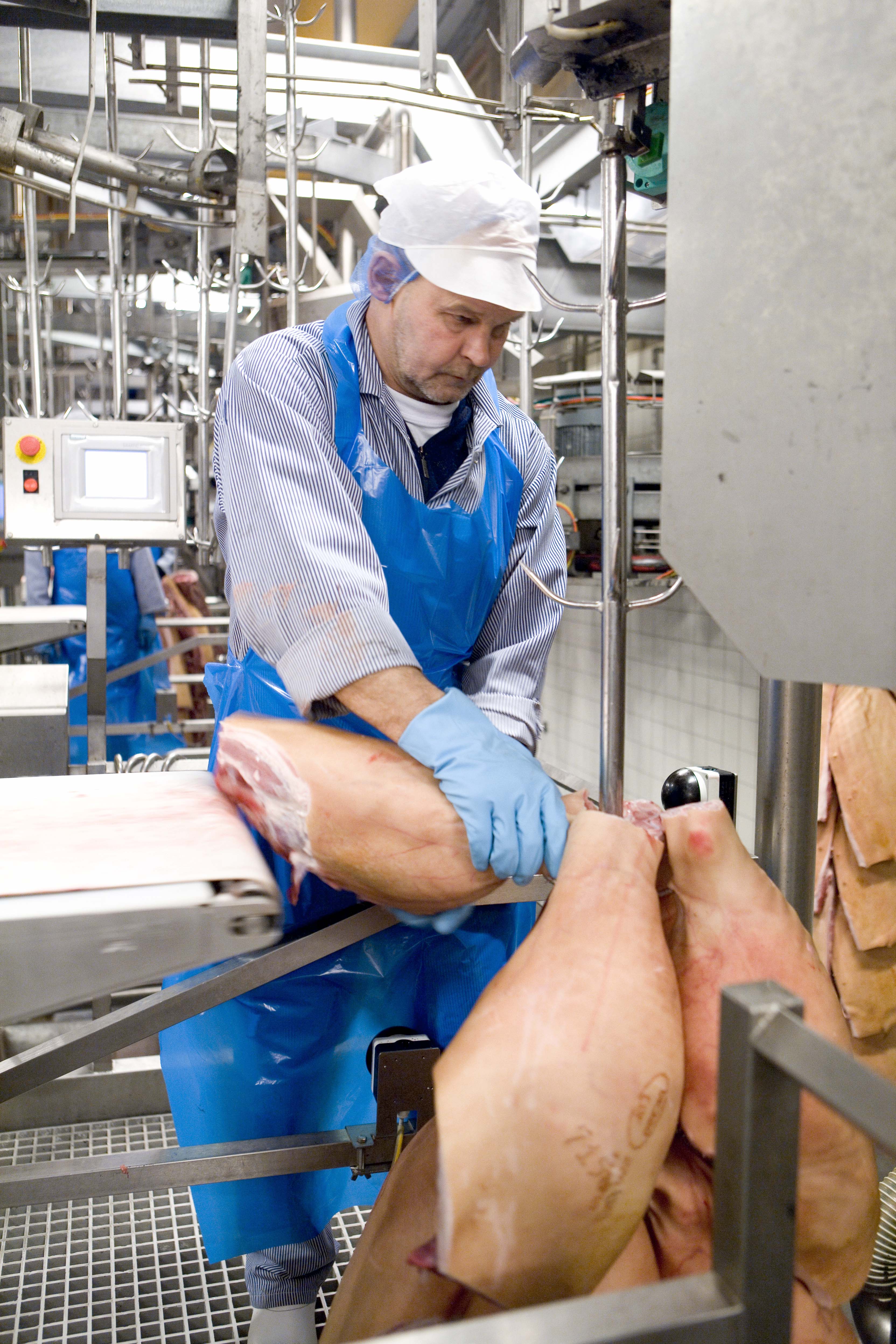 The world’s second largest meat processor, Danish Crown, is pursuing a growth strategy and sees many opportunities in the future, despite its high cost structure, the company’s Chief Analyst, Karl Christian Møller, told delegates at Alberta Pork’s AGM last December. A focus on increasing the value-added component of its business, forging supply chain partnerships with retailers and an expansion of localized production in other European countries is the key to future success, he says. The cooperative company, owned by its 13,000 supplying producers, has recently agreed the purchase of companies in Sweden, Slovakia and Britain. “These local activities are increasing the most, because they have lower production costs,” Møller explained. “We have purchased high quality companies, with good management, who know the local market well, so we can tailor our products to local needs.”
 High costs are the albatross around the necks of both Danish producers and the processing sector. Producers have to meet stringent environmental and welfare regulations and also have high feed and labour costs. “The price of wheat is now $382/tonne and producers aren’t able to purchase corn from the USA due to a ban on GMO crop imports into the EU,” Møller pointed out. “Producers are now losing $45 per hog.” Danish Crown’s average cost of employing people working in their plants is $43/hour, compared with a figure of $10-15 in Germany, where processors employ workers from Eastern Europe. In response, the company has rationalized its operations from 20 to 10 plants, maximized the use of automation and increased capacity utilization. A new plant at Horsens, Jutland, which opened in 2005, slaughters 90,000 pigs per week with a two-shift system and a staff of only 1300.
Møller sees opportunities both in the “old” EU countries and in the new member countries. “After 1990, meat consumption in the Central European countries fell by 40-60%,” he noted. “There is a big demand for pork and consumption is rising as incomes increase.” Because labour is relatively cheap, further processing in these countries is profitable. “Also, the retail structure is changing away from butchers’ shops to larger retailers that want to source meat from vet-inspected modern plants,” Møller said.
In Western Europe, customer focus is on convenience, food variety, safety, animal welfare and impact on the environment. Incomes are high and the demands on food producers reflect that. “Many consumers have a zero attitude to risk and yet, at the same time, they go to the discount supermarket to buy meat as cheaply as possible!” Møller exclaimed. Countries that have set high standards for safety or welfare offer an opportunity to sell at higher prices, he said. “Sweden has a zero- Salmonella policy so pork prices are very high because there are few imports.” In the UK, where the Danes have been exporting bacon for 150 years, prices are 30% higher than in Denmark due to high welfare standards, such as a requirement for group housed sows. Danish Crown owns 40,000 outdoor-housed sows in Eastern England and its Tulip Foods subsidiary accounts for 32% of the company’s total turnover. It has recently purchased George Adams, a company that processes 15,000 pigs per week, carries out a high degree of further processing and turns over $350 million per year. Danish producers also provide pigs for the UK market, produced to UK standards, for which they are paid a premium of 10 cents/kg.
In high-income countries, demand for organic pork is increasing rapidly and Danish Crown subsidiary Friland is one of the leading suppliers. “Producers get paid around three times the normal price and their production cost is about double, so it’s very profitable for them,” Møller noted.
The Danish cooperative model could provide a model for Canadian producers in the future, Møller feels, allowing them to capture some of the added value created in the supply chain. Danish producers build up equity in the company through a “Personal Capital Account” by paying 1.5% of the value of pigs sold and producer equity is $1bn of the total $4bn company equity. “Although they get their money back when they leave the company, they have to give one year’s notice because a stable supply of pigs is essential,” Møller stressed. The hog price is set by taking the total value of product sold in the global marketplace and deducting processing costs. After the year-end, producers receive a bonus, giving a return on their investment, which for 2006-7 was 15 cents per kilo for market hogs.
Asked if his company had any interest in owning a plant in Canada, Møller said that EU markets were much more profitable. “It’s better to be in a place where production is declining and demand is increasing,” he explained. “However, as competitors with Canada in world export markets, Danish producers think that Canadian producers have many advantages such as lower feed costs and space to produce pigs, so they do fear you as competitors.”
Photo captions:
- Karl Moller-1.jpg: Karl Christian Møller, Senior Analyst with Danish Crown
- Danish processing-1.jpg: Value added processing is the key to Danish Crown’s success. (Photo courtesy Danish Bacon and Meat Council)
Arginine supplementation boosts litter size and weight
Posted in: Production, Uncategorized by admin on | No Comments
For more than 20 years, intensive genetic selection has led to an increase in both litter size and birth weight in swine. However, prenatal death and fetal growth restriction remain important factors that limit maximum reproductive performance in swine. New research, funded by USDA’s Cooperative State Research, Education, and Extension Service (CSREES), shows this problem may be alleviated by dietary adjustments that can enhance placental growth, thereby promoting an optimal intrauterine environment throughout pregnancy.
Naturally occurring limitations in the placenta’s ability to supply an adequate amount of nutrients to the fetus can result in prenatal death and fetal growth restriction. Increased death and reduced growth of fetuses are further exacerbated by the widespread practice of restricted feeding programs to prevent excessive weight gain of sows during pregnancy.
Although this feeding regimen can ameliorate farrowing difficulties and appetite reduction during lactation, research from a team of scientists at Texas A&M University and Texas Tech University indicate that sows may not receive sufficient amounts of certain nutrients during mid- to late-gestation to support rapid absolute growth of their fetuses and mammary tissues. Specifically, these nutrients include arginine, one of the amino acids that are the building blocks for tissue proteins.
With grant support from the CSREES National Research Initiative (NRI), Guoyao Wu, Sung Woo Kim and colleagues discovered that prenatal death in swine could be greatly reduced by supplementing standard corn and soybean-based maternal diets with an additional 0.83 percent arginine between days 30 and 114 of gestation.
Compared to the control sows that received no additional arginine, the additional supplementation increased the number and total litter weight of piglets born alive by two pigs per litter and 24 percent, respectively. The study shows that a specific dietary intervention can enhance reproductive performance in pigs.
This recent discovery may result in a significant economic return to pork producers. An increase in the number of live-born pigs will markedly reduce the production costs associated with sow reproduction and lactation. An increase in the vitality of newborn pigs will increase their rate of survival to weaning.
This use of dietary arginine supplementation was based on the findings of basic research on arginine biochemistry and nutrition that was supported by the USDA-NRI since 1992. Arginine plays multiple roles in animal metabolism by serving as a substrate for the synthesis of various important molecules that enhance placental growth (including placental vascular growth). Ultimately, this can result in increased utero-placental blood flow and, therefore, improved transfer of nutrients from mother to fetus.
Arginine can be synthesized by sows and its concentration is relatively high in corn- and soybean meal- based diets. Thus, it was traditionally considered that arginine was a non-essential amino acid for pregnant pigs and that the amount consumed from a conventional diet was sufficient for optimal reproductive performance. However, recent biochemical studies revealed that arginine serves key regulatory functions in nutrient metabolism and fetal growth in pigs. Thus, there has been a paradigm shift in our understanding of the beneficial roles for arginine in swine nutrition and production.
Reference: Ronaldo D. Mateo, Guoyao Wu, Fuller W. Bazer, Jun C. Park, Izuru Shinzato and Sung Woo Kim. 2007.
Dietary L-Arginine Supplementation Enhances the Reproductive Performance of Gilts. Journal of Nutrition 137: 652–656.
$1.4 million to promote Canadian Pork as imports soar
Posted in: Economics, Meat Quality by admin on | No Comments
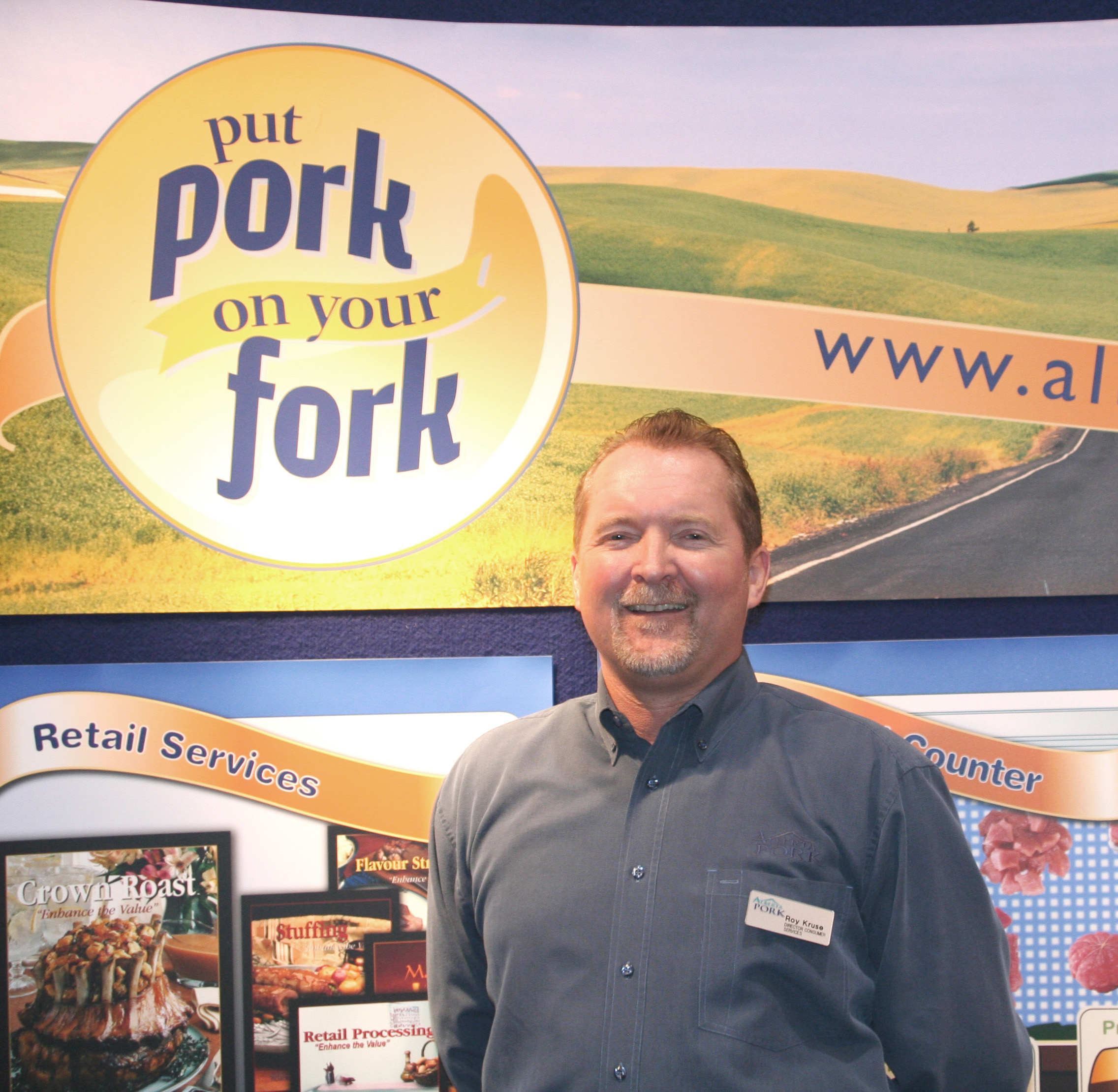
 Soaring pork imports – estimated to be 25% higher in 2008 – have heightened the need for more consumer awareness of the origin of the pork that they purchase. Pork Marketing Canada (PMC) recently announced that it had obtained funding of almost $1.4 million for its Canadian Pork initiative, which is aimed at increasing sales of Canadian pork. A new “Canadian Pork” label will be used to identify the product in participating grocery stores.
“Shoppers now have the choice to choose Canadian,” says Roy Kruse, Manager of Pork Marketing Canada. “Until this label, consumers didn’t know whether or not the pork they found at their local meat counter was imported or Canadian. The new label gives them the opportunity to identify and choose Canadian pork over imports.”
The PMC initiative is supported by studies that show Canadian consumers will choose Canadian products over imports if given the choice. “Canadians want high-quality foods that are safe and produced under environmentally sustainable practices”, notes Kruse. “More and more, they want to buy Canadian.” A study by the Canadian Federation of Agriculture found that 90% of Canadian consumers felt Canadian-grown product should be easily identifiable in stores. Further, 95% of consumers would prefer to buy Canadian-grown product that is competitively priced.
These findings are consistent with an Agriculture and Agri-Food Canada study that found the quality of food produced in Canada is viewed as better than food produced in other countries. Canadian consumers continue to believe that Canada has better production practices and standards and more rules and regulations than other countries. “Not surprisingly, the demand for local food continues to rise,” explains Kruse. “With heightened concerns for the environment and an increasing focus on food safety, people are more interested than ever in the food on their plate.”
In western Canada, participating stores initially include Save On Foods, Overwaitee and Safeway. “It is hoped more retailers will come on board as time goes on,” says Kruse. Also, some Maple Leaf Foods fresh pork products will be labelled Canadian in retail stores where Maple Leaf Foods fresh pork products are carried. Labels will be on fresh pork products from early April onwards. “The assumption is that consumers will choose Canadian product over other options if pork is clearly labelled,” Kruse believes.
The labelling initiative will be supported by an ongoing media campaign to improve consumer awareness. “This campaign is about people as much as it is about pork,” says Kruse. “The campaign will focus on the positive aspects of Canadian pork producers, their high quality product and their contribution to Canadian society and its economy.”
Pork Marketing Canada expects the “Canadian Pork” label campaign to help boost sales of Canadian pork and help to mitigate some of the financial issues faced by the industry.
Pork Marketing Canada is a national marketing initiative of provincial pork organizations across Canada. The purpose of this alliance is to increase the consumption of Canadian pork by partnering with packers, processors, retailers and food service distributors and operators. Pork Marketing Canada offers expertise, information and funding towards programs that promote pork, and further develop sales. For more information, visit www.putporkonyourfork.com
Banff Pork Seminar 2011
Posted in: Pork Insight Articles by admin on June 17, 2011 | No Comments
The proceedings for the 2011 Banff Pork Seminar, published as Advances in Pork Production, Volume 22. Individual articles are also available through Pork Insight.
Modeling the fate of dietary phosphorus in the digestive tract of growing pigs
Posted in: Pork Insight Articles by admin on June 16, 2011 | No Comments
Phosphorus is an important part of a pigs growth regime. It is also one of the most expensive nutrients in a pigs diet, behind energy and protein. When a pig ingests phosphorus there is a variable amount that becomes soluble and is used for growth while some phosphorus is excreted and essentially wasted. An understanding of what causes phosphorus to be utilized is important to understand to increase efficiency in pig growth and feed costs. This paper describes designed mathematical models that simulate what happens to dietary phosphorus in a pigs digestive system especially focusing on how calcium and phytase effect phosphorus digestibility. The models look at three parts of the pigs digestive tract, stomach, proximal small intestine, and distal small intestine. Parameters for the model were taken from past literature. A sensitivity analysis was done to prove the effectiveness of the model. The model was able to accurately predict the efficiency of phytase and a decrease in plant phytase efficiency compared to microbial phytase. The predictability of the model was proven when results were compared with published pig data not used for model development. Prediction of phosphorus digestibility across 66 experiments and 281 observations was adequate. Prediction of calcium was not as accurate. This model proved useful in evaluating phosphrus digestibility for different feedstuffs and feeding strategies. It can also be used for improving dietary phosphorus utilization by quantifying the variations effecting phosphorus utilization.
To read this article visit: http://jas.fass.org/content/89/11/3596
Agent-based simulation framework for virtual prototyping of advanced livestock precision feeding systems
Posted in: Pork Insight Articles, Swine Innovation by admin on June 11, 2011 | No Comments
Running a virtual prototype experiment to test precision feeding systems can achieve instant results for low costs. An agent based model makes it possible to evaluate, design and test a precision feeding system while avoiding investment in physical construction. Each component of a virtual feeding system is made into its own software that has parameters, each piece of software is considered an agent. Each agent has its own limitations and can communicate and make requests from other agents by a high-level agent communication language. All the agents are combined in a multi-unit system which simulates the presision feeding system as a whole. The multiple agents collaborating and communicating together make up the operational capacity of the virtual prototype. Understanding parameters and workload capacity of the simulation model helps understand the workload capabilities of the real system and can help design the new feeding system. Agent based model allows for design alterations to be preformed and potentially put into practice in the real mechanism if proven to work. It is possible to evaluate testing immediately after a system has been built avoiding lag and time investment involved with physical testing, this is an advantage of the virtual system.
Comparison of different prediction equations to measure net energy content of feedstuffs
Posted in: Energy, Pork Insight Articles by admin on May 8, 2011 | No Comments
The abstract for a study comparing the French, German, and Dutch net energy equations to actual net energy calculations. All three equations accurately predicted the effects of gender, body weight, and feed intake, but the effect of protein varied by equation. The French equation was similar to measured net energy, but net energy was 25% greater than the German or Dutch equations.
Dietary omega-6 to omega-3 fatty acid ratios affect plasma fatty acid profiles in sows
Posted in: Nutrition, Pork Insight Articles by admin on | No Comments
The abstract for an experiment testing omega-6:omega-3 (n6:n3), and the difference between plant or fish oil for a source of omega-3. The study found a 1:1 ratio to have the biggest effect. Although fish oil was more effective at increasing n3 fatty acids, plant oil also had an effect on the sows’ fatty acid profile.
Dissecting the competitiveness of the Canadian hog sector: Past and future, perception and reality
Posted in: Economics, Pork Insight Articles by admin on | No Comments
The abstract for an economic analysis of the decline in net producer revenue. The contributions of exchange rates and feed costs were 23% each, the recession was 18%, and mandatory country of origin labeling was 36%. Mandatory country of origin labeling costs are problematic since they cannot be adjusted, and contribute significantly to net revenue decline.