

SEARCH
Industry Partners




Prairie Swine Centre is an affiliate of the University of Saskatchewan

Prairie Swine Centre is grateful for the assistance of the George Morris Centre in developing the economics portion of Pork Insight.
Financial support for the Enterprise Model Project and Pork Insight has been provided by:







Back to the basics – Key learnings from Walking the Pens
Posted in: Production by admin on July 12, 2011 | No Comments
Key learnings from Walking the Pens
If you are a regular reader of Western Hog Journal, you likely saw the Fall 2007 and Winter 2008 articles based on Pfizer Animal Health’s producer education program, Walking the Pens. Launched in 2007, the program is designed to help producers identify and treat individual pigs. It is one way that Pfizer supports the Canadian hog industry. As a reminder, in the first article we looked at how to start pigs properly. In the second, we reviewed common illnesses and their treatments and how to identify sick pigs quickly and efficiently.
However, having knowledge is not enough to ensure that your pigs are healthy. Successful operation of any nursery or grow-finish operation depends on a myriad of factors – quality and health of the stock, quality of the rations, facilities, weather, staff – the list seems endless. Critical to many of these is one overriding factor: the performance of the people responsible for day-to-day operations. Every member of your team must be clear about their responsibilities and learn to recognize or, even better, anticipate problems.
In this article we will examine successful methods for sharing hog health knowledge with employees and how Walking the Pens has helped Canadian farmers in their operations. We have held over 100 training sessions over the past year. Attendees have had the opportunity to strengthen their operation by sharing the information they have gained through the sessions with others working in their barn.
Barn walk-through
Whether introducing new employees to the barn, or reviewing the basics with your peers, consider the walk-through as the basic tool and start with a review of the barn records. Accuracy, timeliness and good record keeping are very important, and tying the records’ use to specific decisions reinforces their importance.
Reviewing the recent diagnostic history of the sow herd or herds and any other related pig flows at the barn gives employees context for current illnesses. Previous group closeouts and current mortality or morbidity records are also helpful. When reviewing these records look for consistent patterns. Death loss and sickness occurring in the first two weeks post entry into grow-finish is usually due to either high infection pressure from the sow herd, such as with PRRS, or an inability to start pigs well. Death loss and sickness reoccurring three to eight weeks post entry is typically due to disease.
The next step is the walk-through itself. Think about and talk to employees about the basic equipment they should carry on each visit:
- a marker to identify pigs needing treatment or evaluation
- medicines that are regularly administered
- a notebook or clipboard to record treatments, observations or needed repairs
Once the barn walk-through is complete, review all of the teachable moments. For new employees, consider creating a pocket-sized, laminated reference card to outline the goals for each turn.
Hog health maintenance
Professionals such as engineers, nutritionists, veterinarians, and animal handlers can all add to the successful education of employees. For example, an engineer has the equipment and experience to troubleshoot the ventilation within a barn and to develop standard operating procedures to properly manage the barn environment. A nutritionist will focus on diet budgeting, diet quality, growth performance, feed particle size and feed wastage.
If you have concerns about the health of your herd, don’t hesitate to get your veterinarian involved: he or she can help you troubleshoot problems and involve other consultants if necessary.
Exposing employees to these experts and giving them a chance to be part of the discussion can help them anticipate issues and know when and who to ask for advice.
Barn management
Each barn should have a sheet that records key events and information such as entry date, weight, source, lot number, mortality, treatments, removals, feed budgeting, temperatures and other comments. Comments should include information such as quality of the pigs at entry, response to treatment or environmental challenges such as fans not being operational. This information can be kept as individual records by topic or consolidated on one form.
Similarly, environmental data and financial information should also be recorded and actively managed. These records can help to identify the early onset of a health challenge, and can be reviewed with your veterinarian in troubleshooting problems.
Remember, the initial education phase is only the first part of developing better husbandry skills.
Proper husbandry skills need to be developed/taught/reinforced throughout the 22 to 26 weeks it takes for pigs to get to market. By the time new employees have loaded 260 pound pigs onto a truck, they may have forgotten the skills it takes to get a 10 pound pig started on concrete slats. To be successful, the system has to have regular, ongoing education.
As one Walking the Pens participant noted, the program’s goal “is to perfect what you’re doing, and improve on what you aren’t paying attention to…A lot of the materials, you have done before, but this program brought it all back to reality.”
Conclusion
It is important for all of us all to recognize that the learning process never ends. The commitment to ongoing education is essential to the success of your operation.
You are the people that see the pigs day in, day out. This is why it is important for all employees to be well versed in, and focused on, sick pig identification. At the same time, concern about the overuse of antibiotics and maximum residue limits or tissue tolerances in food animals has increased the need to be selective in the administration of treatments, placing more importance on individual, rather than blanket treatment.
The industry is shifting emphasis from group to individual pig treatment, and Pfizer stands ready with health protocols and products to aid in this transition. Our hope is that the practices and procedures outlined in Walking the Pens will assist you to produce healthy, high-quality pigs and contribute to your success and profitability. And, if you are interested in participating in a Walking the Pens session but haven’t had a chance yet, please contact your veterinarian for more information.
Dr. Don McDermid is Manager of Veterinary Services in the Swine Group at Pfizer Animal Health.
After training new employees, a close look at the following indicators will provide clues to the areas that may need to be addressed through additional training and education:
|
Health – Producer meetings address challenges and opportunities
Posted in: Production by admin on | No Comments
Producer meetings address challenges and opportunities
By Western Swine Health Associates: Drs. Frank Marshall, Chris Misutka, Pete Pawluk, Shawn Davidson, Chris Byra, Gail Cunningham and Egan Brockhoff
“It is not the strongest of the species that survive, nor the most intelligent, but the ones most responsive to change”
– Charles Darwin
I (Dr. Egan Brockhoff) recently had the opportunity to attend a number of workshops focused on the best practices of leading farmers. Having farmed myself for many years prior to entering my veterinary career it was interesting for me to be reminded that such a diverse range of practices are necessary for success in primary agricultural production today. A colleague and friend of mine once told me that within every challenge lies an opportunity. Recognizing the challenges that our industry faces, it was outlined at this workshop that advancement through continuing education will be a big part of the future successes of our best practices producers. Beginning in February of this year the Western Swine Health Associates (WSHA) began their first eight-day advanced swine management and nutrition course for barn managers and owners.
The initial success of this particular course lends much to the foundational work that Dr. Melodie Chan has done in the western dairy industry. By adapting that portfolio of work in adult learning to swine production and nutrition the WSHA and other industry resource persons have been able to work with 24 producers since Christmas so far in two four week courses.
The finer details of the course itself fall outside the scope of this article; however, a number of bullet points are noteworthy. The approach was directed at providing a balanced portfolio of skills for our producers: Productivity, Human Resources, Fiscal Management, and Customer Satisfaction.
Factors of successful production are often the tenets of many producer seminars. This course works hard to underscore the differences between production and productivity and how that relates to sustainability and profitability. The correlation between production and productivity is often murky and can typically only be realized through the specifics rational enterprise analysis.
We also wanted to introduce concepts of human resources (HR) and management into our course model. Even at the level of the 200-sow unit, its productivity is increasingly impacted by HR and the management of those people resources. Whether it is keeping a single staff member motivated and happy or an entire team the fundamentals of people management hold true. In many ways, the day spent with the course participants on HR, generational differences and communication was about more than what goes on in the barn. It was about how all relationships can be strengthened and how those can and will impact the future of your business and your life around it.
Understanding the needs of your customers was also a topic we wanted to bring forward. Not only did we spend time defining our various customers as producers of pork products we also spoke to how these various customers will and do perceive pork production. An interesting question comes to mind. Recently I attended a meeting in Kansas City. The hot topics of the day were the handling of the downer dairy cows at a California slaughter facility and the long haul transport of pigs from Alberta. The question we as veterinarians had to ask ourselves at this meeting and you as producers have to ask yourself every day is are we ready to allow cameras into our barns? Do we do the best we can with pain management? How do we handle downers? What has been acceptable, what is acceptable, and what will be acceptable? These are all questions we asked and addressed during the course.
To bring a close to the course we included talks in financial analysis and benchmarking. In itself this could have been a month long or even year-long subject to cover. Nevertheless it is a timely discussion and went along way to showing the importance of putting yourself under a microscope from time to time. Walking through benchmarking exercises brought to the forefront the significant variation in the productivity of various enterprises. Many years ago I was introduced to the idea that you can’t manage what you do not measure. Certainly that still holds true today.
The opportunity to bring these courses forward to producers has been a professionally rewarding experience for the WSHA, our producers, and I as the project coordinator. As we all reflect upon our past accomplishments, meditate on those that we presently strive towards, we must not forget to look forward. There are many opportunities ahead along with the challenges.
Focus on maximizing pig value, US economist advises
Posted in: Economics by admin on | No Comments
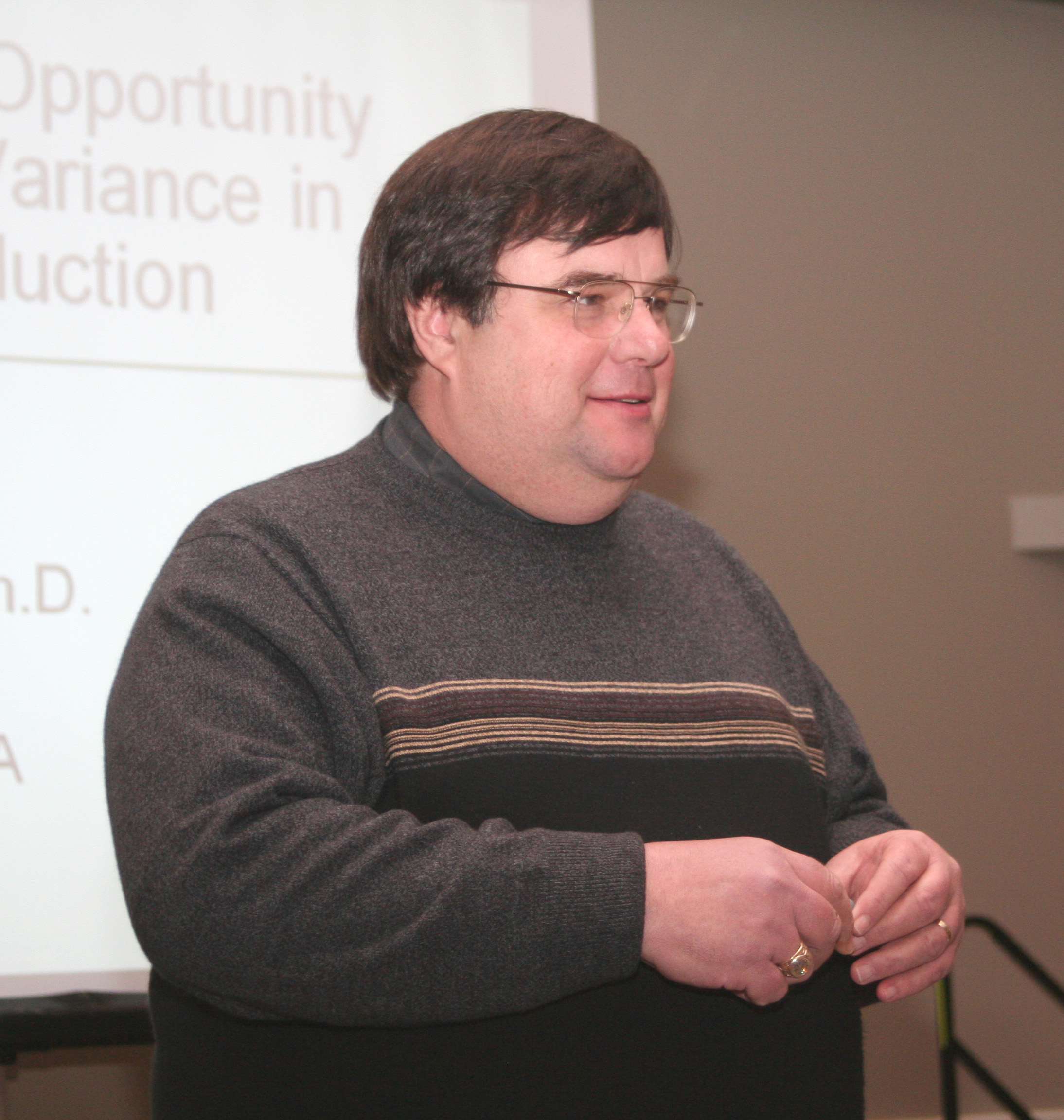 Producers should focus on maximizing the value of the pigs that they sell in order to improve margins, rather than trying to cut costs without understanding the potential consequences, says Dr. Dennis DiPietre, an economist from Missouri. He was speaking at a series of meetings held across Canada, which were organized by Elanco Animal Health. “When people are in survival mode, they make decisions that might look as if they are going to result in a net benefit, but very often they don’t,” he says. “During the 1998-9 pig crisis, one large US production company took all the cell phones away from their staff. What might be the cost of missing just one vital communication?”
DiPietre says that herd recording programs focus on sub-systems of production and fail to tie the whole production process together. “That means we lose the idea that the value of the end product is the key thing,” he explains. “For example, weaning age and weight affect growth in the nursery and through to market, but this never used to be considered by the sow farms. Bonus schemes focussed on breeding parameters, not what happened in the nursery. Now the impact is appreciated, producers are investing in more farrowing crates in order to increase weaning age.”
Producers can increase their income by maximizing the number of “Full Value Pigs” that they sell, says DiPietre. He defines these as high health, quality pigs that reach an optimum weight in the desired time to achieve maximum market price. In order to increase the number of Full Value Pigs, it is necessary to know the growth rate of pigs close to market weight and their feed intake. It is also essential to know the relationship between carcass weight and lean percentage in the population of pigs because, as pigs get heavier, their carcass lean reduces, which may have an impact on index and value. The price received for the various weight classes of pig, as defined by the grading grid, must also be known. From all this data, the weight at which net revenue is highest can be calculated and compared with the actual weight of pigs shipped.
“The optimum weight is dependent on the grading grid and also the cost of feed,” DiPietre notes. “The profit-maximizing weight under November 2006 assumptions for the US was 135kg, but today it is only 127kg.”
The number of Full Value Pigs can be increased by moving the average weight of pigs shipped closer to the optimum and by reducing the degree of weight variation. “The greater the variation in weight of pigs shipped, the lower the optimum weight at slaughter,” explains DiPietre. “Therefore, if you can reduce variation, average market weight can be higher, giving more kilos sold and increasing value.” This will also increase the average price received per kilo, he says, because the biggest price discounts are in the extremes of the weight distribution. A tighter weight range will also result in improved feed efficiency and lower feed costs, DiPietre notes.
In addition to improving selection of pigs for market to optimize weight, producers should look for the reasons for variation within their pigs, he believes. This could be related to health challenges, variation in weaning age, variation in throughput and stocking density or variation in feeds. Better management to reduce such variation, such as more timely treatment of health problems, will increase the percentage of Full Value Pigs, DiPietre says. He advises producers to focus on the bottom 30% of pigs because this will have the most impact.
Maximizing the value of the end product will become essential in the new high-cost feed environment, stresses DiPietre. “A doubling of feed prices means that producers will have to deliver more value than in the past,” he says. “This is what will separate those people that are going to be successful in the future and those that aren’t.”
Feeding by-products to grower-finisher pigs
Posted in: Production by admin on | No Comments
A must for regaining competitiveness
Take home message
The draconian rise in feed costs is directly associated with a drastic rise in price of locally-grown wheat and barley. Thus, the most immediate method to keep the rise in feed cost in check is to increase the dietary content of feedstuffs such as by-products by partially replacing cereal grains. The increased use of by-products must coincide with the use of modern feed quality evaluations systems for energy, amino acids, and phosphorus. Then, the risk of increased dietary protein and fiber content due to increased by-product use can, to a great extent, be managed. Growth performance and carcass quality of grower-finisher pigs can be maintained with reasoned changes in feedstuff composition of feeds, while simultaneously formulating more cost-effective feeds by using more by-products.
Current status
In the last decade, the Western Canadian pork industry has expanded rapidly, supported by competitive locally-grown feed grains, an advantageous exchange rate, and overall reasonable prices for market pigs. Within the last year, this combined picture has changed quickly. Especially for feed grain prices and current exchange rate, the current situation might last for a while. The expansion of the bio-fuels industry, especially in the US, and pressure in global wheat markets are main causes for high feed grain prices. In other words, local crop producers have now been given access to markets that are able and willing to pay more than the local livestock and feed industry for locally-grown grains that were used previously in swine feeds. As result, competitiveness to feed grower-finisher pigs in Western Canada was lost relative to the Northern US, as has been reflected by increasing numbers of young pigs that are being born in Western Canada to be finished in the US.
Instant solution
To regain competitiveness, the Western Canadian pork industry must implement aggressive strategies to use other feedstuff combinations than have been used for the last decade. The use of alternative feedstuffs was not required for the last decade, because grain producers were forced to trade large quantities of grains domestically to feed markets following the elimination of transport subsidies. The feed grain markets have now changed for the foreseeable future. By-products should be used by the pork industry to a much greater extent as feedstuffs in swine feeds than during the last decade to regain competitiveness short-term, or as a minimum, to reduce feed costs. By-products would include feedstuffs such as dried distiller’s grain plus solubles (DDGS), millrun, canola meal, etc., but also raw 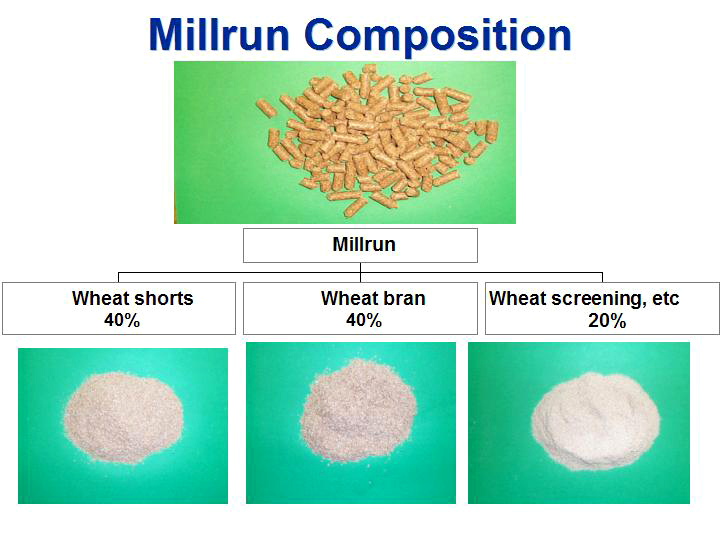 materials that have been extruded and are cost-effective should be considered. Medium-term, rapid feed quality evaluation systems combined with trading based on feed quality and modern feed processing techniques will support the cost-effective use of locally-grown and locally-produced feedstuffs. Crop breeding programs might provide relief long-term, especially if yields per acre can be enhanced beyond averages achieved in the last decade. But obviously long-term breeding efforts do not provide solutions that are required immediately to keep a viable local pork industry in western Canada.
Risk management – energy
To feed pigs diets with an increased content of by-products presents a risk to maintaining growth performance and carcass composition. However, other areas in the world, especially in Western Europe, have managed this risk to a great extent by using more modern feed quality evaluation systems, at least systems that are more modern than used traditionally in North America. By-products such as canola meal, millrun, DDGS, etc. generally have a much higher protein and fibre content and lower starch content than grains. Therefore, less starch and more protein and fibre will be used to supply energy to support protein deposition. Better energy systems than digestible energy (DE) and metabolizable energy (ME) are required, because these two systems overestimate the amount of energy supplied by protein and fibre. The net energy (NE) system is such a system. Although the NE system has not been validated for extreme inclusion levels of by-products in swine diets, a large body of evidence of European and North American data suggest that the NE system is superior to the DE and ME system in dealing with large fluctuations in dietary content of macronutrients, especially protein. In other words, growth performance and carcass quality can be maintained more easily across a wider spectrum of changes in dietary protein content. In contrast, if expected changes in macronutrient composition are small, not much of an advantage of the NE system will be observed.
Risk management – other constituents
Apart from energy, dietary amino acids should be formulated using the standardized ileal digestible (SID) amino acid system, and the use of total and apparent digestible amino acids for feed formulation should be avoided entirely. Furthermore, phosphorus should be formulated as digestible or available phosphorus and not as total phosphorus. Some by-products such as DDGS have a high content of digestible phosphorus and this potential advantage would be ignored if the total phosphorus system is used to formulate swine feeds. Moreover, by-products present a risk because concentrations of mycotoxins or anti-nutritional factors can potentially be higher than in the original cereal grain. For example, vomitoxin or DON can survive the fermentation and drying process, and can thus be concentrated in DDGS in comparison to the feedstock grain. Finally, the high fibre content of by-products and thus compounded feeds will mean that pigs should be marketed 1 to 2 kg heavier to ensure that target carcass weight will be reached. The increased fibre content will stimulate intestine growth and dressing percentage will thus be slightly lower.
Risk management – guidance
The risk of including an increasing amount of by-products into swine feeds can be managed better by including multiple by-products each at a lower inclusion level in swine diets than a large quantity of a single by-product. Unfortunately, local research efforts have been mostly directed towards studying the impact of individual by-products, rather than studying the maximum inclusion level of a mix of by-products. Still, if one of the following feedstuffs – tallow, canola meal, phytase, and DDGS, and perhaps even extruded feedstuffs – are currently missing from your feed formulations from grower-finisher pigs, your feed costs are likely too high. If the combined total of these feedstuffs, excluding soybean meal, is currently less than 30% of grower diets, opportunities to develop a more cost-effective feeding program exist. Experiences with by-products in The Netherlands indicate that combined total of by-products can be pushed to 70% in compounded feeds and up to 95% in liquid feeding systems. The Western Canadian pork industry has barely explored such opportunities. Unfortunately, pork producers in western Canada do not have the same extent of opportunities as pork producers in Ontario to use liquid by-products from the food industries. Still, sufficient opportunities exist to explore larger inclusion rates of by-products
Databases
To use local by-products effectively, information on the content of their constituents NE, SID amino acids, and digestible/available phosphorus is essential. Throughout history, large databases containing the nutritional quality of these constituents have been acquired for an array of feedstuffs including by-products, especially in Western Europe. In particular local feed consultants have brought this information to Western Canada, and have implemented the use of these databases to formulate feeds. A steep learning curve followed. For example, some differences in macronutrient profile of by-products likely exist between continents that should be accounted for properly using laboratory analyses. Correct NE content and ratios of SID lysine to NE had to be implemented, whereas SID ratios of other amino acids to lysine were more easily implemented. Also, even though the NE system can predict performance and carcass quality better than the DE and ME systems, it does not mean that the NE system can be implemented without reasoned changes in feedstuff and macronutrient composition of feeds.
Implications
The pork industry in western Canada is under severe pressure, in part due to very high feed costs. The current status dictates that the risk of using increasing amounts of by-products will be taken. These risks should be managed properly. Even though Western Canadian nutritionists have generally worked with more complex feeds than colleagues in the US, more complex feeds in other places globally provide a guide to reductions in feed costs that can be achieved instantly. At Banff Pork Seminar for the last two years, we developed specific sessions that provided the breadth and depth of knowledge required to implement these changes.
Eye on Research – Selection for uterine capacity improves fetal survival
Posted in: Production by admin on | No Comments
Selection for uterine capacity improves fetal survival
Work at the University of Alberta has shown that in very prolific sows with a high ovulation rate, embryo survival and quality of piglets at birth may be compromised due to limitations in nutrient supply via the placenta. One solution to this problem is to select for uterine capacity rather than total numbers born. Recent work by the USDA’s Animal Research Center in Nebraska, suggests that this approach does indeed improve fetal survival and, as a result, litter size.
The researchers selected pigs over 11 generations on the basis of ovulation rate (OR) or uterine capacity (UC) and then looked at the number of fetuses at different stages of gestation for each of these lines and an unselected control line (CO). Gilts had one horn of their uterus and the corresponding ovary removed at 160 days of age. After breeding they were slaughtered at 25, 45, 65, 85 or 105 days of gestation and ovulation rate and the number of live and dead fetuses recorded. Fetal and placental weights were also recorded.
As might be expected, the ovulation rate of OR gilts was highest (18.0) compared to the UC and CO lines, with 15.0 and 14.0 respectively. However, as pregnancy progressed and embryo losses occurred, the UC gilts had better embryo survival (Table 1). In fact, at full term, the number of pigs produced by UC gilts was predicted to be 19.6% higher than for the OR gilts.
Table 1: Embryo numbers in gilts selected for ovulation rate or uterine capacity
Days of gestation
25 45 65 85 105
Unselected control (CO) 10.1 8.3 7.2 6.7 7.3
Ovulation Rate (OR) 13.4 8.3 7.9 6.5 6.7
Uterine Capacity (UC) 10.2 9.0 8.5 7.5 8.0
In each line, the number of live fetuses at day 25 was approximately 72% of ovulation rate. Mortality to day 45 was greatest in OR, intermediate in CO, and least in UC. Reductions in live fetuses continued to occur from day 45 to 105, but line differences at day 45 were essentially maintained to day 105. Selection for uterine capacity improved fetal survival primarily during the time period between days 25 and 45. Relative growth rate of placental tissue during gestation suggested a relatively later growth pattern of placental tissue in the UC line.
WHJ comment: The differences between the three lines are quite staggering. It can be seen from the table that, even though the OR line had a much higher number of live embryos at day 25, their numbers decreased much more rapidly than the two other lines. This suggests that selection on the basis of uterine capacity should result in more piglets born alive per litter.
Reference: B. A. Freking, K. A. Leymaster, J. L. Vallet and R. K. Christenson. Number of fetuses and conceptus growth throughout gestation in lines of pigs selected for ovulation rate or uterine capacity. J. Anim Sci. 2007. 85:2093-2103. doi:10.2527/jas.2006-766
Eye on Research – Drinker design affects water intake and wastage in the nursery
Posted in: Production by admin on | No Comments
Drinker design affects water intake and wastage in the nursery
During the first few days after weaning, pigs often experience body weight loss as they adapt to eating solid food. During this time period, they are also observed to drink excessively and develop abnormal oral behaviour such as belly nosing. Some recently published research suggests that this excessive drinking may be from piglets’ attempting to satiate their hunger through gut fill.
Gut fill through water intake may affect establishment of feeding behaviour. Using drinker devices other than the standard nipple drinker may ease piglets’ transition at weaning by facilitating initiation of feeding and preventing development of behaviour problems. This experiment examined the effect of drinker type on water and food intake, growth rates, and belly nosing in newly weaned piglets.
Eighteen pens of 15 piglets each (270 piglets) were weaned at 18 days of age. They were housed in pens containing one of three drinker devices: a standard nipple, a push-lever bowl or a float bowl. Piglets’ water and feed intake, water usage, body weight and behaviour were examined for two weeks post weaning.
Piglets with nipple drinkers wasted more water than those using other types of drinker. The amount of wastage was 1114, 295 and 186 ml respectively for nipple, float and push-lever type drinkers. Those piglets with float bowls consumed less water than other piglets. Consumption was 879, 475 and 774 ml respectively for the three drinker types. Piglets with push-lever bowls spent less time at the feeder than other piglets, although no differences were detected in feed intake or overall daily gain between any of the drinker types. Piglets with push-lever bowls also tended to perform less piglet-directed nosing behaviour than piglets with the float bowl.
The researchers noted that piglets appear to use more water during the first two days after weaning with certain drinker types. However, they say, piglets do not appear to attain satiety through water consumption because most of the water used during the first few days after weaning is wasted. This excessive drinking and water wastage can be abated through use of push-lever drinkers without negative implications on feed intake and growth rates.
WHJ comment: Nipple drinkers wasted about six times more water than the push-lever bowl type, which has significant implications for the cost of water and for manure disposal. The disadvantage of the float-type bowl is that it reduces water intake, probably due to a build-up of debris such as feed particles in the bowl making the water less palatable. Push-lever type bowls usually have a very shallow bowl, which is easily cleaned out and less likely to accumulate debris. This work suggests that choice of drinker type in the nursery is perhaps more crucial than we thought and that a push-lever bowl drinker is most suitable type for nursery pigs.
Reference: S. Torrey, E. L. M. Toth Tamminga and T. M. Widowski (2008). Effect of drinker type on water intake and waste in newly weaned piglets. J. Anim Sci., doi: 10.2527/jas.2007-0632
Eye on Research – Vitamin A at weaning and breeding increases litter size
Posted in: Production by admin on | No Comments
Vitamin A at weaning and breeding increases litter size
A study was conducted by five cooperating experimental stations in the USA to determine the effects of an intramuscular injection of vitamin A at weaning and breeding on subsequent litter size of sows. Sows were assigned to one of three treatments given at weaning and again at breeding: 1) a placebo injection (2 mL of corn oil), 2) injection with 250,000 IU of vitamin A, and 3) i.m. injection with 500,000 IU of vitamin A. A common vitamin-mineral premix that supplied 11,000 IU of vitamin A/kg of diet (as-fed) was used by all stations. As would be expected, station effects were noted for many response measures. Analysis of the data also showed interactions between station, treatment and parity.
For sows of parity 1 and 2, litter sizes increased from treatments 1 to 3, respectively, for total pigs born (10.15, 12.14, and 13.18), live born (9.70, 11.14, and 12.16) and weaned (8.92, 10.12, and 10.60) piglets. However, for sows of parity 3 to 6, litter sizes were not affected by the treatment with 11.82, 11.71, and 11.46 total born pigs respectively, 10.82, 10.64, and 10.23 live born, and 8.65, 9.01, 8.79 weaned piglets. Piglet birth weight decreased due to vitamin A treatment in parity 1 and 2 sows and was likely due to the differences observed in litter size. The results of this regional project demonstrated that injection of high doses of vitamin A in young sows at weaning and breeding improves the subsequent number of pigs born and weaned per litter, indicating that vitamin A requirements for maximal performance may vary with age.
WHJ comment: Many years ago it was quite common to give an injection of Vitamins A, D and E at weaning, although the response was often not clear on commercial farms. This trial work shows that the response to Vitamin A is quite large in young females but that there is not much benefit for older sows. The industry is becoming more aware that gilts and second litter sows need higher levels of certain nutrients, which sometimes cannot be supplied through the normal diet. While further work in this whole area is required Vitamin A injection, as shown in the trial, can be considered by producers as a technique for improving litter size in young females.
Reference: M. D. Lindemann, J. H. Brendemuhl, L. I. Chiba, C. S. Darroch, C. R. Dove, M. J. Estienne and A. F. Harper (2008). A regional evaluation of injections of high levels of vitamin A on reproductive performance of sows. J. Anim Sci. 86:333-338. doi:10.2527/jas.2007-0153
Eye on Research – Seven-day Regumate treatment effective for cycling gilts
Posted in: Production by admin on | No Comments
Seven-day Regumate treatment effective for cycling gilts
Previous studies at the University of Alberta have shown that implementation of an efficient gilt development unit (GDU) management program and the use of Regumate in gilts that have shown estrus is an effective tool in GDU management. The program can be refined further by reducing the period of Rugumate treatment although, to do this, it is essential that the first day of standing estrus is recorded. Regumate is then administered from day 9-13 onwards, when the natural progesterone level is high. The U of A researchers have compared a 7-day treatment with a 14-day treatment in gilts that either cycled naturally or where estrus was induced using PG600.
Breedings were targeted to occur Tuesday to Friday to avoid weekend breedings, to coincide with semen delivery and optimize quality. Therefore, Regu-Mate treatment was started on a Friday. Gilts detected in heat Saturday – Wednesday of the previous week were allocated to the 7-day protocol (RM7) (corresponding to day 9 -13 of the estrus cycle). Gilts detected in heat on Thursday – Friday from two weeks previous, or cyclic gilts with unknown heat dates, were allocated to the 14-day protocol (RM14).
The percentage of gilts bred within 10 days of Regumate withdrawal was higher (87.4%) in RM7 gilts than RM14 (84.8%). However, there was no difference in numbers total born or born alive. Gilts that had been treated with PG600 took a longer time to show estrus after Regumate withdrawal (6.6 vs 6.3 days) and fewer of these gilts were bred by 10 days (81.3 vs 91.9 %). Also, numbers born alive (10.9 vs 11.6 pigs) were lower, although total number born was not statistically different.
WHJ comment: This work suggests that reducing the number of treatment days when using Regumate to synchronize gilts is effective. It also shows that gilts that did not cycle quickly after boar exposure and were given PG600 to induce estrus had lower fertility. Regumate and PG600 are both valuable tools in GDU management, however good boar stimulation to induce estrus is the key to achieving a rapid onset of estrus. The use of either a 7-day or a 14-day treatment period with Regumate, depending on when estrus occurs, provides a means of synchronizing gilts that have shown estrus at different times.
Reference: J. Patterson, N. Williams, G. Spronk and G. Foxcroft (2008) Efficacy of a 7 vs 14 day Regu-Mate protocol in cyclic gilts. Advances in Pork Production: Volume 19, Abstract #25
Weaning at 28 Days. Is Creep Feeding Beneficial?
Posted in: Pork Insight Articles, Prairie Swine Centre, Production by admin on | No Comments
Providing feed to the piglets in the farrowing room, or creep feeding, is practised to ensure a smooth transition onto solid feed at weaning. It is assumed that even a limited intake of the creep feed will familiarize the piglet with solid feed and mitigate a post-weaning growth lag by 1) increasing the body weight of piglets at weaning, 2) encouraging consumption of solid feed immediately post-weaning and 3) initiating the adaptation of the gastro-intestinal tract to solid feed. It was found that by allowing piglets access to a Phase 1 diet in the farrowing room (creep feeding) for the final 7 days prior to weaning on day 28 did not provide a sustained growth benefit, regardless of weaning weight.
For the full text PDF Click Here!
Do Peas and Canola Meal have Synergistic Effects when Included in Diets for Growing Pigs?
Posted in: Pork Insight Articles, Production by admin on | No Comments
The objective of the study was to evaluate the inclusion of increasing levels of peas with or without canola meal in diets for growing pigs. A total of 64 barrows were fed diets containing different combinations of peas and canola meal to study the effect on performance. No significant differences in performance were observed; indicating that up to 30% peas with or without canola meal can be successfully included in diets for growing pigs.
For the full text PDF Click Here!