

SEARCH
Industry Partners




Prairie Swine Centre is an affiliate of the University of Saskatchewan

Prairie Swine Centre is grateful for the assistance of the George Morris Centre in developing the economics portion of Pork Insight.
Financial support for the Enterprise Model Project and Pork Insight has been provided by:







Measuring cutaneous thermal nociception in group-housed pigs using laser technique—Effects of laser power output
Posted in: Production, Welfare by admin on July 25, 2011 | No Comments
Nociceptive testing (the testing to evaluate the perception of pain) is a valuable tool in the development of pharmaceutical products, for basic nociceptive research, and for studying changes in pain sensitivity is investigated after inflammatory states or nerve injury. However, in pigs only very limited knowledge about nociceptive processes are available, especially methodology which is applicable for pigs kept in group-housing without disturbing the daily routines of the animals. To validate a laser-based method to measure thermal nociception in group-housed pigs, we performed two experiments observing the behavioural responses toward cutaneous nociceptive stimulation from a computer-controlled CO2-laser beam applied to either the caudal part of the metatarsus on the hind legs or the shoulder region of gilts. In Exp. 1, effects of laser power output on nociceptive responses toward stimulation on the caudal aspects of the metatarsus were examined using 15 gilts kept in one group and tested in individual feeding stalls after feeding. Increasing the power output led to gradually decreasing latency to respond and affected the types of responding (less non-responding, less moving leg, less lifting leg, and more kicking). Furthermore, the occurrence of tail flicking during laser stimulation was increased. In Exp. 2, effects of laser power output on nociceptive responses toward stimulation on the shoulder region were examined in 10 gilts kept under the same conditions. Again, increasing the power output led to gradually decreasing latency to respond and affected the types of responding (less non-responding, less moving shoulder, less moving body, higher occurrence of muscle twitch, and higher occurrence of rubbing shoulder). In conclusion, the results of the two experiments suggest that behavioural responses to nociceptive cutaneous laser stimulation are a valid measure of nociception in grouphoused gilts which are tested with a minimal disturbance of daily routines, and both when applied to the hind legs and to the shoulder region. Furthermore, pig nociceptive responses appear to be graded, to include new types of behaviour as the nociceptive input increases and to show elements of site-specificity.
For more information the full article can be found at http://journals.elsevierhealth.com/periodicals/applan/issues
A note on genetic parameters of gilt responses to humans
Posted in: Production, Welfare by admin on | No Comments
In livestock production pigs are handled frequently by humans from their first day of life. Negative experiences with humans result in chronic stress and may have an influence on oestrus behaviour, prolonged parturition and a higher number of stillborn piglets. In this study, a response test towards a stockperson was evaluated for improved maternal behaviour and increased piglet survival. Records were available from 638 German Landrace gilts with 860 observations tested for the response to an observer in the familiar environment of the mating centre. The degree of response was scored in five ordered categories. Fertility information (number of piglets born alive and stillborn) was available from 293 sows. The figures for survival rate and crushing by the sow were used from 2408 piglets. The estimated heritability in the human response test was h2 = 0.09. Gilts which displayed only low response to humans showed fewer stillborn or crushed piglets in their first litter. The conclusion of this study was that the measurement of gilts responses to humans could be collected under production conditions since the gilts were tested in their home pens. The estimated additive genetic variance indicates that there is enough variance for selection. The scoring gives some evidence that sows with low responses to an observer have an improved piglet survival rate. The data also indicated that totally unresponsive sows had a higher number of stillborn piglets.
For more information the full article can be found at http://journals.elsevierhealth.com/periodicals/applan/issues
Pain and discomfort in male piglets during surgical castration with and without local anaesthesia as determined by vocalization and defence behaviour
Posted in: Production, Welfare by admin on | No Comments
Surgical castration of male piglets without anaesthesia is routine in domestic pig production causing serious distress and impairment of welfare. Thus, the EU is seeking alternatives, with local anaesthesia being one of the possible candidates. The aim of the present study was to compare surgical castration without anaesthesia (castration by cutting the spermatic cords (C) with castration under local anaesthesia (CL), the act of intratesticular anaesthesia (L), and the combined effect of local anaesthesia and the following castration (L + CL) under practical field conditions on a commercial farm. Distress was estimated according to a set of behavioural indicators derived from vocalisation and defence movements of the piglets. C had the overall worst effects on the indices, made up assumingly by the pain due to the intensity and duration of the procedure, although it was not possible to separate the effects of handling and the procedure of castration. Local anaesthesia reduces the intensity of pain experienced during castration as assessed by changes in the behavioural indicators used here. But this positive effect was partly obscured by additional distress due to prolonged handling. It is concluded that the welfare benefits of local anaesthesia for castration of piglets, as carried out and assessed here, may not fully meet expectations, and that further research is needed to find ways to reduce the suffering of male piglets, that it is necessary to castrate.
For more information the full article can be found at http://journals.elsevierhealth.com/periodicals/applan/issues
Autonomic reactions indicating positive affect during acoustic reward learning in domestic pigs
Posted in: Production, Welfare by admin on | No Comments
Cognitive processes, such as stimulus appraisal, are important in generating emotional states and successful coping with cognitive challenges is thought to induce positive emotions. We investigated learning behaviour and autonomic reactions, including heart rate (HR) and its variability (standard deviation (SDNN) and root mean square of successive differences (RMSSD) of a time series of interbeat intervals). Twenty-four domestic pigs, housed in six groups of four, were confronted with a cognitive challenge integrated into their familiar housing environment. Pigs were rewarded with food after they mastered the discrimination of an individual acoustic signal followed by an operant task. All pigs quickly learned the tasks, while baseline SDNN and RMSSD increased significantly throughout the experiment. In reaction to the signals, pigs showed a sudden increase in HR, SDNN and RMSSD, and a decrease in the RMSSD/SDNN ratio. Immediately after this reaction, the HR and SDNN decreased, and the RMSSD/SDNN ratio increased. During feeding, the HR and the RMSSD/SDNN ratio stayed elevated. The pigs showed no cardiac reaction to the sound signals for other pigs or their feeding pen mates. We concluded that the level of cognitive challenge was adequate and that the observed changes in the autonomic tone, which are related to different dimensions of the affective response (e.g. arousal and valence), indicated arousal and positive affective appraisal by the pigs. These findings provide valuable insight into the assessment of positive emotions in animals and support the use of an adequate cognitive enrichment to improve animal welfare.
For more information the full article can be found at http://www.sciencedirect.com/science/journal/00033472
Domestic pigs, Sus scrofa, adjust their foraging behaviour to whom they are foraging with
Posted in: Environment, Production, Welfare by admin on | No Comments
Subordinate domestic pigs show behavioural tactics similar to the ones described as tactical deception in primates and corvids (i.e. crows, ravens and jays) when foraging with scrounging dominants for a single monopolizable food source. Here we investigated further whether they can learn deceptive tactics to counter a scrounger by first retrieving the smaller of two hidden food baits, and whether they can discriminate between different types of co-forager. Seven subordinate pigs were tested with co-foragers, and also alone, when foraging for two differently sized food baits hidden in two of 12 buckets in a foraging arena. Unlike their co-foragers, the subordinates already knew where the foods were located; co-foragers differed in whether they were scroungers or not. Subordinates did not respond to scrounging with the predicted deceptive tactic of visiting the small bait first. They did, however, lose their overall preference for retrieving the large bait first and increased their foraging speed compared to when foraging with nonscroungers or on their own. The findings suggest the ability to discriminate between different individual co-foragers in domestic pigs, and increasing foraging speed as a way of responding to exploitation by scrounging dominants in competitive foraging situations with several food patches.
For more information the full article can be found at http://www.sciencedirect.com/science/journal/00033472
Pork production improvement expected from the use of new genetic markers
Posted in: Production by admin on July 14, 2011 | No Comments
Background
Breeders have been using gene markers since the 1990s to remove genes known to negatively impact pork production. Genes like the porcine stress syndrome (HAL) and the NAPOLE gene (RN-) have been identified and are commonly selected against in most breeding herds so the deleterious genes are removed from their herds. In this manner commercial pork producers do not have to address these genes in their breeding herds because their genetic supplier has already managed the genes for them.
Today, swine breeders have new gene marker tools commercially available to them at relatively low costs. These new gene markers are for traits that include feed efficiency, growth, backfat and pork quality and litter size.
Two companies, DNA LandMarks, a BASF Plant Sciences company that performs genetic testing located in Quebec, Canada and GeneSeek Inc., a molecular biology company in the US, have purchased the licensing agreements from the researchers who originally developed them. Included in the group of available tests are markers developed in Max Rothschild’s lab at Iowa State University, which is responsible for developing tests for litter size, pork quality and feed efficiency, backfat and growth rate. A breeder wanting to screen animals can simply submit a blood or tissue sample (whole blood, blood blotter cards, ear notches, docked tails, or tissue obtained through a new ear tagging system from Typifix are all examples of sources of DNA that can be used to run these tests) and have the marker genotypes determined on as many animals as they desire. The costs for these tests are relatively inexpensive and as technology improves it is likely that more and more tests can be offered and prices for these tests typically decline.
As an example, we discuss the commercially available tests from DNA Landmarks (http://www.dnalandmarks.com/english/livestock_overview.html)
Markers for growth rate, feed efficiency, feed intake, and backfat
Three markers associated with growth rate and feed efficiency are available. These markers are MC4R, HMGA1, and CCKAR. Briefly, the MC4R locus impacts growth and leanness in the pig. The name MC4R is taken from the gene’s name Melanocortin-4 receptor. There are two alleles or variants for this marker, A and G. The A allele is associated with fast growth while the G variant is associated with lean and efficient growth. The producer and breeder can decide if they wish to choose the “fast” growth form of the gene or the “lean/efficient growth” form of the gene. Pigs that are homozygous for the fast growth alleles (i.e. AA) have been shown to reach market weight 3 days sooner compared to pigs that are homozygous for the lean allele. If producers chose to select for the MC4R lean alleles (i.e. GG) pigs will have 8% less backfat and eat significantly less feed (improving feed efficiency). In Table 1 research results are shown indicating the effects of MC4R in two different populations of pigs. These results have been well validated and are effective in all breeds except Hampshire.
The second marker available is HMGA1. The abbreviation HMGA1 is taken from the gene’s name, High-mobility group A. This gene marker is highly associated with backfat and lean growth. HMGA1 variants are consistently associated with fat deposition, growth rate, and lean mass percentage traits across several pig populations. With this particular marker, producers need to remember that the T allele is the beneficial allele and the one that should be selected for to reduce backfat and thereby improve lean percentage. Producers can test and select animals which are likely to be leaner and produce offspring that are leaner. Thus, selection of the beneficial alleles will reduce backfat and improve percentage lean in terminal market animals that are from breeders that have incorporated the beneficial alleles into their breeding program. Improvement in feed efficiency should also occur when selecting for the beneficial allele of this marker because a reduction in the amount of fat deposited reduces the amount of feed needed to add weight to the animal.
The last gene marker in this group is CCKAR. CCKAR is an abbreviation for cholecystokinin type A receptor. This marker is associated with the control of feed intake, hunger control, and obesity. There are two genetic alleles or variants, G and A, for this marker. In this case the G allele is dominant to the A allele. Pigs that have at least one copy of the G allele (i.e. can be GG or GA) for this marker have, on average, about 5% higher daily feed intake, 3% higher daily gain, and 3% fewer days to reach market weight, when compared to homozygotes (i.e. AA) for the A allele.
Markers for meat quality
Production of high quality pork to meet both domestic and export market demand has been a selection goal of most swine breeders in recent years. Many niche market programs are in place to meet white tablecloth and export demand for quality pork. In the past several years, markers have been identified which improve pork quality.
Two genetic marker tests that impact pork quality have been licensed to DNA Landmarks from ISU. The two markers associated with meat quality offered in this package include PRKAG3 and CAST.
The PRKAG3 is an abbreviation for protein kinase, AMP activated, gamma 3 subunit. This marker is associated with muscle glycogen content and meat quality. Producers and breeders can select for animals that have the higher pH and better meat color from of the gene. Other variations of this gene have been referred to as the Rendement Napole (RN) gene marker. The RN gene marker has been shown to cause low ultimate pH and reduced water holding capacity in pork. This gene marker has been largely observed in purebred Hampshire or crossbred animals involving Hampshire. Hence, this gene was also known as the Hampshire effect. Another variation of this gene has been identified and is what DNA Landmarks is offering in the PRKAG3 gene, which determines the presence of the 199Ile, A-nucleotide variant, which is the one that is preferred.
This marker is also associated with lower glycogen, higher ultimate pH (about .1) and favorable color in loin and ham tissues. Animals possessing this beneficial genotype have a pH of nearly 0.1 higher in their loin and ham samples than those that are homozygous for the non-beneficial allele. Thus, producers should select animals that have at least one copy of the A allele with the ultimate goal of having the genotype of all animals be AA. The effects of this marker have been observed in all major pig breeds and this test would be very useful in breeds like the Berkshire and Duroc to remove the unwanted forms of the gene.
The second meat quality genetic marker is called CAST, which is an abbreviation for Calpastatin. Calpastatin is responsible for inhibiting enzymes called proteases that affect meat tenderness after harvest. Two variants have been identified within the CAST gene area. This gene impacts firmness, juiciness, Instron force, cooking loss, chewiness, and tenderness scores. Breeders should select for the favorable CAST A allele.
ESR marker for litter size
Increasing litter size is one way to improve production efficiency of a pork operation using fewer sows and less feed. Selection for increased litter size is responsible for the large gains breeders have made in this trait in the last 20 years.
One gene called ESR, the Estrogen Receptor, is associated with litter size in pigs and has been used for many years by a large pig breeding company. It was first discovered in Meishan pigs (Figure 1). Estrogen is a key female hormone that plays a key role in many reproductive functions in the sow including embryo survival, fetal development, fertility, maintenance of fertility, and secondary sexual characteristics. Based on all of the fertility traits that have been shown to be impacted by estrogen, it is easy to believe that this gene for the hormone receptor is associated with litter size in swine. Animals that carry one copy of the favorable variation of the gene will, on average, have 0.4 more pigs per litter. Sows that are homozygotes (2 copies) for this marker would on average have 0.8 pigs per litter. This test has been shown to be effective in breeds or lines involving Large White or Yorkshire breeds and crossbred sows that have this breed involved in them.
Where do breeders begin when considering the use of the molecular markers?
Our advice to producers is to begin testing their herd boars and/or boars in the boar studs they use to make pure matings. For boars used in the development of terminal sire lines, the best approach would be to determine the status of all herd boars and boars in the boar stud for the markers impacting growth, backfat, and feed efficiency including MC4R, HMGA1 and CCKAR. Additionally, the same approach could be used to examine the status of herd boars or boars in the boar stud for the markers used to improve meat quality including PRKAG3 and CAST. Similarly, all boars used to make maternal purebred matings should be tested using the ESR marker used to improve litter size.
Once the results are obtained, breeders can determine what the frequency of the alleles, both good and bad, are for the breeds or lines of sires in the boar stud. This information can be used to determine if further testing of females from each breed or line is necessary. Breeders can determine which alleles they would like to fix or be sure that all animals have two copies of in a given breed or line of animals. Selection of the preferred animals and culling of those without the desirable alleles can then be done.
How can the marker information be used to develop breeding programs?
Many of these markers or genes are best used in combination. Use of all five, MC4R, PRKAG3, CAST, CCKAR and HGMA1, would be beneficial for overall terminal line development to improve growth, leanness and meat quality. Using MC4R (growth allele) and HGMA1 could be used for to develop a line that grows fast and has some backfat improvement. Similarly, selecting animals that have the MC4R (lean allele) and HMGA1 could be used together for make even faster progress in improving leanness and efficiency in breeding stock. The PRKAG3 and CAST could be used in combination to improve meat quality. Furthermore, some breeders may choose to select animals for all of the growth and meat quality markers to develop lines of pure breed animals that excel in the production of lean, high quality pork. Maternal lines should be developed that have the favorable alleles for the ESR gene marker. This will enhance the chances of the lines having large litters, which are extremely important to production efficiency and overall profitability of any pork operation.
Breeders and producers should work to develop the best multi-gene combination for their lines that meets customer needs for both maternal and terminal lines.
Marker test costs
The cost for the marker tests varies depending on how many tests are done. Check the DNA Landmarks web site for more information on the market tests and cost information http://www.dnalandmarks.com/english/livestock_overview.html.
While testing is not inexpensive, especially if attempting whole herd tests, useful information can be obtained by testing sub populations of animals at a much lower cost. This allows a strategy to be put in place before entire whole herd testing programs are required to determine status for all of the markers available.
Combined or used in thoughtful combinations these gene markers offer real benefits for future genetic and economic improvement for swine breeders and commercial pork producers.
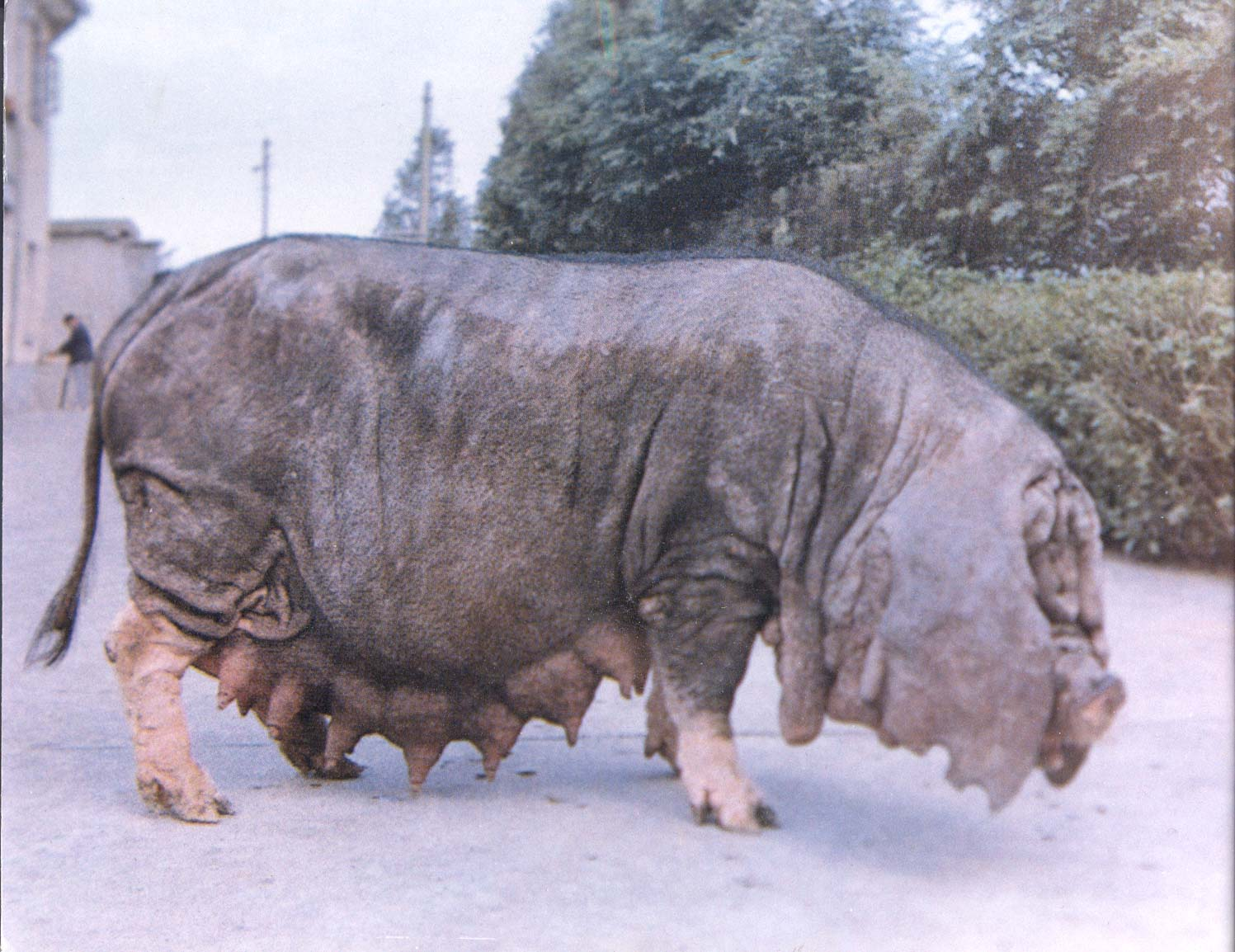
Figure 1. The Meishan breed of pigs which originated in China and is known for their outstanding litter size, longevity and other reproductive traits. This breed has made significant contributions to the discovery of molecular markers for a variety of economically important reproduction traits in swine.
Table 1. Example effects of the MC4R molecular marker in pigs.
| Genotype | Number of Pigs | Backfat (mm) | Shoulder Fat (mm) | Loin Depth (mm) | Average Daily Gain (g/d) | Feed Intake (kg/D) |
GG vs. AA2 Commercial genotypes a |
679 | -1.3 | -1.4 | +1.4 | -26.0 | -0.15 |
| P value | <.05 | <.05 | <.10 | <.10 | <.05 | |
| GG vs. AAPure Line Data | 2,366 | -1.1 | n/d | n/d | -28.0 | -0.17 |
| P value | <.0001 | <.0001 | <.01 |
Glimmer of hope Down Under
Posted in: Economics, Production by admin on | No Comments
Australian pig producers have suffered the same problems as their Canadian counterparts, with low hog prices and high feed costs, says consultant John Riley. But now, a weakening of the Aussie dollar and a downward trend in feed costs has resulted in optimism that the worst is over. However, producers need a sustained period of profitability to regain confidence and invest in new technology, he believes.
The number of pigs slaughtered in Australia in June 2008 fell by around 14 % compared with the same period in 2007. The pigs slaughtered totalled just 406,000, the lowest monthly number for well over a decade. The low number of pigs forward has resulted in prices increasing to $2.80 per kilogram for a 75 kg carcass. With an anticipated drop in the national sow breeding herd from 286,000 in June 2007 to approximately 250,000 in June 2008, the industry is hopeful that improved prices will continue through to early in 2009.
The record grain sorghum harvest in Queensland and NSW and promising planting conditions for wheat and barley in the southern states and Western Australia has resulted in feed costs easing downwards slightly. With the northern hemisphere harvest well advanced, producers are hoping that the downward trend in feed prices will continue. If the Australian industry is to avoid further contraction a significant period of profitable production is essential.
Over the last twelve months or so most businesses have increased their liabilities to remain in production and there is a real concern that, as the economic climate improves, financial institutions will put pressure on businesses to reduce their debt load resulting in more producers exiting the industry.
By Australian standards, 2008 has been a long cold winter. On many units, pig accommodation is designed to meet high summer temperatures not low winter temperatures. Most sheds are fitted with cooling systems but not heating systems and in the last quarter improvements in income in the market place and the marginal reduction in the price of feed have been eaten up by poorer feed conversion efficiency in the grower herd and increased pre-weaning piglet mortality.
The fall in the value of the Australian dollar from 98 cents US earlier in the year to currently around 86 cents has had limited effect on the level of processed pig meat reaching Australia. The level of imports from both your country and Denmark have fallen significantly, imports from Canada have fallen by some 6% shipped weight. The expected market opportunities for Australian pig meat have not materialised as the USA have increased their volume landed in Australia by nearly 8% year on year to over 31,000 tonnes shipped weight. The level of exports fell as the Australia dollar almost reached parity with the US dollar. With the fall in the value of our dollar, industry is hoping that export volumes to both Singapore and Japan will increase. It will, however, be a slow process recapturing market share lost to our competitors.
On the home front, the sale of the Hyfarm breeding company’s interests have been finalised and the breeding company in which UK-based JSR Health Bred were a major partner has exited the industry. At the same time as Hyfarm left the industry PIC Australia has purchased a 7,000 sow, farrow to finish unit from Nippon Meat Packers Australia Pty Ltd. The Japanese company, which has a substantial interest in the beef feed lot industry, developed the state of the art piggery in 2000 to supply both the domestic and export market. PIC Australia is owned by the CHM Alliance, whose members also have interests in the poultry industry and cotton production. The acquisition of the Nippon unit at Tong Park in Queensland makes them one of the largest operators in Australia after the 40,000 sow QAF holdings in New South Wales and Victoria.
Australia, as an island, albeit a very large island, is very protective of its animal health status and applies stringent bio-security protocols. There has been no importation of porcine genetic material since about 1990. In the opinion of some experts the policy has resulted in a lack of heterosis in the national pig breeding herd. The average number of pigs weaned per sow in a small sample of herds recorded with the industry’s pork organisation Australian Pork Ltd (APL) is 20.73. On a visit to Holland in July, I had the opportunity to meet with a representative of the international breeding organisation Topigs and visit several of their client’s production units. Arjan Neerhof, the Breeding Program Manager at Topigs, claimed (and his client’s production records confirmed) that commercial units using the Topigs 20 line were averaging 26.8 pigs weaned per sow per year with the top 10% achieving 29.8 pigs weaned compared with an average of 23.5 for the top 10% in the APL sample.
| Topig 20 sample | APL sample | |
| No of herds | 430 | 31 |
| Pigs weaned per litter | 11.3 | 9.16 |
| Litters per sow per year | 2.38 | 2.26 |
| Pigs weaned per sow per year | 26.8 | 20.73 |
The Dutch industry is producing six more weaned pigs per sow per year than Australian producers with the same level of feed usage. If Australia is to compete successfully on the world market, the experts referred to earlier argue that the importation of genetics is a high priority providing our stringent bio-security regulations can be met.
The Australian industry takes great pride in its green and clean image but earlier this year a supply of zinc oxide from China imported on an out of date certificate of analysis, caused a major residue alert in Western Australia. The zinc oxide contained high levels of lead contamination (>85,000 ppm). Tests on pigs fed diets containing the zinc oxide were found to have high levels of lead in red offal which was disposed of, at considerable expense, before it entered the food supply chain.
After months of despondency the rise in pig meat price and the marginal fall in feed price provide a glimmer of hope for the Australian industry. For the industry to regain confidence and invest in new technologies, a lengthy period of profitability is essential.
Management strategies to maximize weaning weight
Posted in: Production by admin on | No Comments
While the traditional key performance indicator in sow units is weaned pigs per sow per year, the pork industry is now considering weaning weight with the same level of importance, says Dr. Juan Carlos Pinilla and his colleagues at pig breeding company PIC. Speaking at the 2008 American Association of Swine Veterinarians, he notes that heavier weaning weights are positively correlated with growth rate, feed efficiency and pounds of saleable pork. Current estimates of milk yield are 22 to 26 lbs (10-12kg) of milk per sow per day, says Dr Pinilla. Many factors influence this number: health, environment, genetic potential, mammary gland stimulation (lactation length, number and weight of the nursing piglets), nutrition, feed intake, body condition, and water intake. His presentation described strategies to wean heavier piglets by maximizing milk production based on common practices utilized by some successful commercial systems in North America.
Maximizing milk production
Number of functional teats
To maximize litter weaning weight, it is necessary to select replacement gilts for number and quality of their teats. “The standard is to cull gilts with less than 12 teats, but too many producers do not have this standard in their operations,” believes Dr Pinilla. “Generally, modern dam lines have more than 12 teats, in fact, more than 85% of gilts selected in our Genetic Nucleus show 14 or more teats at selection.” Recognizing that the heritability of teat number is low and genetic improvement will take time genetic suppliers still have the responsibility to improve this trait, he feels.
Gilt growth rate and weight at breeding
In gilts, there is a significant correlation between the ADG in the period from 65 to 195 lbs (30-88kg) and the weaning weight of their litters. The current higher milk yield potential, and consequently the potential to wean heavier piglets, could be partially explained by larger body size and more mammary tissue in modern genotypes.
Beside the effects on retention rate and litter size, the current recommendation to breed gilts after they achieve 300 lbs (136kg) minimum to get farrowing weight to 400 lbs (181kg), will produce additional benefits. “Gilts bred in that window will gain less body weight during their first gestation and consequently they lose less body weight during their first lactation and are able to retain weight, or even gain some weight, during P2 and P3, versus gilts bred at lighter weights,” explains Dr. Pinilla. “As a practical consequence, weaning weights could be increased due to higher milk yields.”
Controlled weight gain in gestation
It is well documented that excess weight gain in gestation limits the feed intake during lactation and increases the sow’s body weight loss. Farm management must be aware of that and manage gestation feeding to limit excess body weight gain. “During their first gestation the female should gain around 80 lbs (36kg) of body weight. From P1 to P6, an average of 35 lbs (16kg) increase in body weight per gestation is acceptable,” believes Dr. Pinilla. “A maximum of 12% of lost weight during the first lactation and a maximum of 8% average in older parity sows are considered as the limit body weight loss compatible with high performance.”
In a project to control annualized sow mortality, the impact of gestational body weight gain control was seen in terms of reduction in production cost per weaned piglet, with no negative effect on the litter weight gain in farrowing. Annualized sow mortality effectively was reduced from 13% to 5%. “A rule of thumb was derived from that experience: every lb of reduction in the daily usage of gestation diet from 7.0 lbs per day to 4.5 lbs per day can be translated into 1.0 to 1.1 lbs/day of additional feed intake in farrowing and every additional lb of average feed intake in farrowing in turn can be translated into 20-22 extra lbs of piglets weaned per sow per year,” explains Dr. Pinilla.
Number and weight of piglets nursed
Litter size (number and weight of the piglets nursed) is the major individual factor in the determination of milk production. “From a production management point of view, plan to have more than 50% of the sows weaning 11 or more piglets, particularly since milk yield is more than 50% greater when litter size increased from 6 to 12 piglets, advises Dr. Pinilla. “The female is able to react to a higher milk requirement by eating more feed. Suckled glands will be larger and more productive in subsequent lactations than un-suckled or poorly suckled glands.” Lower performance in farrowing can be traced to the practice of loading P1 females with just 9 to 10 piglets in order to “prevent extensive catabolism”. The current recommendation is to load gilts with 12 strong and heavy piglets and support that with proper feeding management, cooler rooms, limited cross fostering, and water availability, he notes.
The most recent and promising tool to produce heavier litters is to let the sows farrow naturally and/or limit the use of farrowing induction to risky sows (fat, lame or older than P5). Data collected from a commercial farm suggests that every additional day of gestation results in piglets weighing 0.15 extra lbs (70g) per day, in the range from 113 to 118 days. Consequently those heavier piglets at birth have greater opportunity to vigorously suckle the teats, survive and gain weight and be weaned at a heavier weight.
Dr Pinilla also advises drying off piglets after birth to prevent chilling, measures to control the incidence of diarrhoea and split suckling, especially where litter size is high. “Farms where split-suckling has been fully implemented have seen increased survivability and weaning weight, and less variation in weaning weights,” he says.
Lactation length
It is well-known that increasing lactation length increases weaning weight. “PIC research has shown that for every additional day in farrowing with their mother, weaning weight increases an average of 0.56 lbs/day/piglet (250g), which is in turn related to a reduction in the age to market, Dr. Pinilla explains. He recommends a minimum of 20 days at weaning, recognizing that this may require additional farrowing places to be constructed in some cases. “A reduction in the breeding target, and consequently the average sow inventory, is not as cost effective as adding more farrowing spaces,” he stresses.
Maximize lactation feed intake
It is critical to prevent and/or to control situations leading to off-feed sows, stresses Dr. Pinilla. “Proper hygiene measures associated around farrowing, such as room sanitation, a clean sleeving process, and individual treatment of fever and lameness are a must. Also, check the availability of fresh, cool and clean water is a daily duty in farrowing, making sure the sows have a minimum water flow rate of 0.5 gal (2 litres) per minute.”
Data from a commercial system suggests that a mild restriction for 3 days followed by full feeding from day 4 through the end of lactation results in increased feed intake and reduced body weight loss, Dr Pinilla explains. “Based on these data, the recommendation for feeding PIC sows is to scale feed at 4.0, 4.0, and 6.0 lbs per day for days 0, 1, and 2 of lactation followed by ad-libitum access to feed. This pattern ensures the maximum average daily feed intake, milk yield, litter weight gain, and minimum body weight loss.”
Alternatives to the traditional hand feeding systems include the use of self feeders, which are able increase the average daily feed intake by about 7% compared with hand feeding systems and are less demanding in labour. However, no feeding protocol or feeder design will work unless qualified staff gets the sows up two or three times a day to stimulate them to eat, believes Dr. Pinilla. “Other key duties are cleaning the feeders to prevent mould, adjusting the heat lamps height or simply turning them off when needed and checking room ventilation and temperature,” he says. “Caretakers must be able to ‘read’ the sow and piglet behaviour and make adjustments to ensure the sows eating enough feed to wean healthy and heavy piglets.”
Cross fostering
Cross-fostering is a common and preferred management tool. While it provides opportunities to the smaller piglets in a room to get enough milk to grow, in too many situations the staff tends to use the fostering too much and/or too often, Dr Pinilla believes. “Create the light litters as soon as possible after all pigs have received colostrum and before the social order is established, sometime during the first 12-16 hours of life,”, he advises. “When the equalization by size is made after day 1, the benefits are limited because it is a disruption of the normal process of nursing, sows get nervous and mastitis can become a problem.” Nurse sows to raise the fall-behinds can be created from day 4 to 7, moving a fresh sow from the next younger room, he says. “It is important to limit the fostering to a maximum of 10-15% of the litters disrupted after day 4-7 of age.”
Take home messages
|
Individual sow feeding stalls offer simple but effective system
Posted in: Production by admin on | No Comments
One of the major benefits of sow stalls is the ability to feed each sow individually, according to body condition and stage of pregnancy. Group housing systems have varying capabilities for individual feeding and this factor needs to be considered when choosing which method to use. Perhaps the simplest approach to controlling feed intake and protecting sows from bullying while feeding is to use individual feeding stalls with a locking rear gate. These have been used in traditional straw yard systems in Europe for at least 50 years, typically with a group size of 5-10 sows. The system comprises a bedded lying area providing about 15 ft2/sow, a solid floored scrape-through dunging area and then the feeding stalls. Pen dimensions are primarily determined by the width of the feeding stall, which is usually 20”, so that for a group of six sows the pen width would be 10ft, making the lying area 9ft deep. Overall space requirement relative to other systems is high, at 36 to 40 ft2/ sow, making the capital cost of a building quite high. Also, feeding is usually by hand, making it rather labour intensive. However, the system can be easily constructed using farm labour, which made it very popular in the 1960s and 1970s. Then, as average unit size grew, this labour-intensive method started to be replaced with new methods of more automated group housing.
Cafeteria feeding popular in Denmark
Despite the advent of these new methods, such as electronic sow feeding (ESF) and trickle feeding, many Danish producers have opted for a system adapted from the old sow yards in order to benefit from the simplicity and reliability at the expense of some extra labour input and the relatively high initial cost. They developed the “Cafeteria” system, which has a row of individual feeders that is used by each pen of sows in turn. This design allows sows to be housed in larger groups because the layout is not constrained by the feeder dimensions. It also reduces the cost significantly by utilizing one feeder for up to 8 groups of sows. The building design is simple, with straw bedded yards, usually holding sows bred within a week of each other, a scrape-through dunging area and then the row of feeders. Producers using the system say that it is easy to operate, has no complicated equipment and requires little maintenance.
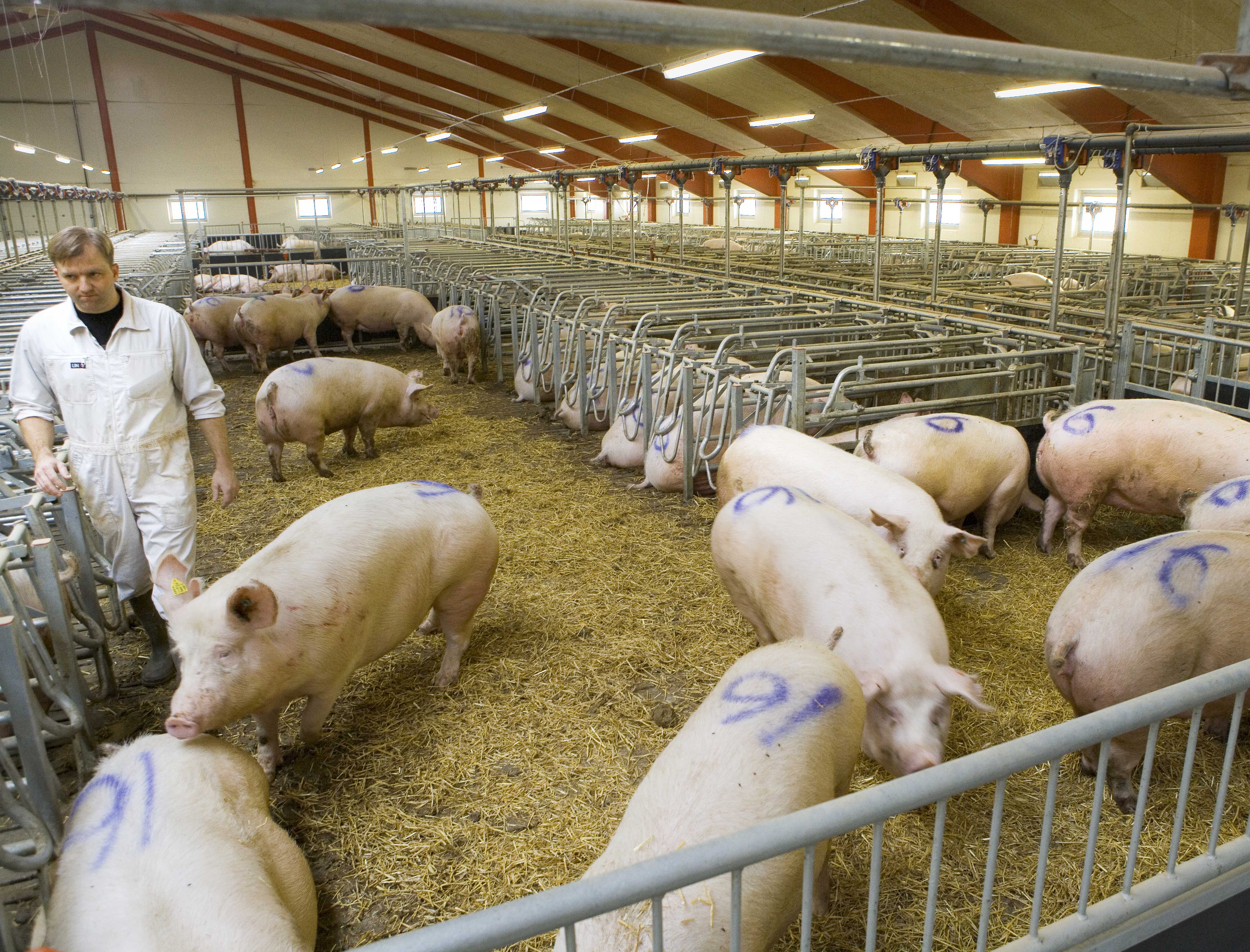 The major drawback in some people’s eyes is the higher labour input compared to other methods. Although automatically filled feed dispensers are used, the same amount of feed has to be dispensed to each sow in the group because sows often use a different feeder at each feeding session. Therefore, the operator may have to give additional feed by hand to individual sows according to body condition. Also, because there are multiple groups of sows using the same feeders, the operator must be present over an extended period of time to feed all the sows. If locking rear gates are used, he must unlock the gates to release the sows after feeding, then place the sows back in their pen before letting another group out to feed. The dispensers are filled while one group of sows is feeding, ready for the next group.
Klaxon signals eating time
Another apparent disadvantage of the cafeteria system is the stress caused by making sows wait for feed while they watch other groups go to the trough. However, having watched this system in action, it is clear that sows become conditioned to feeding at a particular time and don’t get excited until very close to the time they are released. This conditioning is quickly developed providing the operator follows a specific routine. At one farm I visited, the operator used a klaxon to signal feeding times for each group – one blast for the first group, two for the second group and so on. It was amazing to watch the reactions of the sows; those that were not due to be fed didn’t respond at all. Certainly, if there is any stress, it isn’t reflected in the performance results, which appear to be similar to other types of sow housing.
Handling of solid manure and straw requires a significant labour input, but hard manual work is avoided by the use of machinery. In addition, using straw adds cost, too. Notwithstanding the list of disadvantages, the system is now widely used in Denmark because of its simplicity and reliability, although much less so in other European countries.
Slatted floors save space
Another method involves combining individual feeding stalls with a slatted exercise and dunging area, a system that has been adopted by producers in Denmark and a number of other countries. Generally termed “free access stalls”, this method saves space by utilizing the feeding stall as a lying area. It requires each sow to have its own stall, which makes the system rather expensive, despite the lower overall space requirement compared to the cafeteria system. The free access stalls must have a mechanism that locks the rear gate when the sow is in the stall but allows her to release it as she backs out, otherwise sows may attempt to enter another sow’s stall at feeding time. Layouts for free access stall systems usually involve two rows of stalls backing onto a common dunging area. Group size may range from 10-30 sows per pen.
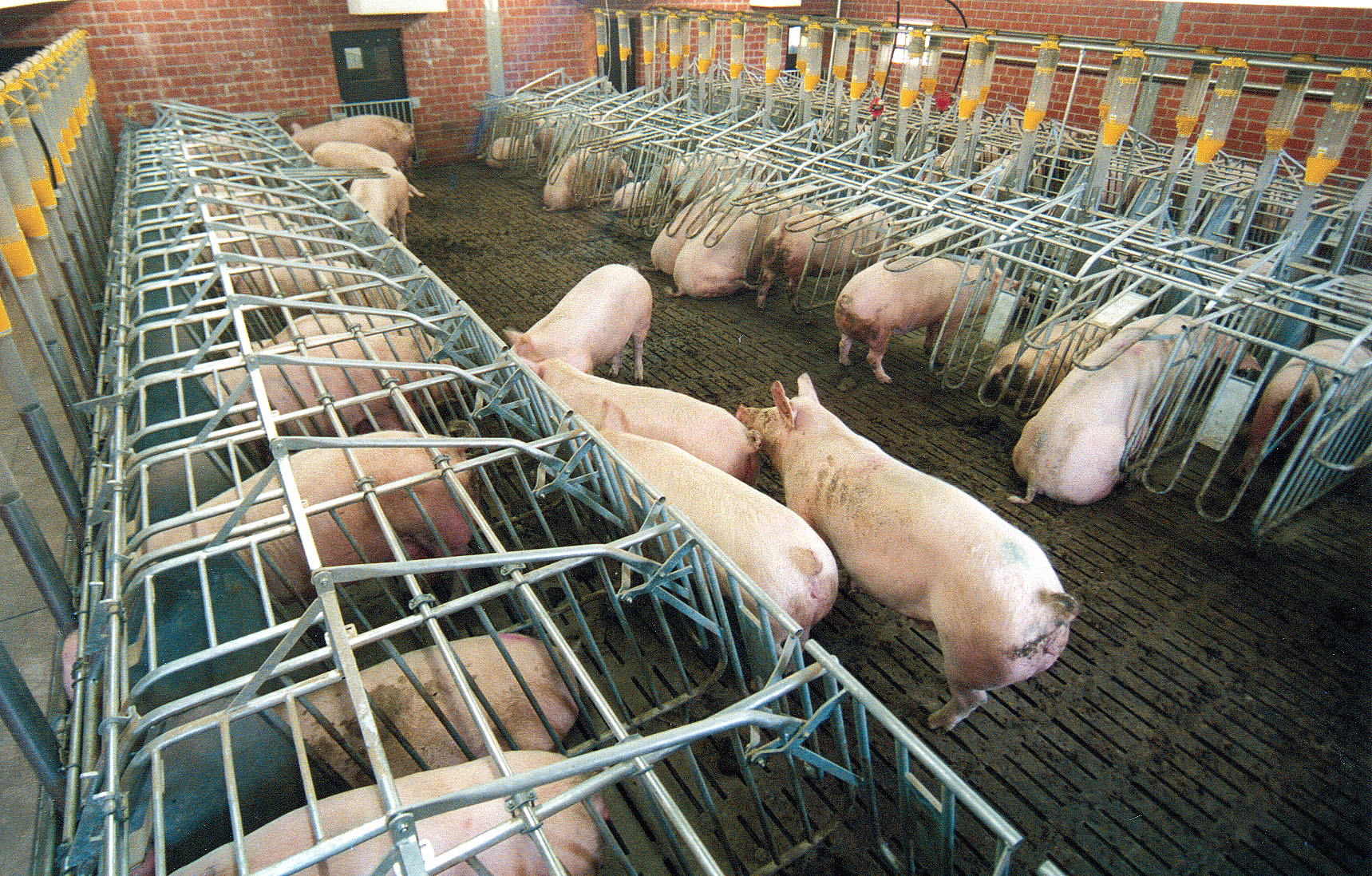 Slatted free access stalls reduce labour requirement dramatically, but have some disadvantages for the sow. First, although free to leave the stall and roam in the dunging area, sows often spend the majority of their time locked in the stall, because there is no bedding to root in. While supporters of sow stalls always suggest this is because the sow feels protected in the stall and is happier there, the real reason is the sterile outside environment with a lack of things to do. The second drawback is the potential for foot and leg injuries in slatted pens, especially after sows are mixed. Very high quality slats with rounded edges can help to minimize this problem, but there is no doubt that injuries are significantly higher than in bedded systems.
Both dry feed and liquid feed can be used in free access stalls, usually dispensed automatically. Where dry feed is given, sow body condition can be controlled by adding additional feed by hand, but this is not possible with wet feeding. Alternatively, sows can be grouped by condition at the time of mixing and the feed level adjusted for the group as a whole.
Other aspects of management vary between the cafeteria system and free access stalls. In the latter system, where sows spend a lot of their time in the stalls, jobs such as scanning and vaccination are easier. Because each sow has its own stall, they can be locked in at feeding time and the particular task carried out when convenient. In a cafeteria system, where several groups use each set of feeding stalls, the tasks have to be carried out on sows while they are in the lying area, which is less easy.
Conclusions
These two systems using individual feeding stalls offer very straightforward options for housing groups of sows that are easy to understand by producers and have a low maintenance requirement. Those with a phobia about electronics are especially drawn to them! The systems can be built with either solid or bedded floors and can accommodate a range of group sizes, with about 40 being the practical maximum in most cases. They are especially suitable for small-to medium sized units, typically up to 1000 sows. Their primary disadvantages compared to other alternatives are the higher labour input and relatively high capital cost.
Photo captions:
- Danish Free access stalls-1 – A bedded free access stall system in Denmark
- Chore-Time_GestationStall.jpg – A slatted free access stall system (photo courtesy Chore Time)
Dutch ESF design works well in Alberta
Posted in: Environment, Production by admin on | No Comments
A layout for group sow housing with electronic feeders that came from Holland has been working well for six years at Plain Lake Colony, Two Hills, Alberta. And, while there are a few things that he’d do differently with the benefit of experience, Hog Boss Ben Hofer says that he is very happy with the system and wouldn’t go back to sow stalls. In 2002, the Colony replaced its old 120-sow farrow to finish barn and constructed a new1200-sow unit producing isowean pigs. “We felt that sooner or later, we would be forced into using group housing, but we were also optimistic about its potential,” says Hofer, who is a Director of Alberta Pork. “We thought we could learn from the experiences in Europe and build a good system.” Having looked at both electronic feeding (ESF) and floor feeding, he felt that sow welfare was much better in the ESF system.
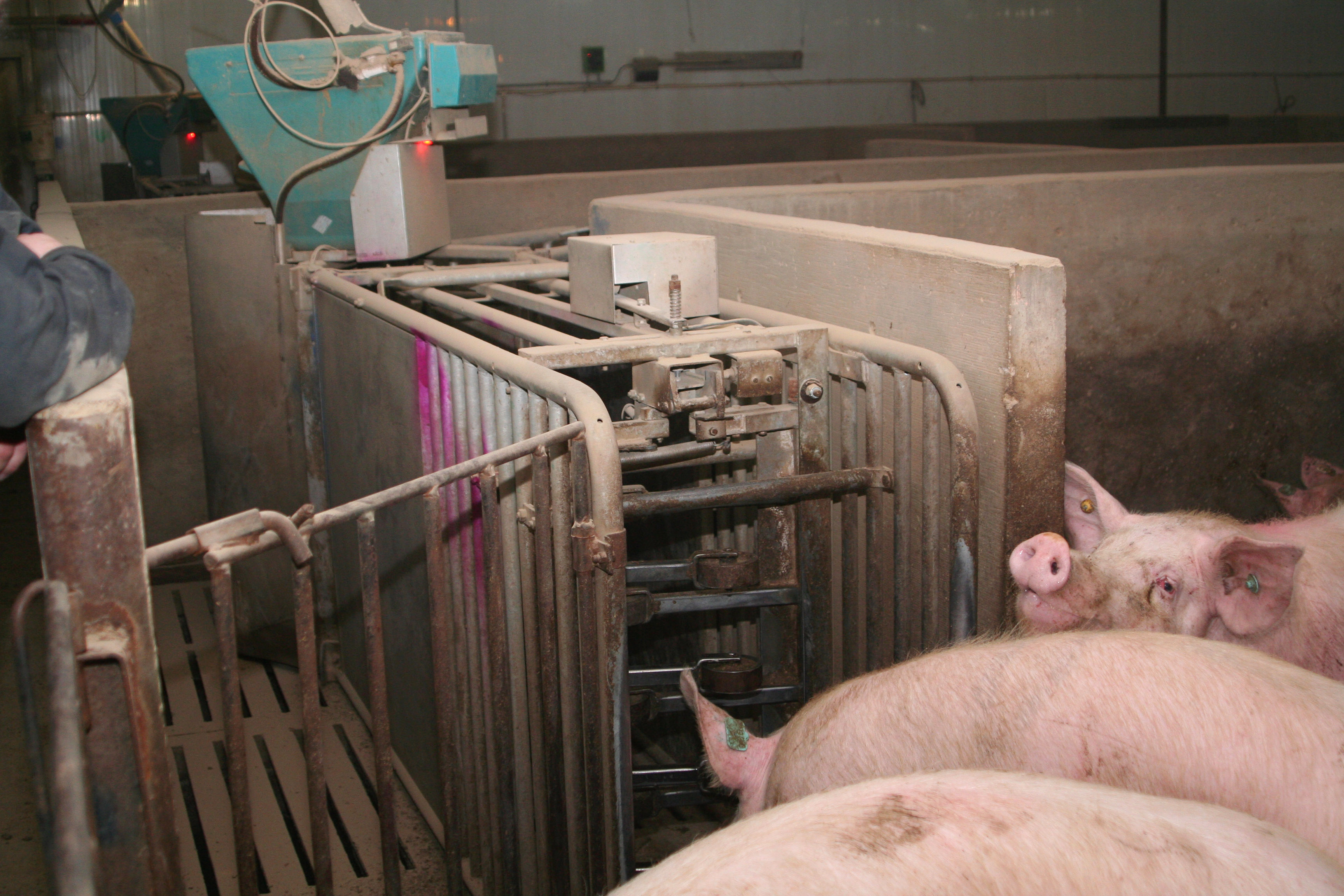
The decision was taken to use slatted floors rather than straw bedding, something the Dutch have a lot of experience with. All parts of the pen are slatted, apart from the lying areas. Overall pen size is 54ft x 25ft, providing a total of 24 square feet per sow and there are 6 separate lying areas divided by concrete walls, three each side of a slatted dunging area. The Nedap feeders, from Holland, are located at the front of the pen, adjacent to the access alleyway, so that they can easily be observed. “We chose the Nedap feeder because it had the fewest moving parts and the least amount of electronics on the feeder itself, which means less maintenance,” Hofer explains. “Also, some people advised us to have a feeder with a sensor on the back gate to avoid sows returning to the feeder soon after eating, but we don’t believe that’s necessary with the layout we have.” When sows leave the feeder after eating, they have to walk along a slatted alley, where the drinkers are located, and around the back of the pen, in order to return to the feeding area, which prevents constant re-visiting of the feeder by dominant sows. “This allows less dominant sows easier access to the feeder,” notes Hofer.
 Each week about 60 sows are bred in order to achieve the farrowing target of 56 per week, with sows being transferred to the group pens within 7 days of breeding. These “fixed” groups, with sows that were all bred in the same week, are much easier to manage. A boar is taken into the pen to check for returns at 18-24 days and again three weeks later. Scanning takes place at 30 days and again at around 56 days. Sows that are not pregnant are removed and returned to the breeding area.
Prior to breeding, gilts are housed in two large training pens adjacent to the breeding area, which each have two electronic feeders. Gilts enter the unit in groups of 40 at a weight of 110-115kg and there are 80 gilts per pen. Any gilt that does not learn to feed quickly is placed in the feeder, but there have been very few problems with training, Ben Hofer notes. “Less than 1% of gilts have failed to use the feeder,” he explains. “Of the first 600 gilts, only one needed to be culled for this reason, so it’s hardly worth mentioning.” Vasectomized boars are used for stimulation and are used to breed gilts at least once prior to natural service at second or third heat. This practice has been shown to increase first litter size. After breeding, gilts are mixed in the weekly groups with sows, a practice that Hofer says he would prefer to avoid. “If we did this again, I would have three large groups so that gilts and parity 1 sows could be housed separately from older sows,” he says.
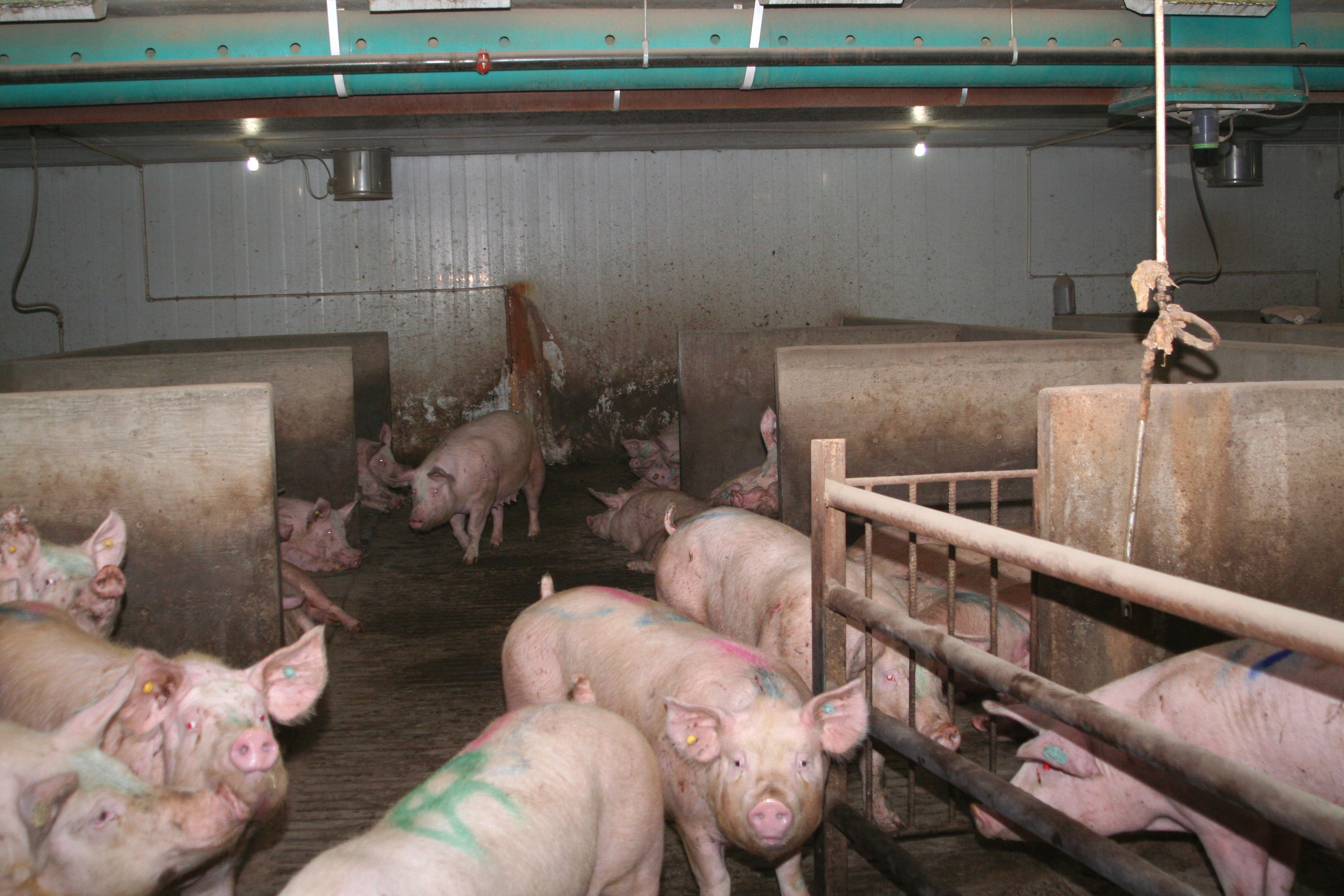 The benefits of individual feeding are apparent from the very even body condition of sows in the groups. Feed levels are regularly adjusted according to condition and the feeder ensures accurate feed delivery. Feed is dispensed in drops of 70 grams, every 20 seconds for sows and every 30 seconds for gilts, together with 50ml of water. The feeding cycle starts at 9.00pm, which means that, by morning, the majority of sows have fed, allowing the operator to identify any that have failed to feed. “The computer prints out an attention list and sometimes there will be 4-5 sows that have not eaten,” explains Hofer. “We don’t worry if they miss one day because most sows will eat the day after, but on day two we’ll check on the sows.” The most common reasons for feeding not taking place are lost electronic ear tags, sows that are lame and sows on heat, he says.
Experience with the system has been very positive and production runs at around 26 pigs weaned per sow, despite a roof collapse last year that put a bit of a dent in the figures. “It’s a nice environment to work in,” Hofer comments. “You can walk in and work with the sows whenever you want and they are very quiet.” He also notes that sows get more exercise than those in stalls, which means that they have better muscle condition, leading to fewer problems at farrowing. Observing and understanding sow behaviour is the key to successful management, Hofer says. “You have to handle the animals and listen to what they are telling you, not tell them what to do!” he exclaims.
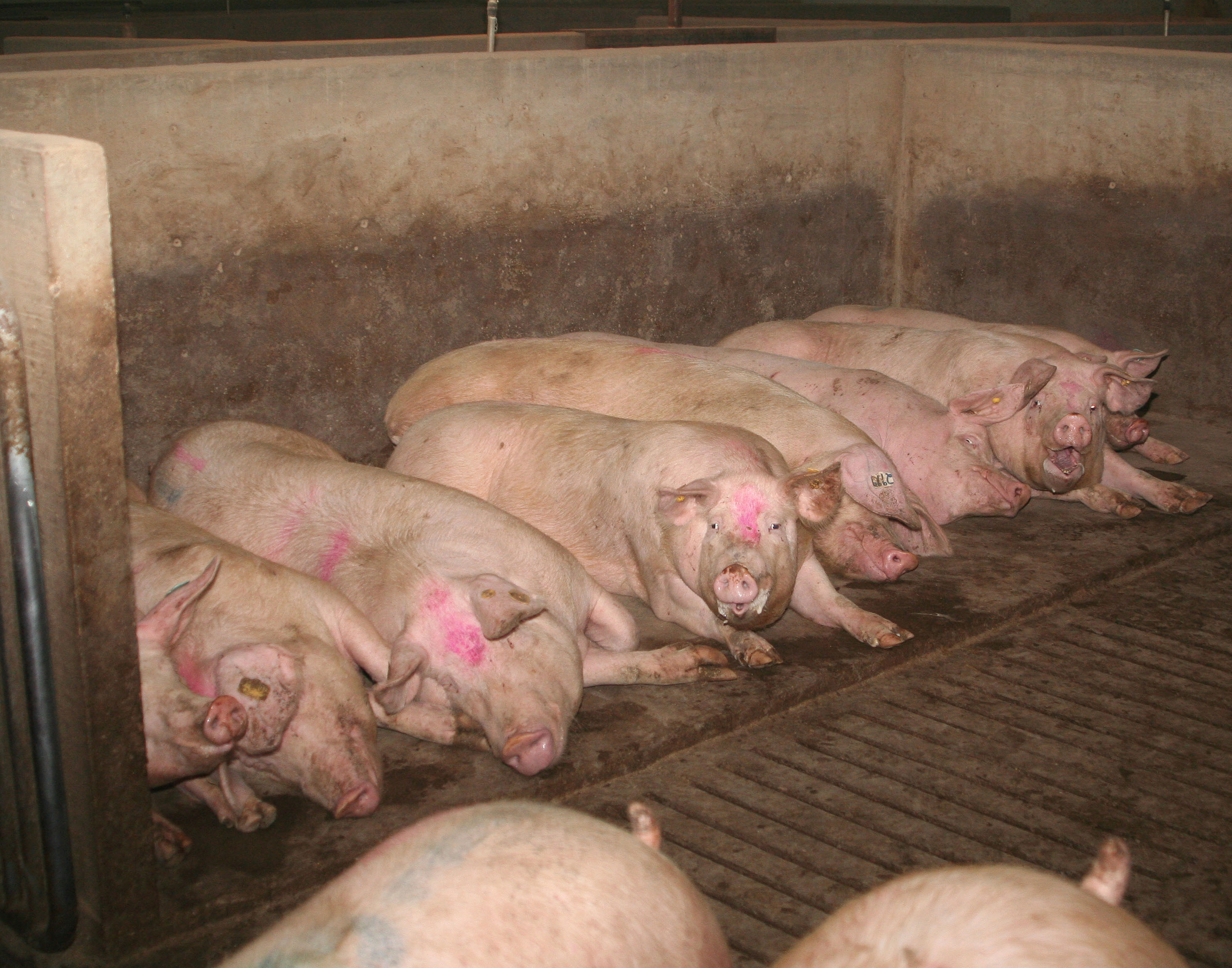 The only major aspect of the system that he would change is the type of slat. “We installed finishing slats and they are too narrow, which means we get some leg problems when sows fight after mixing,” he says. “I would prefer a slat that’s 5 to 6 inches wide, with a three-quarter inch gap to provide better support for the sow’s feet and to minimize injuries.” Another minor problem occurs when pens are part filled. “The sows tend to dung in any area that is not used for lying, which then needs cleaning out manually,” notes Hofer.
The need for maintenance and repair of electronic feeders is often cited as a problem, but experience at Plain Lake has been generally positive. “We had some initial problems with the electronic boards, but they were changed and have been working without a hitch for the last three years,” says Hofer. “The only other thing we occasionally have a problem with is the springs on the entry and exit gates, but they are easy to change.” The barn staff does the maintenance themselves, with guidance from the manufacturer by phone if required. “We’ve figured it out ourselves because most electricians and computer guys don’t understand it,” Hofer adds.
Overall, the verdict is that the system is a success and the design works well. Gilts and sows have adapted well to the feeders and production is good. Not only that but sows are calm and quiet to work with, spending most of their time asleep in the lying areas. “Learning to get used to the system was a bigger learning experience for the people than the pigs,” Hofer laughs.
Photo captions:
- Nedap feeder – The Nedap electronic feeder note the exit race that takes sows away from the feeding area once they have eaten
- Gilt pen – One of the two gilt pens showing the layout of the lying area with the slatted area in between
- Sows in lying area – Sows resting in the lying area