

SEARCH
Industry Partners




Prairie Swine Centre is an affiliate of the University of Saskatchewan

Prairie Swine Centre is grateful for the assistance of the George Morris Centre in developing the economics portion of Pork Insight.
Financial support for the Enterprise Model Project and Pork Insight has been provided by:







Understanding the response of your ventilation controller to changing conditions
Posted in: Environment, Production by admin on July 14, 2011 | No Comments
In both new and remodeled swine production facilities, it is not uncommon to have fans, inlets, heaters and controllers supplied by up to four different companies. While the ventilation controller is the hub for all heating and ventilation system operations, many, if not most, producers rely on their many suppliers and/or builders to integrate the components into a working system.
 When construction and/or equipment installation is completed, there is often only a 20-30 minute ‘training’ session on the system and the producers are left to fend for themselves in management of the system. With four or more brands of equipment, there is most likely no detailed explanation of how and/or why the various components were chosen, nor is there detail as to the capacities of the components or verification of the settings most likely input into the ventilation controller by the installer.
For many producers and their employees, ventilation controllers are something to be feared, meaning that operation of the entire heating and ventilation system remains a mystery.
The obvious place to start in understanding your ventilation system is to list the fans, furnaces and inlets installed, and the capacities of these devices. It is not enough to list the fans as ‘24 inch Multifan pit fans’ since that tells potential users of the information nothing about the capacity of the device or specific model number, an important criteria when ordering parts or estimating performance. For example, Multifan has 6 different 24” fans listed in the BESS Labs manual (www.bess.uiuc.edu) with capacities at 0.05 in. w.g. static pressure (1.25 mm w.g.) ranging from 4,520 to 7,280 cfm (7,680 to 12,370 m3/hr). Armed with fan specific information, it is possible to predict how a ventilation system will respond to various pig size during varying seasons and to compare the installed capacity versus recognized ventilation needs (Table 1).
Table 1: Recommended minimum (cold weather) ventilation rates for moisture control in growing pig facilities. MWPS (1990)
| Pig Wt, kg | CFM | m3/hr |
| 5-13 | 2 | 3.4 |
| 13-34 | 3 | 5.1 |
| 34-68 | 7 | 11.9 |
| 68+ | 10 | 17.0 |
Assuming insulation values of R=35 for ceilings and R=20 for side walls, combining pig heat production estimates (Brown-Brandl et al, 2004) with facility heat loss equations (MWPS, 1977) make it possible to create Table 2. The balance point temperature in Table 2 is the estimated incoming air temperature at which heat production equals heat loss via the ventilation system and insulated walls at various combinations of pig weight and room temperatures. Note that the cfm’s chosen represent typical fan ventilation capacities for fully slatted wean-finish and grow-finish facilities in the US. For example, the 10 cfm rate would represent 2 -24 in. diameter pit fans at 100% of rated capacity in a 1200 head room, while the 5 cfm would be the fans operating as variable speed fans at 50% of capacity, etc.
Table 2: Balance point temperature (in C degree) for growing pig facilities
| Set Point | CFM/pig | |||||||
| Pig Wt | Temperature | 2.5 | 5 | 10 | 15 | 20 | ||
| Kg | oC | oC Balance Point Temperature | ||||||
| 11 | 26 | -17 | 4 | 16 | 20 | 23 | ||
| 23 | 22 | -42 | -11 | 6 | 13 | 16 | ||
| 45 | 18 | -33 | -7 | 3 | 8 | |||
| 68 | 17 | -49 | -15 | -4 | 3 | |||
| 91 | 17 | -62 | -22 | -8 | 0 | |||
For pigs weighing 23 kg, if the set point of the controller is 22o C, and the first stage variable speed fan has a bandwidth of 1.1o C (2o F) with the minimum speed set to ventilate at 5 cfm/pig, the room is in balance when the incoming air (outside air temperature) is -11o C. That is, if the incoming air temperature is lower than this, heat must be added to the room or facility, or the room temperature will gradually lower. If the incoming air temperature is higher than this, the ventilation system will gradually increase the amount of air removed (increased cfm), while also raising room temperature. When the stage 1 fan(s) is running at 100% speed (often 10 cfm/pig in US fully slatted finishing facilities), the room temperature is 1.1o C higher (bandwidth setting in the controller) than the set point and the incoming air will now be approximately 6o C.
In essence, Table 2 allows producers to develop an expectation of how their ventilation system should operate. When they walk into a room or facility, with pigs of a certain size, given outside air temperature, which fan(s) should be operating, and for variable speed fans, what speed should they be operating at? For example, with 45 kg BW pigs, if the outside air temperature is near 0o C, the first stage fans (10 cfm) should be operating at full speed, and the second stage fans (an additional 10 cfm in US facilities) should be cycling on and off. For 91 kg BW pigs, the same outside conditions should mean that stage 1 and stage 2 fans are at or very near to full speed (20 cfm in a typical US facility).
As Table 2 illustrates, one of the biggest ventilation challenges in many production facilities is to get the ventilation rate low enough for 11 kg or smaller pigs. In well insulated facilities, the balance point changes from -17o C to 4o C as the ventilation rate increases from 2.5 to 5 cfm/pig for 11 kg pigs. At the 5 cmf/pig rate this means that heat must be added to the system, either as room heat or supplemental zone heat whenever the incoming air is colder than 4o C.
References
Brown-Brandl, T.M., J.A. Nienaber, H. Xin and R.S. Gates. 2004. A literature review of swine heat production. Trans. ASAE 47(1):259-270.
MWPS. 1997. Structures and Environment Handbook. MWPS-1. Midwest Plan Service, Iowa State University, Ames.
MWPS. 1990. Mechanical Ventilating Systems. MWPS-32. Midwest Plan Service, Iowa State University, Ames.
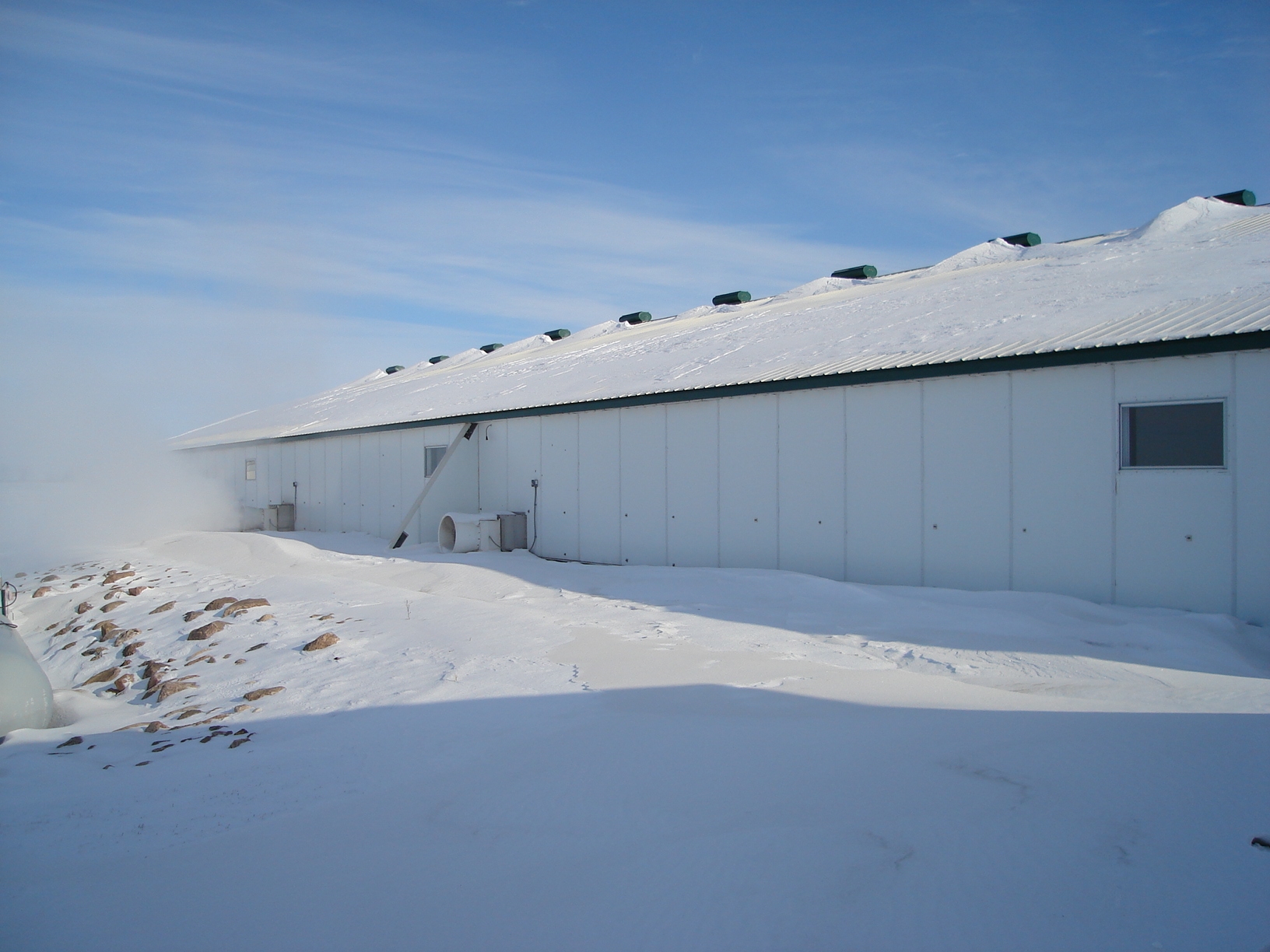
Photo Caption: Hog barn-1
Survival strategies – When every penny counts
Posted in: Economics, Prairie Swine Centre, Production by admin on | No Comments
Introduction
 It is a significant challenge to suggest how a Canadian pork producer in today’s economic environment can turn a loss into a profit. Indeed the “perfect storm” of pork prices, exchange rate and input costs have made losses of $30-$50/hog the norm over the last several months. It is the intent of this paper to reinforce production practices, backed by research and actual commercial practice, that can produce savings of not just $2-3 per market animal but multiples of that. Too often do we hear “I am doing everything possible already” in reference to cutting costs. Production systems are living entities with fluctuations in productivity, management and staff that are overwhelmed with daily distractions and in-barn procedures which evolve whether you want them to or not. There are opportunities, and every dollar saved is one less dollar borrowed under the present conditions. The following is a checklist to take to the barn and help you evaluate where the opportunities exist in your operation.
The focus is on the cost areas with the greatest potential for payback for the efforts invested. These are in order of importance and relative size of annual expenditure: feed (52.7%), wages & benefits 11.2%, and utilities & fuel 4.7%. These three account for nearly 70% of all expenditures on a typical farm in western Canada in 2007, so our approach to addressing costs will be confined to these areas.
Feeding Program
This begins with defining the objective of the feeding program that can be any one of the six objectives in Figure 1.
Figure 1: Objectives of a feeding program
1. Maximize return over feed cost/pig sold
2. Maximize return over feed cost/year
3. Maximize expression of genetic potential
4. Achieve specific carcass characteristics
5. Achieve specific pork characteristics
- Minimize operational losses
Action #1: Feeding program objectives must be clearly defined;
Objectives can and indeed will change over time |
The purpose of defining the program makes it possible for the nutritionist to assist in diet formulation and ingredient selection to achieve that end. So the first opportunity for cost reduction is – Are we formulating to minimize operational losses? This includes a review of selecting optimum energy levels, defining lysine:energy ratios, defining the ratio of other amino acid levels to lysine, setting mineral levels (even withdrawing in late stage finisher diets) and making use of opportunity ingredients. The outcome should be a feed budget similar to Figure 2. The regular matching of actual feed usage by diet type to the budget is the exercise in Figure 3 which shows that after a 5 month period in fact this 600 sow farrow-to-finish farm had excessive use of some of the most expensive diets on the farm and resulted in an average cost increase of almost $6 per market hog. But the owner thought they were doing “everything they could” because they had a competitive feed budget. The problem was not the budget but the fact it was not being adhered to for any number of reasons, perhaps as simple as not explaining to the person making or delivering the feed that the number of pigs in the nursery was below budget, in this case because of a PCVAD outbreak.
Figure 2: Example of a typical western Canadian feed budget
Diet Pig Wt., Days A.D.G., A.D.F.I., Feed,
kg g/d g/d kg/pig kg.pig kg/pig
St #1 6 4 115 125 0.5
St #2 7 to 8 6 300 330 2.0
St #3 8 to 14 13 475 620 8
St #4 14 to 22 13 600 870 11
St #5 22 to 35 17 765 1,224 21
Gr #1 35 to 50 16 865 1,900 31
Gr #2 50 to 65 16 920 2,300 38
Fi #1 65 to 80 16 930 2,600 46
Fi #2 80 to 95 16 930 2,850 46
Fi #3 95 to 105 11 880 3,000 38
Fi #4 105 to Mkt 12 830 3,000 32
Figure 3: Reconciliation of actual feed usage versus budget
Diet Budget Actual (5 month avg)
Wean diet 2.5 3.3*
Starter 1 8 9.1*
Starter 2 11 12.8*
Starter 3 21 23.4*
Grower 1 31 40.1*
Grower 2 38 43.3*
Barrow fin1 46 41.6
Barrow fin2 46 42.9
Barrow fin3 38 43.1*
Barrow fin-mkt 32 46.5*
Gilt fin1 46 48.0
Gilt fin2 46 46.6
Gilt fin3 36 46.1*
Gilt fin-mkt 30 47.4*
Gestation 37 18.1
Lactation 22 18.3
Cost/pig marketed $83.42 $89.35
Difference $5.93
Numbers in RED* are greater than 10% over budget
Other aspects of the feeding program that need to be evaluated include evaluating the energy content of the final diets and implementing the Net Energy system to seek further savings by crediting the most accurate energy value available to each ingredient. Reformulating frequently is important when commodity prices move up or down. The general “rule of thumb” is to reformulate whenever the main grain and protein ingredients move by a pre-determined amount (for example $5-10 per metric tonne).
Alternative feed ingredients at times can be the single largest opportunity to reduce feed costs. This includes co-products of the ethanol, bakery and food processing industry but also includes common ingredients like corn. Currently in western Canadian diets implementing a change from wheat to corn could save as much as $4-5/pig marketed depending on your local cost of wheat.
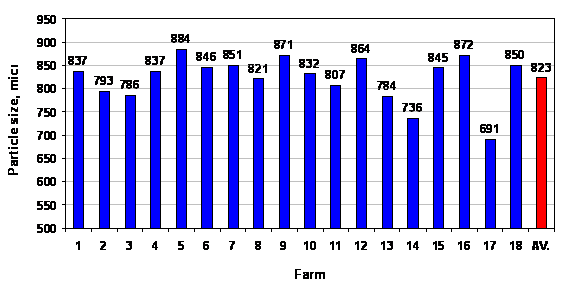
Once the diet has been formulated there are still opportunities to reduce costs by observing particle size stays within the 650-700 micron range to ensure optimum digestibility. Frequently, due to screen wear, improper screen size or hammer wear, the feeds milled on farm are significantly over the 700-micron threshold (surveys show a range of particle size 700-900 microns – Figure 4). For every 100 microns under 700 the feed conversion improves 1.2%. With feed costs today of $80 per finished hog, moving from say a 3.0 F/G to a 2.96 F/G (the effect of 1.2% improvement, or 100 micron reduction in feed particle size) is worth $1.00 per pig marketed.
Figure 4: On-farm survey of average feed grain particle size
| Target of 650 um |
From: Stirdon Betker, Alberta
Please view our Survival Strategies publications on our website www.prairieswine.ca for more tips like:
- Moving from 2 phases to 4 phase feeding programs can easily save $1-2/pig
- Trace minerals and vitamins can be removed from last three weeks of finishing diet (not for gilts for breeding or pigs on Paylean)
- Use of phytase and reduction of dicalcium phosphate in diet has saved $0.50 per pig or more under some market conditions
Labour
Which is more important – breeding sows or shipping pigs? Although the question is not really which is more important, it does point to the two areas where our people have a significant impact in our success as a production unit. Figure 5 shows one farm’s analysis of how management and labour have to respond when market conditions change. The most profitable hog in May 2006 provided a carcass of 100-105 kg whereas that same farm maximized returns by dropping carcass weights 5kg in October 2007 in response to declining hog prices and increasing feed prices. Once the new target is established, consistently hitting the target is important. Unfortunately many packers still report that only 66% of the hogs they receive fall into “core”. This is unfortunate since weighing, marking and forecasting growth rates should allow the personnel to hit 85% in core consistently. The loss due to this slippage is approaching $2.00 per hog marketed.
Figure 5: On farms analysis of carcass weight relative to returns at two time periods
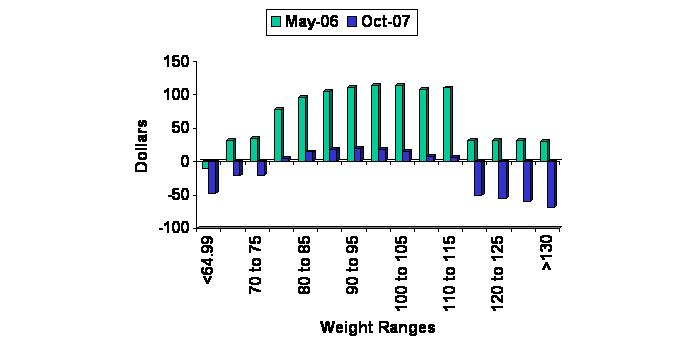
Action #8: In May, 2006, return over feed cost was maximized in carcasses weighing 100 to 105 kg; in October, 2007, returns were maximized in carcasses weighing 95 to 100kg
Utilities
Utilities are the third largest expense in pork production after feed and labour. This cost area has seen significant increases across Canada over the past 5 years. In 2003 we did extensive analysis on the effect of ventilation rate and set point temperature adjustments that can save on energy costs. At the time we found losses of $1 per pig marketed were likely when a finishing barn was over-ventilated by just 10% in the winter. Today electricity prices are three times what we paid in 2003. Our opportunity for savings of up to $3 per hog marketed is possible by ensuring our ventilation systems are performing properly.
An extensive analysis of utility costs is being undertaken in a variety of barns across Saskatchewan. The initial results reported in Figure 6 show that the range of energy use is four fold across various farrow-to-finish operations. Although disappointing for those farms at the high end, it does indicate that there is significant opportunity to reduce costs incurred for utilities – at least $3-5 per pig marketed. Some of the differences contributing to these vast differences in cost include:
- Limit use of heat lamps in farrowing and move to heat mats
- Move from incandescent to T-8 fluorescent bulbs
- Reduce the number of hours of light or amount of light in nursery and grow finish rooms
- When fans need replacing select new ones on the basis of energy efficiency
Figure 6: Survey showing range in energy use across farm types
– Energy, $/100kg pig, over 3 years
Barn type No. of barns Mean Min Max
Farrow-finish 8 6.76 3.31 12.24
Nursery 2 1.70 1.36 2.48
Finish 4 1.35 0.95 2.07
Farrow 2 13.08 11.83 13.93
Farrow-nursery 2 16.21 8.93 23.06
Nursery-finish 1 2.66 1.71 4.06
Additional information will be forthcoming in this area as research uncovers the hidden profit robbers hiding in our utility bills.
Most farms don’t receive a water bill but waste here also contributes to farm costs. Scientific and industry surveys both point to the fact that about 40% of the water delivered to the nipple is wasted. This wasted water ends up as slurry and increases our manure hauling costs by at least $0.70 per pig. The things to look for:
- In a recent survey 20-70% of nipples provided flow rates in excess of recommendations. This excess water is beyond the pig’s capacity to consume it resulting in higher waste.
- Water disappearance is 34% less on wet/dry feeders compared to dry feeders and wall mount nipples.
- Nipples installed at 90o to the wall should be located at shoulder height; nipples located 45o to the wall should be 2 inches above shoulder height (a well-positioned nipple will reduce water wastage to 25% of total volume delivered).
- Replacing nipple drinkers with swing drinkers, bite-ball nipples or bowls has also been shown to decrease wastage.
Productivity
When prices are low and losses are high it is easy to turn our attention away from the demanding management of sow reproduction, “so what if we wean a few less pigs, they are not worth anything any way”. However each pig contributes to carrying the overhead of all those fixed costs our barns incur. Actually, outside of feed and trucking, most costs are fixed in our systems so the impact of sow productivity can be profound. For example, in November we completed an analysis asking what if we move from 22 pigs weaned (20.7 pigs sold) per year to 28 pigs weaned (26.3 pigs sold) per year? During this November period our breakeven price for producing a market hog dropped from $1.60/kg to $1.47/kg when looking at just the impact of sow productivity.
Conclusions
There are opportunities for savings on every farm in Canada. Finding these savings takes a methodical and careful process of comparing our targets to what we are actually achieving – doing this on a regular basis will frequently find opportunities to save. Perhaps savings of $15/hog are possible. These savings don’t all exist on all farms but some of them exist on some farms and it is our job to find them and correct them. Then next month look again and find those that escaped our gaze the first time, and be committed to doing it over and over again as we work to maintain margins in a challenging commodity market.

Pork Insight was developed to address producer and industry needs for timely and accurate information related to pork production and is designed to help you find the information to help you fine -tune your operation. The Pork Insight database can be found online at www.prairieswine.com
Survival Checklist
| Action # 1: Feeding program objectives must be clearly defined; objectives can and indeed will change over timeAction # 2: Selecting the correct dietary energy concentration can lower costs by $1 – $13 per pigAction # 3: Adoption of Net Energy system for diet formulation can reduce feed costs by $1 and $5 per pig.
Action # 4: Aggressive adoption of a variety of ingredients can reduce feed costs by up to $5 per pig Action # 5: Regular re-formulation of diets can reduce feed costs by $3 to $4 per pig. Action # 6: Tracking implementation of feed budget can reduce costs by $5 per pig. Action # 7: Cost of particle size deviation from target can exceed $1 per pig. Action # 8: In May 2006, return over feed cost was maximized in carcasses weighing 100-105 kg, in October 2007, that same farm found returns maximized in carcasses weighing 95-100 kg. Action # 9: Achieving 85% in core, rather than 66% in core would increase return over feed costs by up to $1.80 per pig Action # 10: Increased sow productivity (from 22-28 p/s/y) can reduce breakeven $13/ckg or about 10%. Action # 11: Operating procedures and equipment can both contribute to excess power consumption. Turn lights off, switch to heat mats and reduce heat lamp use. Action # 12: Improper minimum ventilation (10% above requirement) adds up to $3 per pig Action # 13: On average 40% of water delivered to the nipple is wasted, that is an additional $070/pig in slurry hauling costs. |
Scientific review will help to define new pig transport standards
Posted in: Meat Quality, Production, Welfare by admin on | No Comments
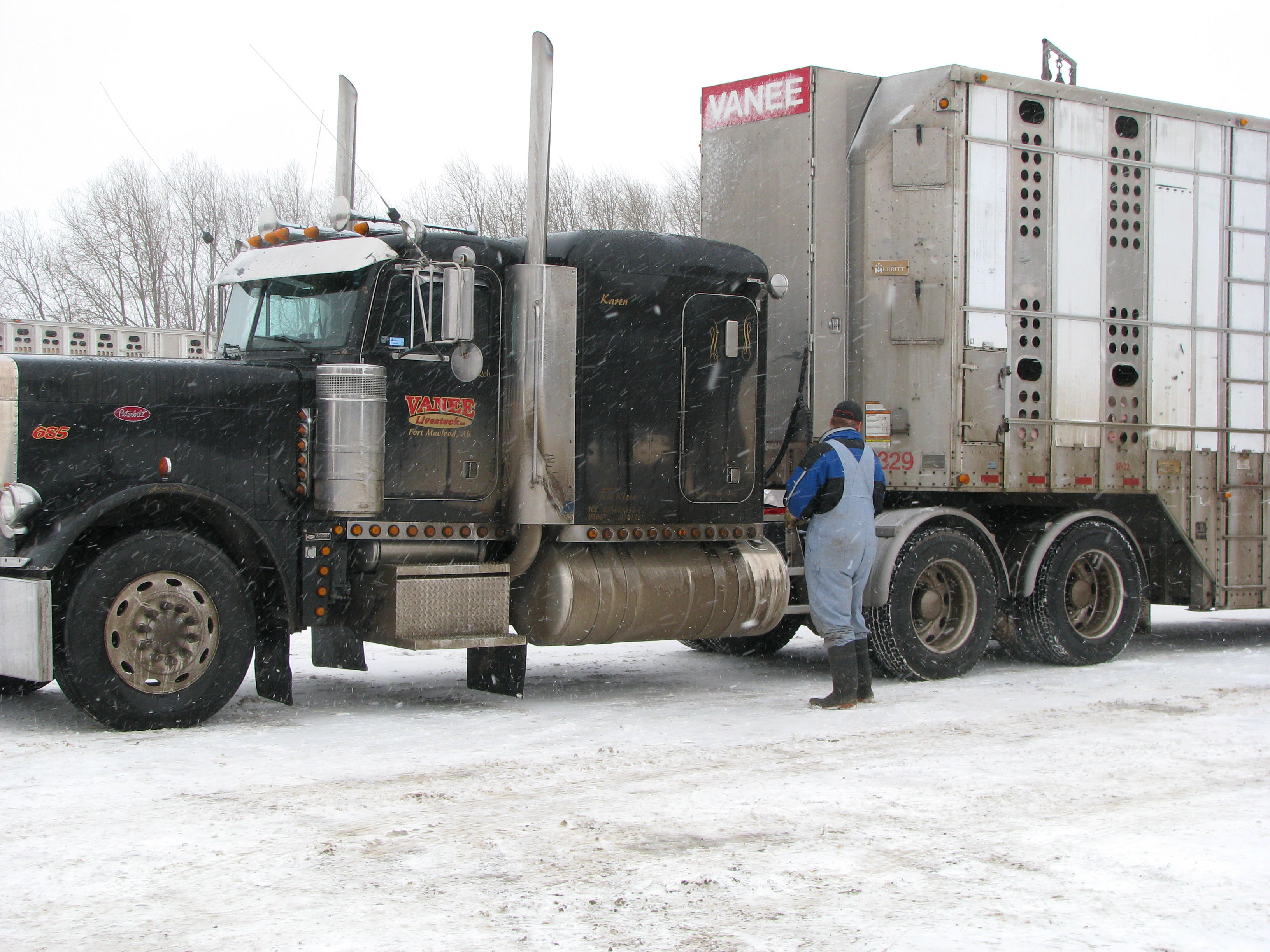 The Canadian Food Inspection Agency (CFIA) is currently in the process of revising existing regulations on the transport of animals, which have not been substantially updated since 1975. However, industry practices have changed considerably since then and new scientific research has given us a better understanding of what is required to ensure the humane treatment of animals during transport.
The World Organization for Animal Health will also soon adopt the first ever global standards for the transport of live animals, including pigs. Ensuring that transport industry standards meet international norms is critical for a country like Canada which exports about half its annual production – including nearly 10 million live hogs a year.
 Drs. Al Schaefer and Clover Bench, Agriculture and Agri-Food Canada scientists in Lacombe, Alberta have been coordinators of a review of the existing recommendations, standards, laws and regulations on pig welfare during transport, to compare them with current scientific literature that started in 2005. This review will help ensure the upcoming changes to Canada’s Livestock Transport Code of Practice are based on scientific data to improve the welfare of animals and, subsequently, maintain or improve meat quality.
“The events that affect animals, like transport stress, are linked directly to actual outcomes in meat quality, food safety and animal welfare,” notes Dr. Schaefer. “Stress causes a number of physical changes in precisely the things that affect food flavour and quality.”
His team specifically examined loading density and journey duration standards (including rest periods and the supply of food and water) in The Recommended Code of Practice for the Care and Handling of Farm Animals –Transportation and the Canadian Health of Animals Act. The review also examined recommendations and regulations in a number of other countries, including the USA, Australia, Ireland, the UK and other EU countries.
Loading density standards
At lower space allowances, pigs encounter higher ambient temperatures, decreased ventilation and air quality, as well as insufficient space to lie down in transit. At the other end of the spectrum, increased space allowance reduces vehicle temperature and increases ventilation, but it can also increase the incidence of fighting and aggression in transit.
Overcrowding can result in increased mortality rates, food safety concerns, and reduced meat quality (primarily the incidence of pale-soft-exudative (PSE) meat). Space allowances above 0.45-0.5 m2/100 kg pig can increase skin damage and the incidence of dark-firm-dry (DFD) meat.
Proper pig density can offset the effects of high temperatures by providing adequate ventilation through vehicle vents, regulating heat production within the vehicle, and providing animals with adequate space to accommodate their size, behaviour and positions during transport.
“The effect of extremely hot and extremely cold conditions during transport and its effect on loading density also needs to be studied in greater detail,” say Dr. Schaefer. “This is of particular importance in Canada due to the extremes in temperature which are experienced throughout the country and over the course of a year.”
Travel duration
The scientific literature has yet to reach a consensus on maximum transport times or the precise impact of rest periods during transport, both of which can affect meat, points out Dr. Schaefer. In fact, he says, there is one school of thought that says short journeys may be more detrimental – for instance higher mortality rates due to animals being unable to adjust to transport stress – than for longer ones and every effort to attenuate such stress during short transport journeys should be made.
The loading and unloading of animals is the most stressful component of livestock transport. Unloading animals for rest periods mid-transport may increase the stress experienced by transported animals. “Research on loading and unloading during long distance travel and the methods used to load and unload animals is urgently needed from the point of view of animal welfare and meat quality,” says Dr. Bench. “Further studies need to determine if it would be better to allow animals to remain on the transport truck and continue their journey, with access to food and water on a ‘higher standard’ vehicle, or if it would be better to transport them shorter distances on a ‘basic’ vehicle and unload them for a rest period with access to food and water.”
“As consumers globally increasingly demand higher standards for the welfare of animals both in their rearing and transport, we must maintain the highest standards of animal welfare or risk losing market share to countries that have implemented increasingly rigorous regulations,” concludes Dr. Schaefer.
Photo captions:
Al Schaefer – Al Schaefer, from Lacombe Research Station, one of the authors of the transport review
Trucking pigs – Livestock transport practices have changed and regulations are in need of updating
Remodelling expands Big Sky sow base
Posted in: Environment, Production, Uncategorized, Welfare by admin on | No Comments
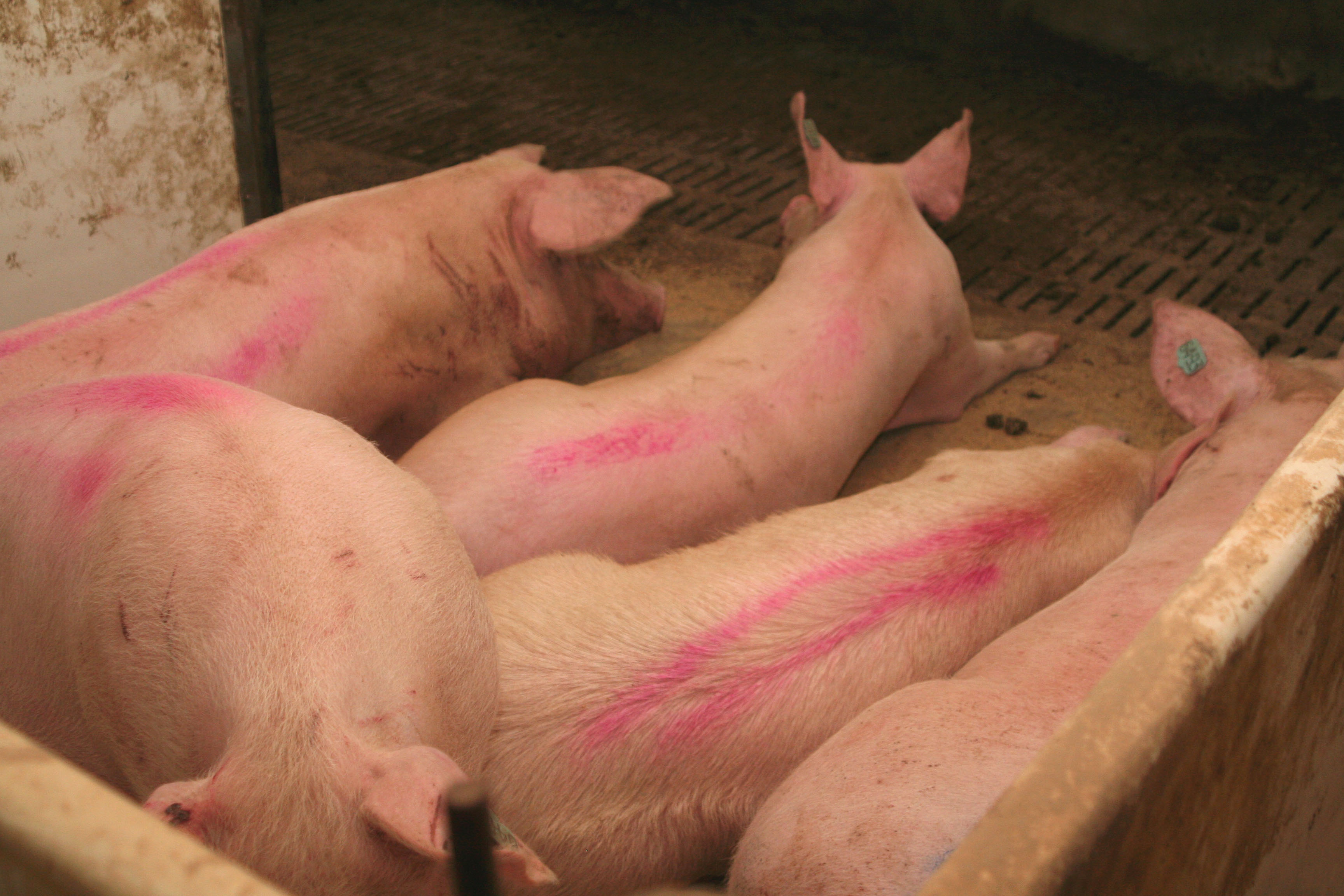 Complete remodelling of 600-sow farrow to finish barns into 1800-sow units producing isowean pigs is the route to expanding the sow base at Humboldt, Sask. based Big Sky Farms, which currently has 49,000 sows. And, says production manager Richard Johnson, it will cut overhead costs per sow leading to a lower cost per piglet produced. The company purchased the assets of Community Pork Ventures (CPV) in 2005, a production system that had been based on 600-sow farrow to finish barns, with four units in the 12,000 sow operation holding 1200 sows. However, the Big Sky production model was based on three-site production, with large-scale breeding units, off-site nurseries and contract finishing barns. “As we got to know and work with the CPV system, we thought there was an opportunity to expand and/or retrofit the systems, which in turn would give us a greater return on capital invested,” explains Johnson. “Not only can we spread our central overhead and management costs over more sows but the specialization in just breeding and farrowing leads to better results.”
The first unit to undergo the transformation was the company’s Kelsey barn, located near Melfort, Sask. Additional sow pens were made by modifying the existing part slatted finishing rooms, which had pens of 23 pigs. Three pens were made into one, although the pen divisions between the lying areas were left in place. Each pen now holds 30 sows, which are fed on the floor using volumetric drop dispensers. One of the finisher rooms was left with 12 small pens in order to house sick, lame or thin sows, something Johnson knew was essential in a floor-fed system from his previous experience with group housing in the UK. In addition, two of the grower rooms were also converted to sows pens, giving a total capacity for 1120 sows from 30 days into gestation up to removal for farrowing. The remaining 6 grower rooms were used to construct a further 240 farrowing pens, while the original nursery rooms hold piglets ready for shipping. From weaning until 30 days, sows are housed in stalls in the existing breeding and gestation areas.
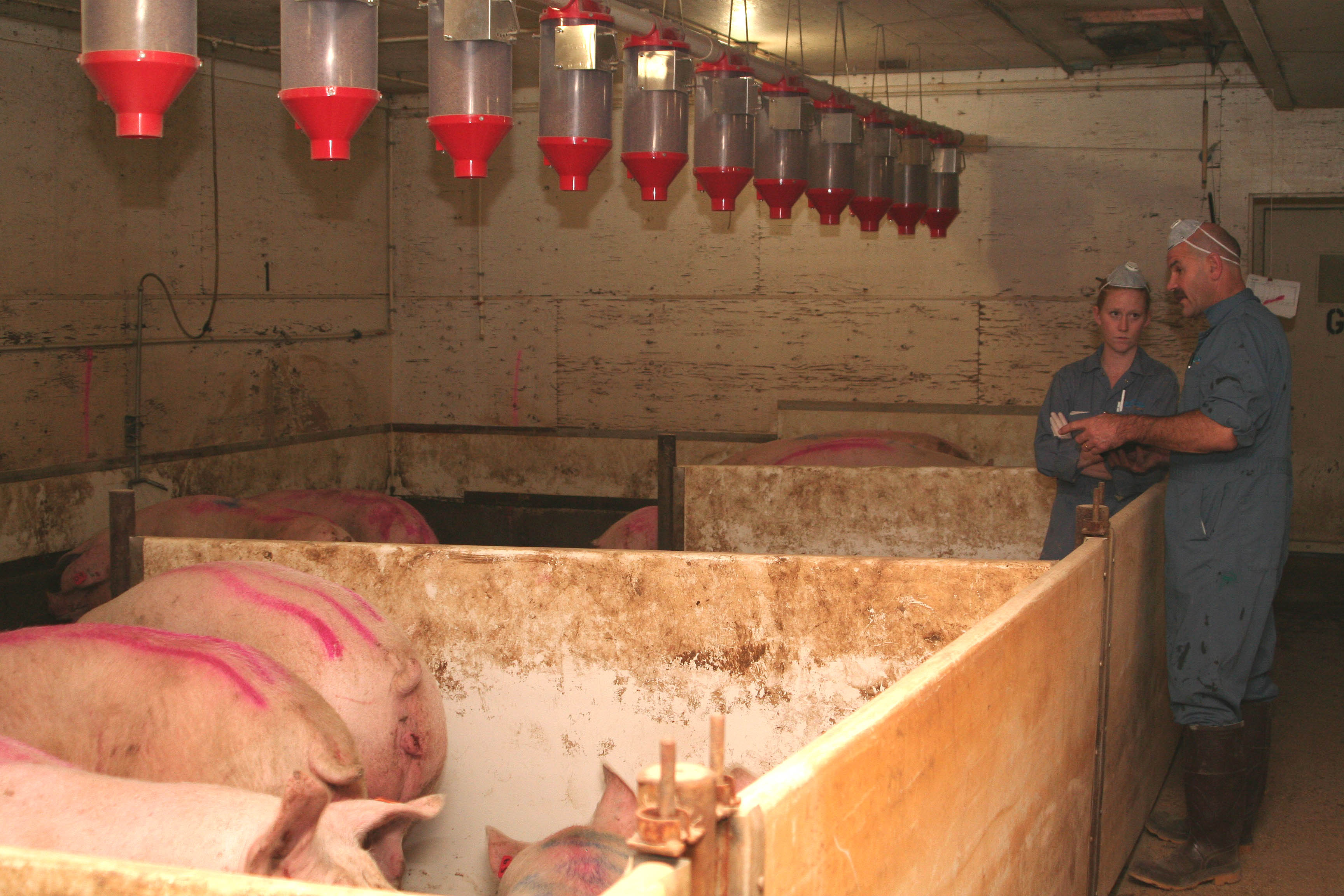 Experience with the group sow pens has been generally positive, but not without its teething problems, says unit manager Susan Armstrong. “Our biggest problem has been variation in the weight of feed dispensed, which has ranged from 7-12 lb per drop, making it difficult to feed accurately.” Gilts are penned separately and sows are grouped by body condition in order to feed more accurately, something that’s necessary when floor feeding. However, that makes it more difficult to remove sows for farrowing, says Armstrong. “We can’t remove all the sows at one time as we would if they were grouped strictly by breeding date,” she explains. Also, sow behaviour is rather aggressive with floor feeding, although no vulva biting has been noted so far. Scanning sows in the group has proved more difficult than when sows are in stalls. “We carry out the first scan when sows are in stalls in the implantation area, but we also like to do a second confirmation of pregnancy at 65 days,” Armstrong says.
Farrowing the target of 85 sows per week started at the beginning of December and the goal is to wean 900 pigs per week at an age of 20-21 days. These are shipped to the USA with another 900 pigs from another barn to make up a full load of 1800. Big Sky has a contract in place for these pigs to be raised in wean-to-finish barns in Iowa, managed by South Central Management Services, but they retain ownership. Finished pigs will be marketed in the US Mid-West but, initially at least, not tied to a specific packer.
While the decision at the time was to finish pigs in the USA, they could just as easily be reared in low-cost contract finishing barns in Saskatchewan, says Richard Johnson. “It’s currently a lot more attractive to finish in the US, but that could change.” The main motivation for the unit remodelling was to improve return on capital, he stresses. “We will make more money doing this than operating a farrow to finish operation. We modelled a range of different scenarios for these barns with a range of feed prices and in every case the farrow to isowean option was the most profitable.”
Big Sky plans to convert more of the ex-CPV units, drawing on the experience of this first one, especially how the group housing works. “It may prove best to remove the partial pen divisions in the group pens, to allow for sows to move around freely while feeding.” Johnson feels. “Also, we may need to fine-tune space allowances and how we group sows according to age and condition.” So far, though, performance has been up to expectations, with the mainly gilt herd farrowing 11.9 born alive per litter.
In time, converting all the ten 600-sow barns would allow an increase in the company’s sow base of 12,000, but Johnson says that’s a long-term goal. “We do want to expand in order to reduce cost,” he says. “Also, having a lot of sows in group housing will give us additional marketing opportunities and could allow us to develop added value pork products.”
Photo captions:
- New_Sow_pens-1.jpg: Richard Johnson discusses the group sow pens with unit manager Susan Armstrong
2. Sows in group pens-1.jpg: Sows lie quietly in the converted finishing pens
Pigs Down Under
Posted in: Economics, Environment, Production, Uncategorized, Welfare by admin on | No Comments
High feed prices and low hog prices have led to a huge increase in sow slaughterings in Australia and there is a low level of confidence among producers, says production consultant John Riley. Meanwhile, imports of pork products soar, including those from Canada, putting even more pressure on producers.
The winter edition of the Western Hog Farmer summarizes the Canadian industry’s response to high feed costs, the weakness of the US dollar and unsatisfactory market returns.
The dismal picture in Canada is mirrored in the Australian industry. In the last month, one of the largest production units in Queensland that is owned by a Japanese company has been put on the market. If this 7,000 sow, farrow to finish business closes, there will be serious repercussions for the local feed mill and the two abattoirs in the state.
Another company to call it a day is the breeding company Hyfarm-JSR. They have sold their 600-sow high health nucleus unit to a Dutch family who recently settled in the state. In addition, the Hyfarm-JSR multiplication unit is now on the market with limited expressions of interest by prospective purchasers.
Ironically, the Dutch family were encouraged to settle in Australia by a state government in 2002 which promoted the financial benefits of investing in the pig industry in Queensland.
 The Productivity Commission report that handed down its findings in December, determined that the unprofitability of the Australian industry was not due to imports from the USA, Denmark and Canada, but was due to high feed costs.
In parts of New South Wales and Queensland, harvesting of the sorghum crop is well advanced with record yields being recorded. Sorghum is a summer grain crop used in animal feeds. Normally the price is around $AU160 per tonne but this year the price is holding firm at around $AU$260 per tonne due to the high demand worldwide for wheat and barley. The usual seasonal reduction in average feed costs has not materialized so far in 2008.
During the last quarter of 2007, sow slaughtering was 49.5% higher than in the last quarter of 2006. The level of imports of processed pig meat during the 12 months ending December 2007 was 29% higher than in 2006 with imports from Canada totalling 43,415 tonnes shipped weight, an increase of 24.8% on the previous year. In the same period imports from the United States increased by 52%.
The lack of confidence in the industry has resulted in very little investment in housing systems that comply with the new welfare codes. The codes dictate that within ten years, housing of sows in stalls for more than four weeks during gestation will not be allowed.
A few producers in the east that have moved to group housing in gestation have adapted grower pens and introduced feeding of small groups.
In some instances in Western Australia sows have been housed in larger groups on deep litter in shelters and fed through traditional feeding stalls on a concrete pad in or adjacent to the shelter. The feeding stalls service more than one group of pigs on a rotation system. The main disadvantage of the system is the high labour required in moving sows.
There is only limited interest in electronic feeding systems. In the past Australia’s isolation in regard to after sales services has led to frustration and a few systems that were installed in the early 1990’s were subsequently removed. However, interest has been rekindled in recent months and two large-scale producers have installed Mannebeck systems in naturally ventilated slatted floor sheds.
In addition to high feed costs and poor market returns, producers in Queensland were shocked to read in March of their state government’s proposal to increase the cost of meeting the environmental legislation. The proposal, if implemented, will see a producer with 100 sows producing bacon pigs paying $52 per sow per year to government and a producer with 600 sows with progeny to bacon will pay about $9,800 per annum. The State government has decided on a policy of full cost recovery from potential polluters of the environment for the implementation and the policing of the legislation. Interestingly a local mining company selling gold worth $108 million will pay just $20,000 if the legislation is passed.
A further major change will dictate that multi-site operations will pay the fee on every site because multi site discounts will be withdrawn. Pig producers in Queensland are far from happy and more could well exit the industry in the next six months.
Photo caption:
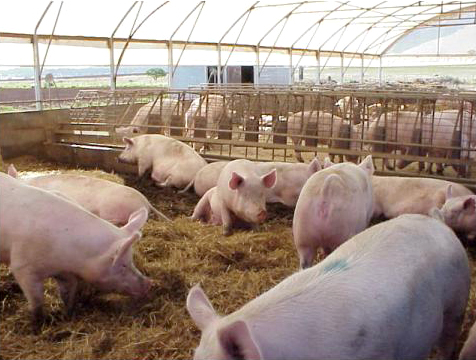
Group sows-1 – Producers in Australia are moving towards group sow housing
News and Views – Saskatchewan slaughter plant remains on track
Posted in: Meat Quality, Production by admin on | No Comments
The Chair of the Saskatchewan Slaughter Plant Initiative says that efforts to bring a new primary pork processing plant to Saskatchewan remain on target for a projected September 2009 opening.
Partners in the project include Saskatchewan First Nations, the Saskatchewan Pork Development Board and Big Sky Farms. The proposed new plant will be located in Saskatoon’s north industrial area and have an initial capacity of one million head per year, expandable to two million head on a double shift.
Initiative Chair Jim Ramsay says an extensive evaluation shows the plan is economically feasible and that it is a sound business concept. “We took an extra month to make sure that we had full consideration of the pressures that are in the industry and we reworked the numbers a couple of times over just to make sure we had a good conservative view of what was happening to see if this was based on sound business principles,” he explains. “Our plan was to get things going into the summer, possibly into the fall with opening in September of 2009 and we have not had to adjust those dates as of yet.”
Ramsay says the business development process focused on marketing and there is interest being expressed by potential marketing partners. He notes discussions aimed at securing the 100 million dollars needed to finance the first stage of development are underway and remain on track.
News and Views – End of KVD to benefit livestock producers
Posted in: Environment, Production by admin on | No Comments
Minister of Agriculture Gerry Ritz announced on February 11th the full removal of kernel visual distinguishability (KVD) as a variety registration screening criterion for all classes of Western Canadian wheat as of August 1, 2008. “Canadian farmers need access to the best crop science and varieties to be successful and the Government of Canada is working to give producers every advantage,” said Minister Ritz. “Moving beyond KVD will allow Canadian farmers to harness the potential of new crop varieties tailored to livestock nutrition and biofuel production.”
The Canadian Grain Commission (CGC) announced in June 2006 that KVD would end for the minor classes of wheat by August 1, 2008. The recent announcement extends the
removal of KVD in 2008 to all classes of Western Canadian wheat, including Canada
Western Red Spring and Canada Western Amber Durum.
Removing the KVD requirements for wheat registration and segregation will allow for the development and registration of new high-yielding varieties of wheat suitable for other uses such as feed and biofuels, without requiring that they look different than milling wheats.
Portable sorter designed for small group systems
Posted in: Environment, Production, Uncategorized by admin on | No Comments
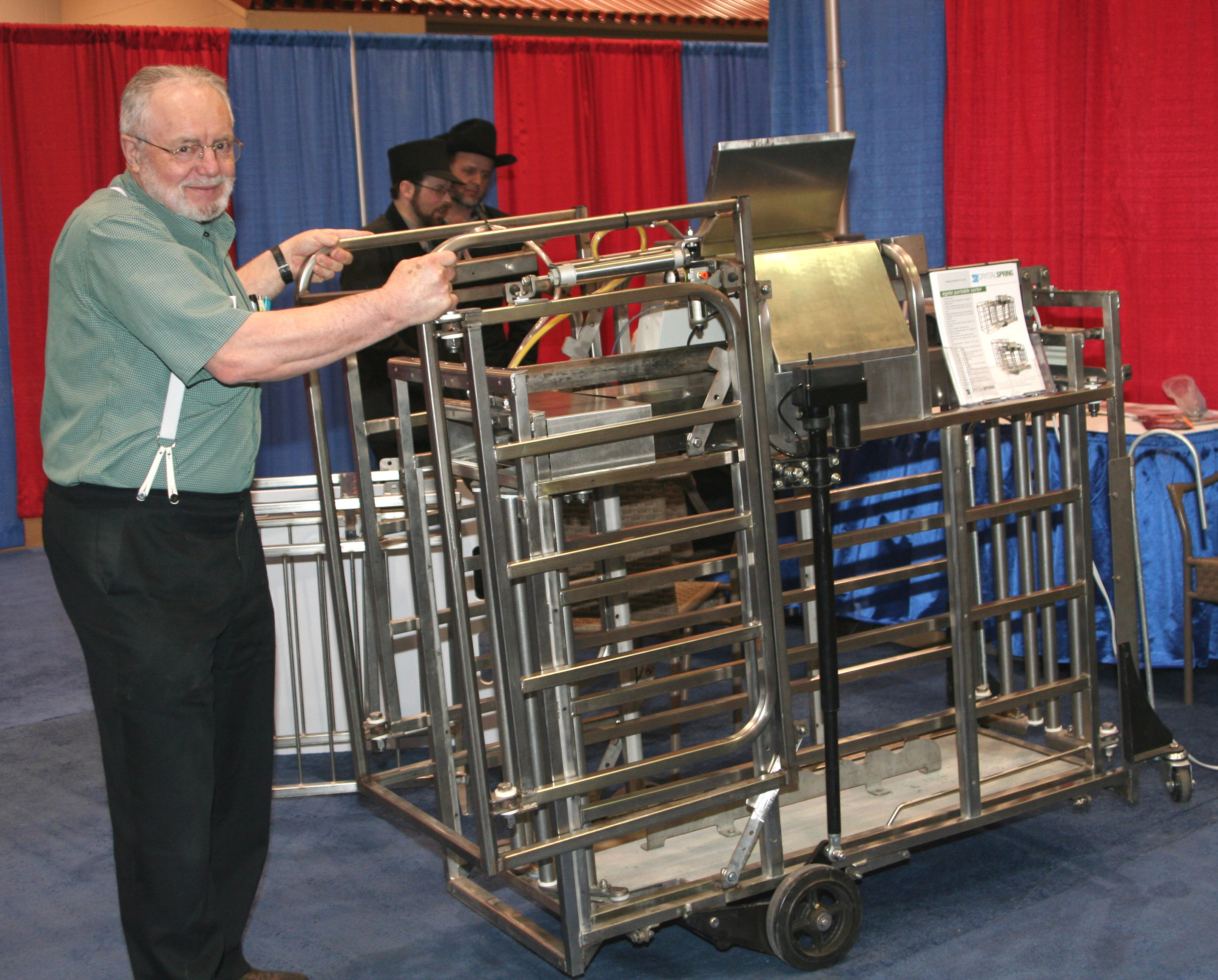 Automatic sorting systems for finishing pigs are becoming more and more common. However, they are only justified economically where group size is 500 or more. In order to gain the same benefits where pigs are housed in smaller groups, Crystal Spring Hog Equipment, based in St. Agathe, Man., have developed the “egate” portable electronic sorter. Constructed in stainless steel, its unique feature is that the rear end of the weighing crate folds up, reducing the length of the scale, which allows it to be moved around in conventional barn layouts with a central alleyway. Jonathan Kleinsasser, Managing Director of Crystal Spring, says that the scale marks pigs automatically if they are ready for market and also marks pigs that will be ready the following week. It displays the average weight of these two groups of pigs and the average weight of all the pigs weighed, so that growth rate can be calculated. The crate has an automatic sorting gate, which allows selection and removal of market weight hogs, while the others can be returned to the pen.
For further information, contact Jonathan Kleinsasser on (204) 433-7178, email info@crystalspringhog.com or visit www.crystalspringhog.com
Photo:
Portable sorter – The egate portable sorter has a fold-up rear section making it easier to move around
New Product Showcase – Intervet introduces Circumvent™ PCV vaccine
Posted in: Production, Welfare by admin on | No Comments
Intervet Canada Ltd. has announced the registration of Circumvent™ PCV vaccine for use in the prevention of PCV2 (Porcine Circovirus, type 2) infection in pigs.
Circumvent™ PCV, a proven efficacious vaccine against circovirus infection (PCVAD – Porcine Circovirus Associated Diseases), is now fully licensed in Canada and the US. This product has been available in limited quantities since spring 2006 through emergency use provisions to assist in the circovirus emerging disease crisis.
“Circumvent™ PCV has saved a lot of bacon”, said Dr. Jorgen Jorgensen, General Manager of Intervet Canada. “Two years ago we received the first supply of this product to be tested in Canada. It wasn’t long before we witnessed significant results. Mortality rates of 40 to 50% were reduced dramatically down to low single digits.”
“Veterinarians and producers are also seeing secondary benefits when vaccinating with Circumvent™ PCV,” said Dr. Jorgensen. “Along with the dramatic decrease in mortality, producers are also experiencing better growth rates, heavier pigs and healthier herds. The use of antibiotics has been reported to have dropped, even in the presence of PRRS and feed gain has improved, demonstrating that the investment of vaccination is returned many times,” said Dr. Jorgensen.
Circumvent™ PCV is registered for use in healthy swine, three weeks of age or older, as an aid in the prevention of viremia and virus shedding caused by Porcine Circovirus, type 2.
For additional product, technical or order information please contact your Intervet Technical Sales Representative, log on to www.intervet.ca or call 1-800-268-4257.
Electronic feeder increases sow lifetime production
Posted in: Environment, Production by admin on | No Comments
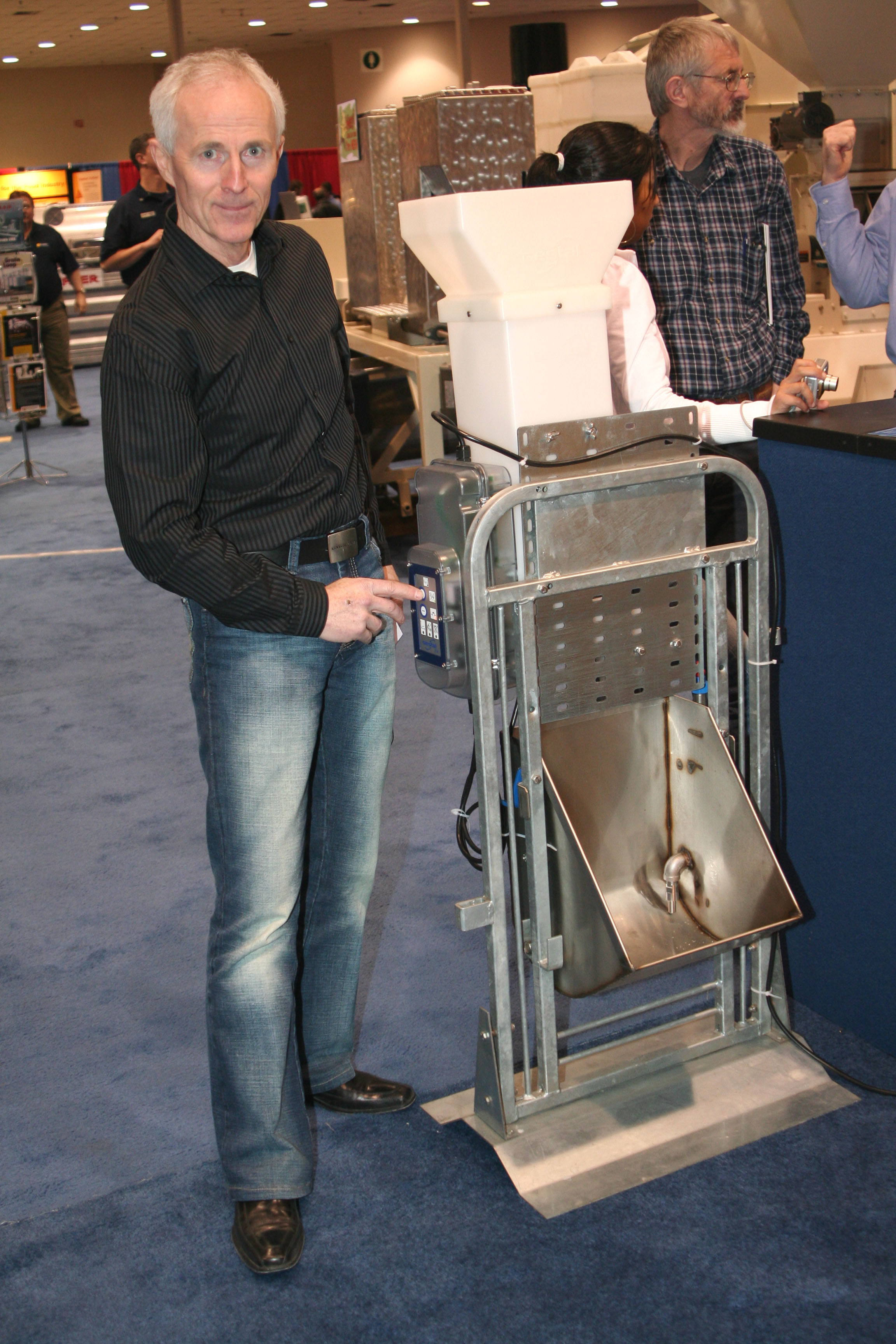 Recently introduced to western Canada, the Gestal electronic lactation feeder from Quebec-based Jyga Concept, allows feed curves and times of feeding to be implemented automatically. The system was developed to maximize lactation feed intake and reduce sow backfat loss over the suckling period, which leads to a shorter interval to breeding and higher subsequent litter size. Experience in Quebec over the last 10 years suggests that sow longevity and piglets weaned per sow lifetime are improved where lactation intake is increased through the use of this feeder. The Gestal system allows different feed curves to be set for gilts and older sows, which helps to avoid both under and over-feeding and maximizes individual feed intake. “Feeding the correct amount in the first 7 days after farrowing is critical in order to maximize intake during the rest of lactation,” says Gestal Sales Representative Blair Gordon. “Following a curve during this period avoids the problems associated with ad-lib feeding during the first week.” The feeding computer tracks feed intake for individual sows and flags up any “problem eaters”, which can be checked by the farm staff. A useful feature is the ability to adjust individual sows intake using a control on the feeder itself after the trough has been inspected, increasing or decreasing the feed curve depending on whether sows have eaten all their feed or not. Feed is dropped into the trough in 2lb doses when sows activate a mechanism that looks like a hockey puck. The operator can set the amount of feed for each period during the day. During hot weather, the system can be programmed to provide more feed during the early morning and late evening periods when it is cooler and sows are more likely to eat.
For further information, contact Blair Gordon on (519) 274-3224, email blairgordon@rogers.com or go to www.jygaconcept.com
Photo caption: Gestal lactation feeder – Blair Gordon, of Jyga Concept, demonstrates the Gestal lactation feeder