

SEARCH
Industry Partners




Prairie Swine Centre is an affiliate of the University of Saskatchewan

Prairie Swine Centre is grateful for the assistance of the George Morris Centre in developing the economics portion of Pork Insight.
Financial support for the Enterprise Model Project and Pork Insight has been provided by:







Loading Facilities for Market Hogs: Saskatchewan’s Top Ten
Posted in: Pork Insight Articles, Welfare by admin on May 17, 2012 | No Comments
Load-outs can be a stressful and time consuming experience. Poor load-out procedures can result in downer pigs and death losses. By looking at 10 different load out systems, researchers were able to identify key aspects of well built, low stress handling systems that are beneficial to producers. Recommended practice indicates that ramp angles should be less than 20°, that ramps should be fitted with cleats and have a non‐slip surface. It is recommended that loading facilities be well lit. Also behavior of the people doing the load-out has significant effects on the procedure. All factors, lighting, design, and handling techniques, should be looked at when trying to improve load-out procedures.
Recruitment of New Workers: A Success Story
Posted in: Pork Insight Articles by admin on May 12, 2012 | No Comments
A representative of Genetiporc Inc explains their strategy for successful recruitment. Gentiporc has a payscale program to ensure workers are receiving fair compensation. Their positions are divided into farm assistants, workers, section leaders, and team leaders. Each position goes through probation, apprentice, permanent, and expert classifications. Also, team leaders are responsible to keep the salary budget under a certain mark, and bonuses are awarded for staying within a budget. Students play an important role in making up the future work force. Genetiporc has recruitment programs for students that include benefits such as guaranteed summer work, referral bonuses, and scholarships for agricultural students. Finally, training is consistent and thorough by using a buddy system with all new employees.
Issues with Recruiting Foreign Workers
Posted in: Pork Insight Articles by admin on | No Comments
In 2004 labor shortages led to the pork industry hiring Temporary Foreign Workers (TFW), and after initial complications it began to work quite well. Then, in 2009 the economy down turned, so the government put restrictions on hiring TFW in order to give Canadians more job opportunities. However, within the pork industry it was difficult to find employees, and wages for TFW were inaccurately determined by using all sectors of agriculture. Current action involves having a wage survey conducted to adjust starting wages for TFW. As well, TFW are now allowed to work up o four years. There are now three streams of employment, meaning requirements are complicated and processing times will likely continue to be lengthy.
Weaning Management
Posted in: Nutrition, Pork Insight Articles by admin on | No Comments
The last ten years have seen changes in weaning management, and an increase in weaning age and weight. The basic setup is important during weaning. The environment should be clean, dry, warm, and with proper height water drinkers before the piglets are moved in. Once the piglets are in the pen, the feeder should be opened to allow a small amount of food in, also mat feeding is useful to facilitate feeding. Observation is important part of weaning to make sure all piglets are drinking, and to encourage feed intake in those not developing feeding behaviour. Given the changing weights and age of weaning, this paper looked at the amino acid and alternate protein sources used in starter diets. In a three phase feeding system, reduced lysine caused no decrease in average daily gain, but feed efficiency was reduced. In phase three the average daily gain was reduced with a low lysine diet. This indicates there could be a cost savings by reducing lysine in the first two phases, but lysine should not be reduced in the third phase. Lastly, replacing fish meal in starter diets was tested. It was found crystalline amino acids or intestinal peptide protein can be substituted, and these alternative protein sources are unnecessary in phase 3 diets.
Keeping Baby Pigs Alive
Posted in: Pork Insight Articles, Welfare by admin on | No Comments
Preweaning mortality can often make up the majority of birth to market deaths, and on most farms is currently above the 10% or below top farm rate. Suggestions to decrease preweaning mortality include individually feeding sows, and making sure the amount of feed given is adequate, and determine true gestation length of sows so as to not induce too early. For the piglets environment heat lamps are important, a black mat can help capture the heat, and drafts should be eliminated. Having enough labor will allow the piglets to be dried off, and ensure each piglet gets colostrum. Things that should be minimized are the number of processing procedures performed, and the amount of sorting. Finally, the sow’s well-being needs to be monitored throughout. Following these suggestions can help reduce preweaning mortality, and increase the number of pigs brought to market.
Prediction of Future Prices and Cost of Production
Posted in: Economics, Pork Insight Articles by admin on | No Comments
After the summer of 2011 growth expectations were reset to lower. There is expected to be slow growth in the US, Canada, and Europe due to high crude oil prices, and the US recession. Asia is expected to have an increase of 6.1% for GDP, with China leading with 9% expected GDP growth. Crop prices have been rising, and a series of poor crop yields has increased the demand without increasing the supply. Crop supplies are expected to increase 6%, especially from sources outside the US. Feed grain supply is expected to catch up with demand, and likely decrease feed costs. As for pork, China and Korea are expected to increase production, which will lower import demand for these countries. Overall export rates are expected to stay nearly where they are, only modest expansion is expected for North America.
Technology’s Role in the 21st Century: Making Safe, Affordable and Abundant Food a Global Reality
Posted in: Pork Insight Articles by admin on | No Comments
The global demand for food is expected to double by 2050, and to keep food safe, abundant, and affordable new technology will need to be used. Technology in agriculture has been improving over the last 50 years, so that inflation-adjusted food prices are lower today (2012) than in 1960. Also, technology advances mean that land use, water use, and carbon footprint has decreased per pound of beef produced. 95% of consumers make purchasing decisions based on taste, cost, and nutrition, but not on food safety or agricultural methods, meaning they should be open to products produced using new technology. New technology is essential to provide food for a growing population, and to provide product choices in a sustainable manner.
Influence of Health on Feed Efficiency
Posted in: Pork Insight Articles, Welfare by admin on May 11, 2012 | No Comments
This presentation by Dr. Steve Dritz of the University of Kansas State was presented as the 5th in a series of 8 webinars on Feed Efficiency hosted by the Prairie Swine Centre. To access the presentation scroll down and click on Download PDF
Swine Innovation Porc – Lead User Program
Posted in: Pork Insight Articles, Swine Innovation by admin on April 30, 2012 | No Comments

The objectives of the lead-user program are to build upon the Canadian Swine research and Development Cluster research program (funded through growing Forward 1), through speeding the rate of adoption of new technologies. Early adoption of some of these new technologies are designed to enhance the competitiveness and differentiation of the pork industry throughout Canada.







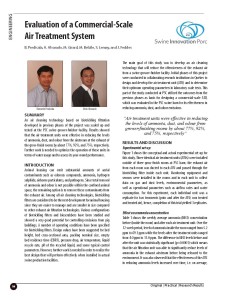
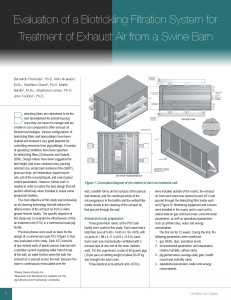

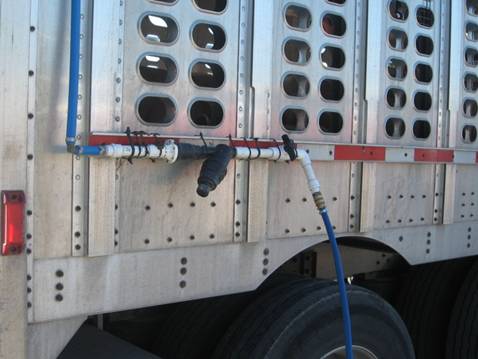


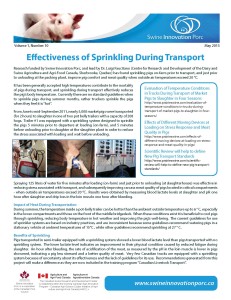
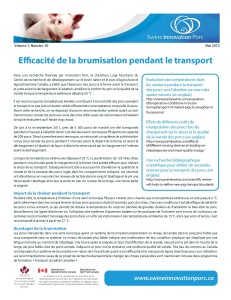

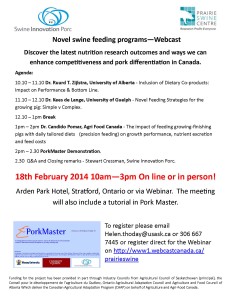
Presentations from the seminar are also available on-line. Please click the following link to view the archived presentations
PorkMaster can be downloaded free of charge. Please click on the PorkMaster logo for download instruction and a copy of the user manual.

Funding for the project has been provided in part through Industry Councils from Agricultural Council of Saskatchewan (principal), the Conseil pour le développement de l’agriculture du Québec, Ontario Agricultural Adaptation Council and Agriculture and Food Council of Alberta Which deliver the Canadian Agricultural Adaptation Program (CAAP) on behalf of Agriculture and Agri-Food Canada.


New Feed Processing Technology that May Influence Feed Efficiency
Posted in: Pork Insight Articles, Production by admin on April 24, 2012 | No Comments
This presentation by Dr. Tom Scott of the University of Saskatchewan was presented at the 4th in a series of 8 webinars on Feed Efficiency hosted by Prairie Swine Centre. To access the presentation scroll down and click on Download PDF